


bharti kher bindi art: decoding her signature motif
.jpg&w=3840&q=75)
Bharti Kher, one of the most prominent contemporary artists from India, has redefined the visual and conceptual landscape of modern art through her radical use of the bindi; a traditional South Asian forehead mark worn primarily by women. What began as a symbol of cultural identity and femininity evolved under Kher’s vision into a deeply layered artistic device that challenges conventions, explores metaphysical concepts and initiates discourse on gender, spirituality, and transformation.
In this article, we delve into the significance of bindi art in Kher’s oeuvre, exploring its aesthetic, cultural, and conceptual dimensions.
The Origins Of The Bindi
 The bindi, derived from the Sanskrit word bindu meaning “dot” or “point” has deep roots in Indian culture. Traditionally, it is associated with the Hindu symbol of the third eye, representing femininity, spirituality and marital status. Over time, the bindi has also evolved into a fashion accessory, embraced by women across religions and generations, both in India and abroad.
Bharti Kher’s fascination with the bindi began in 1995, when she encountered a serpent-shaped bindi in a bustling Indian market. This chance discovery sparked a transformative journey, leading her to adopt the bindi as a central element in her artistic practice. For Kher, the bindi is more than mere decoration-it is a loaded symbol, simultaneously sacred and secular, traditional and contemporary. Bharti Kher adopts this symbol not only to celebrate its cultural roots but also to challenge and expand its meanings. In her work, the bindi transforms into a tool for dialogue about gender roles, societal norms and personal identity.
Aesthetic Appeal
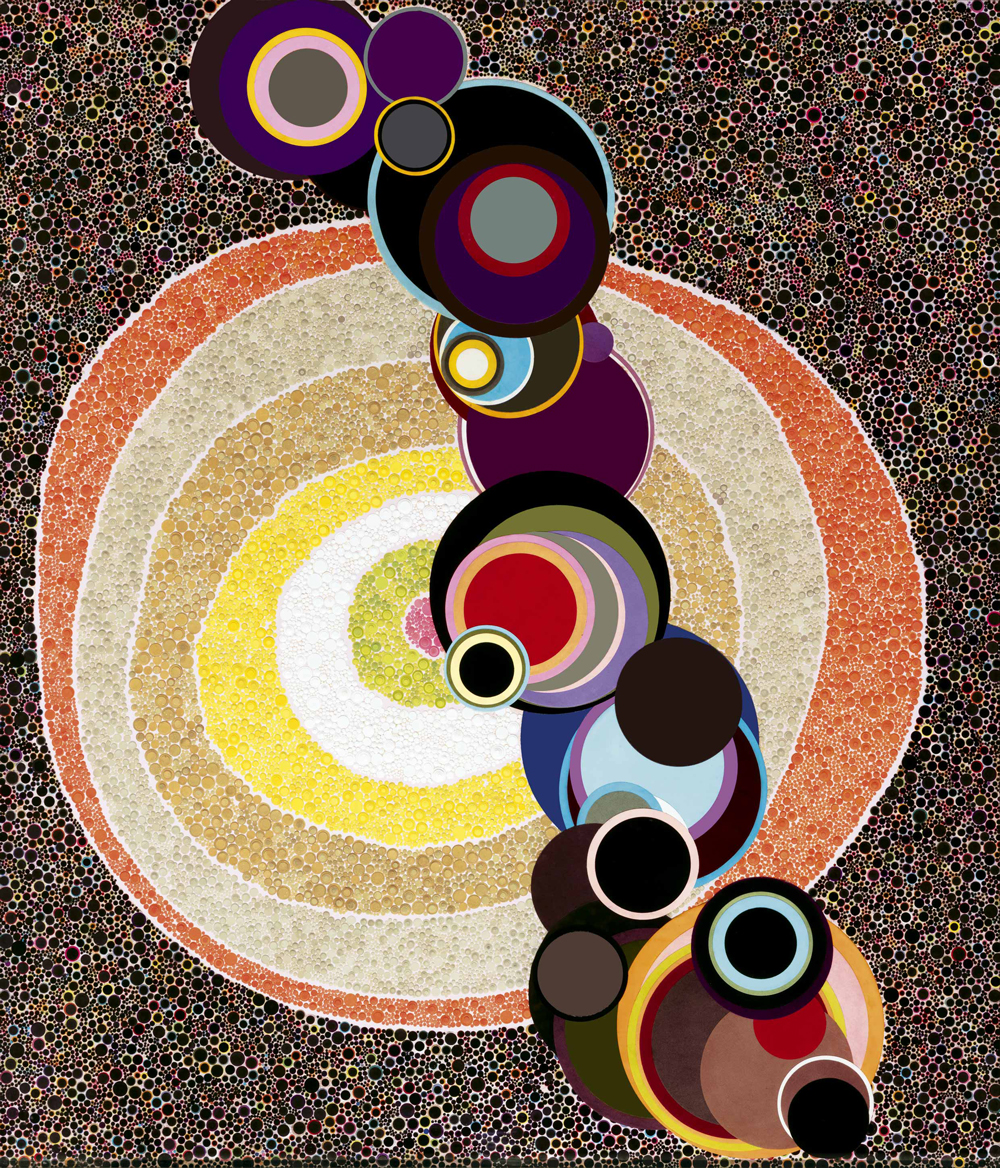
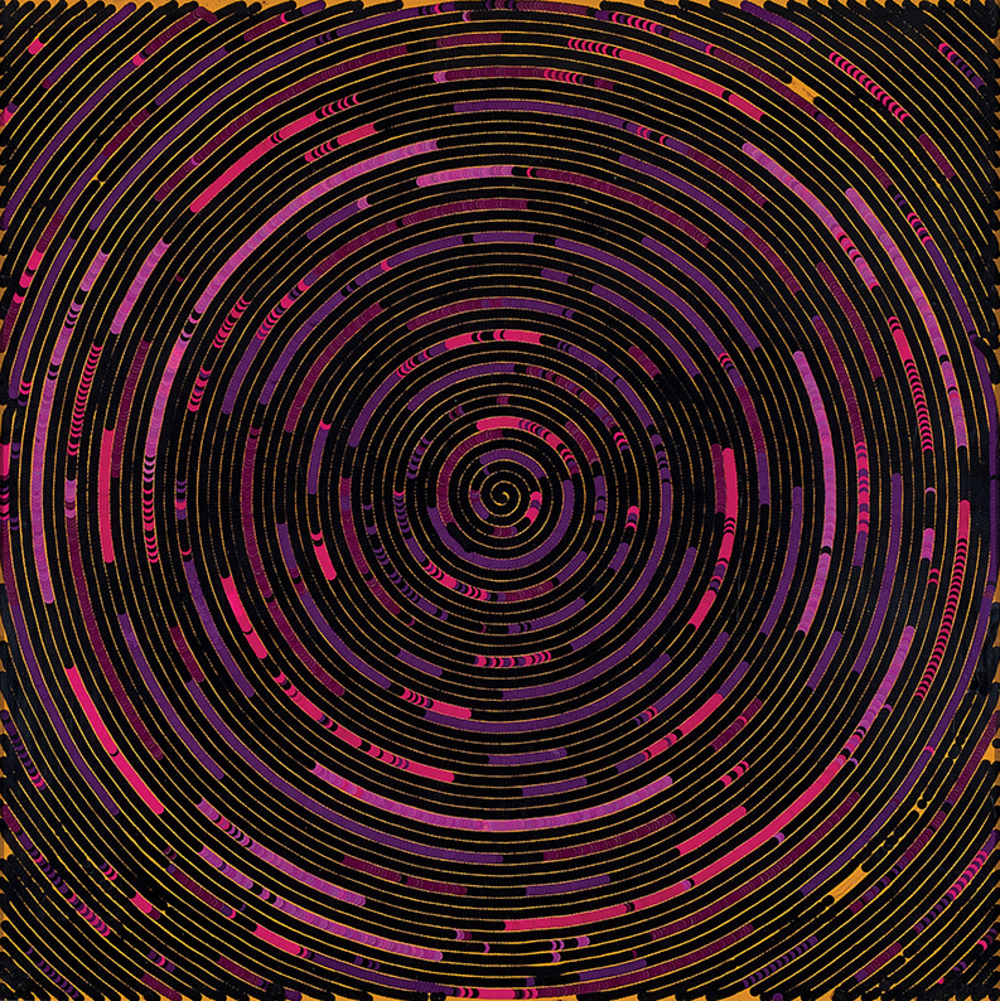
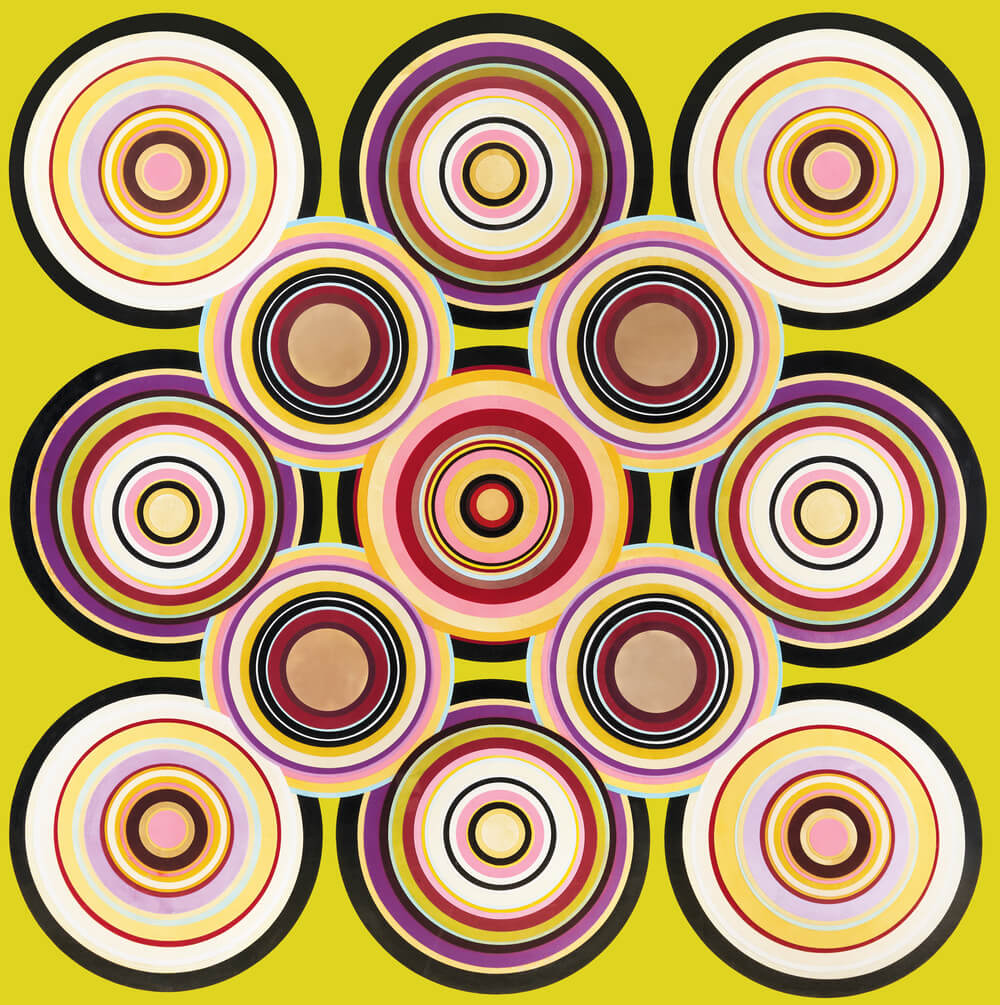
Bharti Kher’s bindi artwork is visually striking. She employs a variety of materials, including resin, wood, and mixed media, to create intricate patterns and installations. The bindis themselves, often in bright colors and diverse shapes, are arranged in elaborate designs that draw the viewer’s eye. This aesthetic richness invites an exploration of the artwork, encouraging audiences to consider both the beauty and the deeper meanings embedded within.
Themes Of Identity
One of the central themes in Kher’s work is identity. The bindi serves as a metaphor for the multifaceted nature of selfhood. In a globalized world, where cultural symbols can be appropriated or misunderstood, Kher’s use of the bindi asserts her Indian identity while simultaneously questioning the fixed notions of cultural representation. Her artworks often reflect the tension between tradition and modernity, inviting viewers to ponder their own identities in a rapidly changing society.
Feminism & Empowerment
 Bharti Kher’s bindi artwork also engages with feminist discourse. By elevating a traditionally feminine symbol, she challenges patriarchal narratives and emphasizes female empowerment. Her installations often depict women’s experiences and struggles, using the bindi as a unifying motif that connects past and present. This approach not only celebrates womanhood but also critiques the societal expectations placed upon women.
Cultural Commentary
In addition to its aesthetic and identity-related dimensions, Bharti Kher’s bindi art serves as a form of cultural commentary. Through her work, she addresses issues such as globalization, migration, and the commodification of culture. Bharti Kher’s bindis, while rooted in Indian tradition, also reflect the complexities of contemporary life, illustrating how cultural symbols can evolve and gain new meanings in different contexts.
Bindi As A Universal Symbol
While the bindi is deeply rooted in Indian culture, Bharti Kher's art transcends cultural boundaries. Her use of the bindi as a universal symbol allows viewers from diverse backgrounds to engage with her work on multiple levels. The bindi becomes a metaphor for the individual's place within a larger community, inviting viewers to reflect on their own identities and experiences.
Symbolism & Social Commentary
Kher’s bindi art is deeply symbolic. The bindi’s association with the third eye allows her to explore metaphysical themes, while its ubiquity in daily life speaks to issues of gender, identity, and societal expectation. By using bindis in unexpected contexts-on animals, abstract forms, and hybrid creatures-Kher questions conventional gender roles, challenges cultural stereotypes, and highlights the fluidity of identity.
Her art also serves as a commentary on globalization and the commodification of tradition. The mass-produced bindi, repurposed in her art, reflects the intersection of popular culture and spiritual heritage, inviting viewers to reconsider the meanings embedded in everyday objects.
The Evolution Of The Bindi In Kher's Practice
 Over three decades, Kher's use of bindis has evolved considerably:
• Early Work (1990s) - Her initial explorations used bindis more sparingly, often in conjunction with painted surfaces or as elements within larger mixed-media compositions.
• Middle Period (2000s) - This era saw the development of her signature all-over bindi techniques, with increasing scale and complexity. Works like "The Skin Speaks a Language Not Its Own" exemplify this period.
• Recent Developments (2010s-Present) - Kher has expanded her vocabulary to include more varied bindi forms, colors, and configurations. She has also begun to incorporate bindis into more ambitious architectural installations that engage entire gallery spaces.
Iconic Works Featuring The Bindi
One of Bharti Kher’s most iconic works is The Skin Speaks a Language Not Its Own (2006), a life-sized, fiberglass sculpture of a reclining female elephant, covered in thousands of white sperm-shaped bindis. This piece has been widely interpreted as a meditation on mortality, motherhood, and the collision of myth and reality. The elephant, a creature revered in Indian mythology, becomes both a symbol of wisdom and an object of decay, its skin transformed into a canvas of cultural codes.
Similarly, in An Absence of Assignable Cause (2007), Kher covered a life-sized whale heart with thousands of bindis, transforming it into a mythical object that blurs the boundaries between the real and the fantastical.
Another compelling series, The Virus, consists of bindi-studded wall works that resemble cellular structures, cosmological maps, or digital networks. These pieces speak to the contagion of ideas, the spread of culture, and the ways identities can mutate and proliferate in an interconnected world.
Critical Reception & Global Impact
Kher's bindi works have garnered international acclaim, with exhibitions at prestigious institutions. Critics have praised her ability to transform a culturally specific symbol into a universal artistic language while maintaining its original resonance.
Art historian Geeta Kapur notes that "Bharti Kher's genius lies in making the bindi simultaneously more and less than what it traditionally signifies, depleting it of its ritual meaning while investing it with new aesthetic and conceptual power."
The global art market has similarly embraced Kher's work. Her pieces have achieved significant auction prices, with major collections worldwide seeking to acquire her bindi creations. This international recognition speaks to her success in creating art that, while deeply rooted in specific cultural references, transcends geographical and cultural boundaries.
Conclusion
Bharti Kher bindi art is more than a stylistic hallmark, it is a philosophical inquiry into the nature of identity, perception, and transformation. Through the repetition of a single, potent symbol, she creates works that are visually mesmerizing and intellectually provocative. The bindi, in her hands, becomes a site of meaning-making, where ancient beliefs and contemporary experiences converge. In decoding Kher’s signature motif, we are invited to explore not just the intricacies of her art, but also the complexities of the world we inhabit.




