
Artists Profile
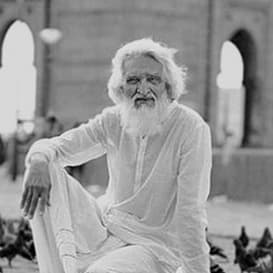
M F Husain
One of India’s most celebrated modern Indian artists, M F Husain, was born in Pandharpur, Maharashtra, in 1915. He moved to Mumbai in 1937 and began his career painting cinema hoardings and making furniture and toys for children.
In 1947, Husain joined the Bombay Progressive Artists' Group, a collective that aimed to create a new visual language for independent India, blending indigenous themes with modernist techniques. His themes often drew from Indian mythology, history, and culture.
While Husain earned widespread renown for his dynamic paintings of horses, he was equally celebrated for thematic series such as those on Mother Teresa and the British Raj. His work often explored the relationship between generations of performers, while drawing upon India’s syncretic cultural traditions. Through motifs and figures imbued with mythological resonance, Husain reinterpreted familiar narratives, presenting them in a distinctly modern visual language aligned with contemporary artistic practices.
He envisioned a secular idiom for modern Indian art that translated the country’s composite culture into a vibrant mosaic of colour and form. Husain helped usher in a new spirit of artistic freedom in the decades following Independence. A restless and peripatetic artist, he traversed both geographical and conceptual boundaries, moving fluidly between painting, installations, and cinema.
Across a career spanning seven decades, Husain also directed feature films, including Through the Eyes of a Painter (1967), which won the Golden Bear Award at the Berlin Film Festival, and Gaja Gamini (2000). In recognition of his contributions to Indian art and culture, the Government of India honoured him with the Padma Bhushan and the Padma Vibhushan, two of the country’s highest civilian awards. Husain passed away in London in 2011.
In 1947, Husain joined the Bombay Progressive Artists' Group, a collective that aimed to create a new visual language for independent India, blending indigenous themes with modernist techniques. His themes often drew from Indian mythology, history, and culture.
While Husain earned widespread renown for his dynamic paintings of horses, he was equally celebrated for thematic series such as those on Mother Teresa and the British Raj. His work often explored the relationship between generations of performers, while drawing upon India’s syncretic cultural traditions. Through motifs and figures imbued with mythological resonance, Husain reinterpreted familiar narratives, presenting them in a distinctly modern visual language aligned with contemporary artistic practices.
He envisioned a secular idiom for modern Indian art that translated the country’s composite culture into a vibrant mosaic of colour and form. Husain helped usher in a new spirit of artistic freedom in the decades following Independence. A restless and peripatetic artist, he traversed both geographical and conceptual boundaries, moving fluidly between painting, installations, and cinema.
Across a career spanning seven decades, Husain also directed feature films, including Through the Eyes of a Painter (1967), which won the Golden Bear Award at the Berlin Film Festival, and Gaja Gamini (2000). In recognition of his contributions to Indian art and culture, the Government of India honoured him with the Padma Bhushan and the Padma Vibhushan, two of the country’s highest civilian awards. Husain passed away in London in 2011.

KNOW MORE
Buy
Sell
Request an Estimate
FAQs
Seller Terms
Store Terms
SERVICES
Client Advisory
Restoration
DOWNLOAD THE APP


Copyright 2026 AstaGuru. All Rights Reserved


