
Artists Profile
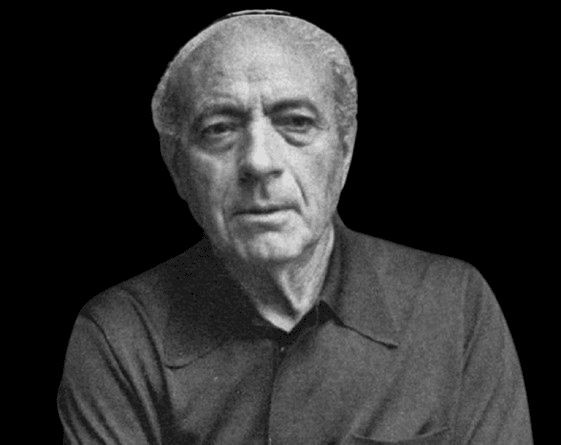
Baltasar Lobo
Baltasar Lobo, born in 1910 in Cerecinos de Campos, Zamora, Spain, was a prominent modern Spanish sculptor and draughtsman belonging to the historical Parisian avant-garde, renowned for his smooth, sensuous forms and refined synthesis of abstraction and figurative sculpture. The son of a carpenter, he showed an early aptitude for woodcarving and model making before working as an apprentice in the studio of sculptor Ramón Núñez in Valladolid. He supported his formative training by carving gravestones while attending evening courses, eventually earning a scholarship to study at the prestigious Real Academia de Bellas Artes de San Fernando and the School of Arts and Crafts in Madrid. Following the devastation of the Spanish Civil War, during which his Madrid studio was destroyed, Lobo fled Spain in 1939 and relocated permanently to Paris.
In Paris, Baltasar Lobo integrated into the vibrant circle of Montparnasse and the School of Paris, forming close, formative artistic relationships with figures such as Pablo Picasso and sculptor Henri Laurens, with whom he shared a studio. While his early work bore the structural discipline of Cubism and classical Mediterranean sculpture, Lobo increasingly embraced biomorphic abstraction and pure volume, inspired by the organic visual language of Constantin Brâncuși and Jean Arp. He worked predominantly in polished bronze, white Carrara marble, granite, and terracotta, developing an international reputation for surfaces finished to a high, tactile gloss that emphasized the fluid play of natural light.
The artist's practice is celebrated for its enduring focus on the female figure, reclining nudes, and the theme of motherhood. Beginning around 1946, Baltasar Lobo developed an acclaimed series centered on maternal motifs, exploring the balance between intimate warmth, architectural equilibrium, and playful dynamic movement. Lobo stripped away extraneous anatomical detail, distilling figures into smooth contours, swelling volumes, and curvilinear silhouettes that evoke fertility, grace, and serenity while retaining a deeply human emotional resonance. Rather than abandoning figuration entirely, he treated abstraction as an essential distillation of figurative truth, creating sculptures that felt both ancient and radically modern.
Baltasar Lobo gained wide critical recognition across Europe, Latin America, and Japan, holding landmark solo exhibitions at Blanche Gallery in Stockholm in 1951, Galerie Vendôme in Paris, and Galerie Villand and Galanis. Baltasar Lobo's Sculptures were commissioned for major architectural projects, notably for the Central University of Venezuela in Caracas. Over his career, Lobo received major honors including the André Susse Prize for Sculpture in 1958, the French Order of Arts and Letters in 1981, and Spain's National Award for Plastic Arts alongside the Castilla y León Gold Medal in 1984. Lobo passed away in Paris in 1993, and his legacy is preserved at the Baltasar Lobo Castle Museum in Zamora as well as in permanent collections including the Museo Nacional Centro de Arte Reina Sofía in Madrid, the Musée d'Art Moderne de la Ville de Paris, and the Sofia Imber Museum of Contemporary Art in Caracas.
In Paris, Baltasar Lobo integrated into the vibrant circle of Montparnasse and the School of Paris, forming close, formative artistic relationships with figures such as Pablo Picasso and sculptor Henri Laurens, with whom he shared a studio. While his early work bore the structural discipline of Cubism and classical Mediterranean sculpture, Lobo increasingly embraced biomorphic abstraction and pure volume, inspired by the organic visual language of Constantin Brâncuși and Jean Arp. He worked predominantly in polished bronze, white Carrara marble, granite, and terracotta, developing an international reputation for surfaces finished to a high, tactile gloss that emphasized the fluid play of natural light.
The artist's practice is celebrated for its enduring focus on the female figure, reclining nudes, and the theme of motherhood. Beginning around 1946, Baltasar Lobo developed an acclaimed series centered on maternal motifs, exploring the balance between intimate warmth, architectural equilibrium, and playful dynamic movement. Lobo stripped away extraneous anatomical detail, distilling figures into smooth contours, swelling volumes, and curvilinear silhouettes that evoke fertility, grace, and serenity while retaining a deeply human emotional resonance. Rather than abandoning figuration entirely, he treated abstraction as an essential distillation of figurative truth, creating sculptures that felt both ancient and radically modern.
Baltasar Lobo gained wide critical recognition across Europe, Latin America, and Japan, holding landmark solo exhibitions at Blanche Gallery in Stockholm in 1951, Galerie Vendôme in Paris, and Galerie Villand and Galanis. Baltasar Lobo's Sculptures were commissioned for major architectural projects, notably for the Central University of Venezuela in Caracas. Over his career, Lobo received major honors including the André Susse Prize for Sculpture in 1958, the French Order of Arts and Letters in 1981, and Spain's National Award for Plastic Arts alongside the Castilla y León Gold Medal in 1984. Lobo passed away in Paris in 1993, and his legacy is preserved at the Baltasar Lobo Castle Museum in Zamora as well as in permanent collections including the Museo Nacional Centro de Arte Reina Sofía in Madrid, the Musée d'Art Moderne de la Ville de Paris, and the Sofia Imber Museum of Contemporary Art in Caracas.

KNOW MORE
Buy
Sell
Request an Estimate
FAQs
Seller Terms
Store Terms
SERVICES
Client Advisory
Restoration
DOWNLOAD THE APP


Copyright 2026 AstaGuru. All Rights Reserved


