
Artists Profile
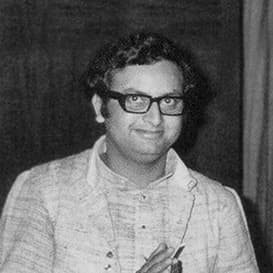
Bikash Bhattacharjee
Born in Kolkata in 1940, Bikash Bhattacharjee emerged as one of the most distinctive voices in post-Independence Indian art. He graduated from the Indian College of Art and Draftsmanship in 1963 and later joined the institution as a professor in 1968. In 1973 he began teaching at the Government College of Arts and Crafts, Kolkata, where he remained until 1982. His early years, marked by personal loss and the stark realities of urban life, deeply shaped his artistic imagination.
Bhattacharjee’s practice is rooted in an intense engagement with drawing, which served as the foundation for his paintings. Working with pencil, pastel and crayon, he developed a nuanced command over tonal variation and texture, often constructing form through subtle gradations rather than line. This sensitivity translated into his paintings, where he explored the expressive possibilities of oil to capture surfaces such as skin, drapery and the weathered walls of Kolkata’s ageing architecture.
His works often present a compelling interplay between realism and fantasy. Bhattacharjee populated his canvases with psychologically charged characters drawn from everyday life, including women, elderly figures, children and domestic workers. Female subjects remained a central focus in his work, portrayed with a striking blend of sensuality, psychological complexity and jarring presence. These figures often inhabit carefully constructed interiors or urban settings that heighten the dramatic atmosphere of the composition.
During the late 1960s and mid-1970s, the artist produced a number of surreal paintings that carried a darker, allegorical tone. Among the most significant of these was the Doll series begun in 1971, conceived as a response to the violence that gripped Kolkata during the Naxalite movement. In these works, human figures appear as dolls with erased or indistinct eyes, a haunting metaphor for the loss of individuality amid social turmoil. His portraits of women, including prostitutes and middle-class figures rendered with a photo-realist sensibility, further explored themes of identity, desire and societal contradiction.
Bhattacharjee’s mastery of light and surface lent his works a cinematic quality, an effect partly shaped by his interest in film. His paintings often blur the boundary between the familiar and the uncanny, leaving viewers with images that are both recognisable and enigmatic. The artist passed away in 2006, leaving behind a body of work that continues to stand as a powerful reflection on urban life, human psychology and the complexities of modern existence.
Bhattacharjee’s practice is rooted in an intense engagement with drawing, which served as the foundation for his paintings. Working with pencil, pastel and crayon, he developed a nuanced command over tonal variation and texture, often constructing form through subtle gradations rather than line. This sensitivity translated into his paintings, where he explored the expressive possibilities of oil to capture surfaces such as skin, drapery and the weathered walls of Kolkata’s ageing architecture.
His works often present a compelling interplay between realism and fantasy. Bhattacharjee populated his canvases with psychologically charged characters drawn from everyday life, including women, elderly figures, children and domestic workers. Female subjects remained a central focus in his work, portrayed with a striking blend of sensuality, psychological complexity and jarring presence. These figures often inhabit carefully constructed interiors or urban settings that heighten the dramatic atmosphere of the composition.
During the late 1960s and mid-1970s, the artist produced a number of surreal paintings that carried a darker, allegorical tone. Among the most significant of these was the Doll series begun in 1971, conceived as a response to the violence that gripped Kolkata during the Naxalite movement. In these works, human figures appear as dolls with erased or indistinct eyes, a haunting metaphor for the loss of individuality amid social turmoil. His portraits of women, including prostitutes and middle-class figures rendered with a photo-realist sensibility, further explored themes of identity, desire and societal contradiction.
Bhattacharjee’s mastery of light and surface lent his works a cinematic quality, an effect partly shaped by his interest in film. His paintings often blur the boundary between the familiar and the uncanny, leaving viewers with images that are both recognisable and enigmatic. The artist passed away in 2006, leaving behind a body of work that continues to stand as a powerful reflection on urban life, human psychology and the complexities of modern existence.

KNOW MORE
Buy
Sell
Request an Estimate
FAQs
Seller Terms
Store Terms
SERVICES
Client Advisory
Restoration
DOWNLOAD THE APP


Copyright 2026 AstaGuru. All Rights Reserved


