
Artists Profile
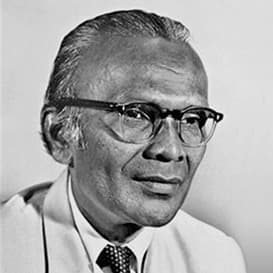
K H Ara
Born in Bolarum, Secunderabad, in 1914, Krishnaji Howlaji Ara was a pioneering figure in modern Indian art, whose exceptional talent and artistic brilliance emerged from sheer passion, hard work and dedication. One of his most significant contributions to modern Indian art was his distinctive interpretation of the female nude and still life. He was also among the founding members of the revolutionary Bombay Progressive Artists’ Group, alongside F N Souza and S H Raza.
Rising from extremely modest beginnings, Ara faced numerous struggles in his early life. He lost his mother when he was three, and after his father remarried soon afterwards, Ara ran away to Bombay at the age of seven. There, he began working as a domestic helper in an English household. Several years later, he found employment as a car cleaner with a Japanese firm, which also provided him with accommodation in a tiny room in Walkeshwar, Bombay.
It was in the solitude of this small room that Ara discovered the inspiration to pursue his urge to draw and paint. The compelling quality of his works soon attracted the attention of renowned art critics Rudy von Leyden and Walter Langhammer. As influential expatriate patrons and practitioners of art, they encouraged Ara to paint regularly and provided him with financial support. A significant milestone in his career came in 1942, when his first solo exhibition was held at Chetna Restaurant in Bombay.
In his artistic practice, Ara neither sought to shock through raw eroticism nor attempted to revisit folk traditions. He was a modernist for whom the formal language of art took precedence over social or political motivations. His approach to art remained intuitive, imaginative, spontaneous and improvised rather than calculated or intellectual. This sensibility led to an eclectic style that was neither imitative nor derivative, guiding him on an exploratory and evolving journey of artistic expression.
Among Ara’s many honours were the prestigious Governor’s Award for painting in 1944 and the Gold Medal from the Bombay Art Society in 1952. He passed away in 1985.
Rising from extremely modest beginnings, Ara faced numerous struggles in his early life. He lost his mother when he was three, and after his father remarried soon afterwards, Ara ran away to Bombay at the age of seven. There, he began working as a domestic helper in an English household. Several years later, he found employment as a car cleaner with a Japanese firm, which also provided him with accommodation in a tiny room in Walkeshwar, Bombay.
It was in the solitude of this small room that Ara discovered the inspiration to pursue his urge to draw and paint. The compelling quality of his works soon attracted the attention of renowned art critics Rudy von Leyden and Walter Langhammer. As influential expatriate patrons and practitioners of art, they encouraged Ara to paint regularly and provided him with financial support. A significant milestone in his career came in 1942, when his first solo exhibition was held at Chetna Restaurant in Bombay.
In his artistic practice, Ara neither sought to shock through raw eroticism nor attempted to revisit folk traditions. He was a modernist for whom the formal language of art took precedence over social or political motivations. His approach to art remained intuitive, imaginative, spontaneous and improvised rather than calculated or intellectual. This sensibility led to an eclectic style that was neither imitative nor derivative, guiding him on an exploratory and evolving journey of artistic expression.
Among Ara’s many honours were the prestigious Governor’s Award for painting in 1944 and the Gold Medal from the Bombay Art Society in 1952. He passed away in 1985.

KNOW MORE
Buy
Sell
Request an Estimate
FAQs
Seller Terms
Store Terms
SERVICES
Client Advisory
Restoration
DOWNLOAD THE APP


Copyright 2026 AstaGuru. All Rights Reserved


