
Artists Profile
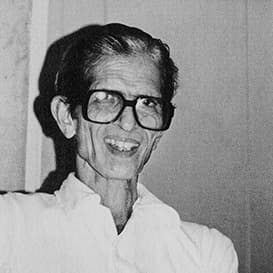
K K Hebbar
Born in 1911 in Kattingeri in the Udupi district of present-day Karnataka, K K Hebbar emerged as one of the significant modernists from southern India. His work occupies a distinctive position within twentieth-century Indian art, as he developed a singular artistic language without aligning himself with any particular artistic movement or group.
Hebbar received his early training in Mysore before enrolling at the Sir J J School of Art in Mumbai. After completing his studies, he joined the institution as an art instructor and taught there between 1940 and 1945. Soon after, he travelled to Europe to further his artistic education at the Académie Julian in Paris, an experience that broadened his exposure to international modernist practices.
A notable phase of his early career, often referred to as his Kerala period, was marked by a series of evocative landscapes inspired by the region. During this time, Hebbar drew influence from artists such as Paul Gauguin and Amrita Sher-Gil. The works produced in this decade, beginning around 1946, are considered highly influential in the evolution of modern Indian art and hold an important place in its history.
Hebbar’s visual language combined elements of Impressionism and Expressionism, resulting in a style that balanced lyrical sensitivity with emotional intensity. Deeply concerned with social realities, he addressed themes such as poverty, hunger and the threat of nuclear destruction. At the same time, another important strand of his work celebrated the grace and rhythm of dance, particularly inspired by his study of the classical Indian dance form Kathak.
An artist committed to constant exploration, Hebbar travelled extensively across India, visiting historical and cultural sites that enriched his artistic vocabulary. A sketch created during a visit to the ancient Karla Caves in Maharashtra earned him a gold medal from the Bombay Art Society. His later travels to Europe and across the Far East, including Japan and Indonesia, further shaped his practice, leading him towards a more abstract and symbolic visual language.
In recognition of his contributions to Indian art, Hebbar was elected a Fellow of the Lalit Kala Akademi in 1976. He also served as the Chairman of the Artists’ Centre, Bombay, from 1953 to 1973. In 1989, the Government of India honoured him with the Padma Bhushan. Hebbar passed away in 1996.
Hebbar received his early training in Mysore before enrolling at the Sir J J School of Art in Mumbai. After completing his studies, he joined the institution as an art instructor and taught there between 1940 and 1945. Soon after, he travelled to Europe to further his artistic education at the Académie Julian in Paris, an experience that broadened his exposure to international modernist practices.
A notable phase of his early career, often referred to as his Kerala period, was marked by a series of evocative landscapes inspired by the region. During this time, Hebbar drew influence from artists such as Paul Gauguin and Amrita Sher-Gil. The works produced in this decade, beginning around 1946, are considered highly influential in the evolution of modern Indian art and hold an important place in its history.
Hebbar’s visual language combined elements of Impressionism and Expressionism, resulting in a style that balanced lyrical sensitivity with emotional intensity. Deeply concerned with social realities, he addressed themes such as poverty, hunger and the threat of nuclear destruction. At the same time, another important strand of his work celebrated the grace and rhythm of dance, particularly inspired by his study of the classical Indian dance form Kathak.
An artist committed to constant exploration, Hebbar travelled extensively across India, visiting historical and cultural sites that enriched his artistic vocabulary. A sketch created during a visit to the ancient Karla Caves in Maharashtra earned him a gold medal from the Bombay Art Society. His later travels to Europe and across the Far East, including Japan and Indonesia, further shaped his practice, leading him towards a more abstract and symbolic visual language.
In recognition of his contributions to Indian art, Hebbar was elected a Fellow of the Lalit Kala Akademi in 1976. He also served as the Chairman of the Artists’ Centre, Bombay, from 1953 to 1973. In 1989, the Government of India honoured him with the Padma Bhushan. Hebbar passed away in 1996.

KNOW MORE
Buy
Sell
Request an Estimate
FAQs
Seller Terms
Store Terms
SERVICES
Client Advisory
Restoration
DOWNLOAD THE APP


Copyright 2026 AstaGuru. All Rights Reserved


