
Artists Profile
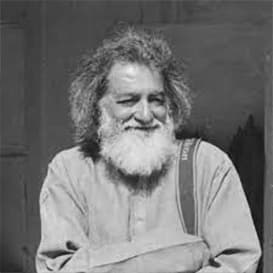
Manjit Bawa
Born in 1941 in Dhuri, Punjab, Manjit Bawa was a prominent figure in modern Indian figurative painting. He studied at the School of Art, Delhi Polytechnic, from 1958 to 1963, where he trained under artists including Somnath Hore, Dhanraj Bhagat, B. C. Sanyal and Abani Sen. He later travelled to England, earning a diploma in silk-screen printing from the London School of Printing in 1967. He worked as a serigrapher and printmaker in England until 1971, an experience that influenced his distinctive use of flat surfaces, bold contours and saturated colour.
After returning to India, Bawa taught at the College of Art, New Delhi, and developed a distinctive figurative language drawing upon Indian mythology, Pahari and Rajput miniature painting, folk traditions and Sufi poetry. Krishna, Shiva, Kali, musicians, animals and birds became recurring subjects. His compositions are characterised by simplified forms, strong linearity and expansive fields of vivid colour, often creating a striking contrast between figure and background. Music was also an important influence on his practice, and the flute became a recurring motif in his paintings.
Bawa exhibited widely in India and internationally, including at the Royal Academy of Arts, London; Hirshhorn Museum, Washington, DC; Grey Art Gallery, New York; and exhibitions in Spain and Geneva. He received the National Award from the Lalit Kala Akademi in 1980, the All India Exhibition of Prints and Drawings award in 1981, and the first Bharat Bhavan Biennale award in 1986. In 1998, he co-founded Sama’a with Ina Puri. In 2005, Bawa suffered a stroke and subsequently remained in a coma for nearly three years. He died in New Delhi in December 2008. His work remains recognised for bringing together Indian mythology, spirituality, music and figurative painting through a highly individual language of colour and form.

KNOW MORE
Buy
Sell
Request an Estimate
FAQs
Seller Terms
Store Terms
SERVICES
Client Advisory
Restoration
DOWNLOAD THE APP


Copyright 2026 AstaGuru. All Rights Reserved


