
Artists Profile
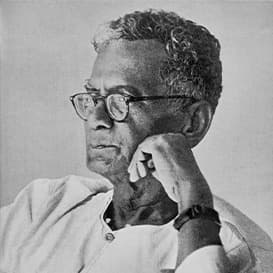
Nandalal Bose
Nandalal Bose (b. 1882) was one of the leading figures of twentieth-century Indian art and a central force in shaping a modern visual language rooted in indigenous traditions. Born in Munger, Bihar, he moved to Calcutta as a teenager, where he trained under Abanindranath Tagore at the Government College of Art and Craft from 1905 to 1910. Closely associated with the Bengal School, Bose absorbed the intellectual influence of figures such as Ananda Coomaraswamy, Sister Nivedita and E. B. Havell, as well as Japanese artists in Calcutta, all of whom encouraged a return to India’s artistic heritage.
In 1919, at the invitation of Rabindranath Tagore, Bose joined Kala Bhavana at Visva-Bharati, Santiniketan, eventually becoming its principal. There, he emphasised the unity of art, craft and nature, fostering individual creativity while shaping a generation of modern Indian artists. His own practice evolved from the revivalist idiom of the Bengal School towards a distinctive language that synthesised Mughal and Rajasthani miniatures, Ajanta murals, and Far Eastern techniques such as the Japanese wash and woodblock printing.
Bose’s oeuvre is marked by remarkable versatility, spanning painting, printmaking and illustration. His celebrated Haripura panels (1938), created for the Indian National Congress, depict scenes of rural life with economy and lyricism, affirming his commitment to everyday subjects. He also contributed to the visual design of the Constitution of India, underscoring his role in nation-building through art.
Honoured with the Padma Vibhushan in 1954, Bose’s works were later designated National Art Treasures. He passed away in Santiniketan in 1966, leaving behind a legacy that bridged tradition and modernity in Indian art.
In 1919, at the invitation of Rabindranath Tagore, Bose joined Kala Bhavana at Visva-Bharati, Santiniketan, eventually becoming its principal. There, he emphasised the unity of art, craft and nature, fostering individual creativity while shaping a generation of modern Indian artists. His own practice evolved from the revivalist idiom of the Bengal School towards a distinctive language that synthesised Mughal and Rajasthani miniatures, Ajanta murals, and Far Eastern techniques such as the Japanese wash and woodblock printing.
Bose’s oeuvre is marked by remarkable versatility, spanning painting, printmaking and illustration. His celebrated Haripura panels (1938), created for the Indian National Congress, depict scenes of rural life with economy and lyricism, affirming his commitment to everyday subjects. He also contributed to the visual design of the Constitution of India, underscoring his role in nation-building through art.
Honoured with the Padma Vibhushan in 1954, Bose’s works were later designated National Art Treasures. He passed away in Santiniketan in 1966, leaving behind a legacy that bridged tradition and modernity in Indian art.

KNOW MORE
Buy
Sell
Request an Estimate
FAQs
Seller Terms
Store Terms
SERVICES
Client Advisory
Restoration
DOWNLOAD THE APP


Copyright 2026 AstaGuru. All Rights Reserved


