
Artists Profile
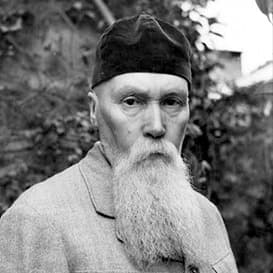
Nicholas Roerich
One of India’s nine National Treasure artists, Russia-born Nicholas Roerich was far more than a painter. An artist, stage and costume designer, explorer, writer, philosopher, and cultural visionary, Roerich led a life shaped by a deep fascination with art, spirituality, and the landscapes of Asia.
He is perhaps best known for his ethereal depictions of the Himalayas—mist-shrouded peaks, luminous skies, and vast, otherworldly landscapes rendered primarily in tempera and oil. His Himalayan paintings remain among the most evocative artistic celebrations of the mountain range, capturing not only its physical grandeur but also its spiritual presence.
Born on 9 October 1874 in St. Petersburg into a prosperous family that frequently welcomed the city’s intellectual and artistic circles, Roerich studied law and drawing simultaneously. His artistic career soon brought him into the orbit of Sergei Diaghilev, the celebrated founder of the Ballets Russes. Roerich designed sets and costumes for the company and travelled across Europe with Diaghilev, encountering some of the leading artists of the modern era, including Pablo Picasso, Henri Matisse, Marc Chagall, and Wassily Kandinsky, who were also involved in designing for its productions.
In 1920, Roerich immigrated to the United States with his wife, Helena. That same year, he founded the Agni Yoga Society in New York, followed in 1921 by an art institute that would eventually evolve into the Nicholas Roerich Museum in 1949. During this period, his artistic interests increasingly turned towards Eastern philosophies and spiritual traditions, which would profoundly influence his work.
His search for deeper connections between art, spirituality, and the East brought him to India in 1923. From here, he undertook extensive journeys through the Himalayas, travelling from Sikkim in the east to Ladakh and Kashmir in the northwest. His expeditions also took him across vast regions of Central and South Asia, where landscapes, cultures, and spiritual traditions became central to both his artistic and intellectual pursuits. He was also instrumental in developing the Roerich Peace Pact, an international initiative dedicated to protecting cultural and artistic heritage during times of conflict.
In 1928, Roerich established the Urusvati Himalayan Research Institute in the Kullu Valley, creating a centre for the study of Himalayan cultures, natural sciences, and traditional knowledge. He spent his final years in Naggar, Himachal Pradesh, where he died on 13 December 1947. His former home in Naggar has since been preserved as a museum, continuing the legacy of an artist whose vision extended far beyond the canvas.
He is perhaps best known for his ethereal depictions of the Himalayas—mist-shrouded peaks, luminous skies, and vast, otherworldly landscapes rendered primarily in tempera and oil. His Himalayan paintings remain among the most evocative artistic celebrations of the mountain range, capturing not only its physical grandeur but also its spiritual presence.
Born on 9 October 1874 in St. Petersburg into a prosperous family that frequently welcomed the city’s intellectual and artistic circles, Roerich studied law and drawing simultaneously. His artistic career soon brought him into the orbit of Sergei Diaghilev, the celebrated founder of the Ballets Russes. Roerich designed sets and costumes for the company and travelled across Europe with Diaghilev, encountering some of the leading artists of the modern era, including Pablo Picasso, Henri Matisse, Marc Chagall, and Wassily Kandinsky, who were also involved in designing for its productions.
In 1920, Roerich immigrated to the United States with his wife, Helena. That same year, he founded the Agni Yoga Society in New York, followed in 1921 by an art institute that would eventually evolve into the Nicholas Roerich Museum in 1949. During this period, his artistic interests increasingly turned towards Eastern philosophies and spiritual traditions, which would profoundly influence his work.
His search for deeper connections between art, spirituality, and the East brought him to India in 1923. From here, he undertook extensive journeys through the Himalayas, travelling from Sikkim in the east to Ladakh and Kashmir in the northwest. His expeditions also took him across vast regions of Central and South Asia, where landscapes, cultures, and spiritual traditions became central to both his artistic and intellectual pursuits. He was also instrumental in developing the Roerich Peace Pact, an international initiative dedicated to protecting cultural and artistic heritage during times of conflict.
In 1928, Roerich established the Urusvati Himalayan Research Institute in the Kullu Valley, creating a centre for the study of Himalayan cultures, natural sciences, and traditional knowledge. He spent his final years in Naggar, Himachal Pradesh, where he died on 13 December 1947. His former home in Naggar has since been preserved as a museum, continuing the legacy of an artist whose vision extended far beyond the canvas.

KNOW MORE
Buy
Sell
Request an Estimate
FAQs
Seller Terms
Store Terms
SERVICES
Client Advisory
Restoration
DOWNLOAD THE APP


Copyright 2026 AstaGuru. All Rights Reserved


