
Artists Profile
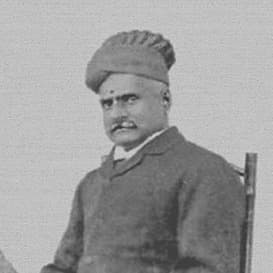
Raja Ravi Varma
Few artists in the history of Indian art have altered its course as profoundly as Raja Ravi Varma. Working at a moment of cultural transition in the late nineteenth century, he forged a visual language that reconciled European academic realism with Indian mythological imagination. In doing so, he not only redefined pictorial conventions but also transformed the very way Indians saw their gods, their histories, and themselves.
Born into the aristocratic Kilimanoor palace in Travancore, Varma’s early exposure to courtly life, ritual culture, and patronage systems gave him access to a world where art was both refined and symbolic. Yet his genius lay in moving beyond inherited traditions. Largely self-taught in oil painting, then still a relatively unfamiliar medium in India, he absorbed the lessons of European realism through observation, adapting its techniques with remarkable fluency. What distinguished Varma, however, was not merely technical mastery, but his ability to synthesise disparate visual worlds into a coherent and compelling idiom. Varma’s art represents a decisive turning point in Indian painting. Prior to his intervention, sacred imagery largely adhered to stylised conventions rooted in regional traditions, be it miniature painting, temple murals, or folk idioms. These images were symbolic and devotional, but often distant in their emotional register.
By introducing naturalism into mythological subjects, Varma fundamentally altered this relationship. His gods and goddesses were no longer abstracted or hieratic; instead, they appeared as tangible, embodied beings inhabiting believable spaces. This transformation had far-reaching consequences, bringing epic narratives and divine figures into closer proximity with the populace.
Raja Ravi Varma’s association with the Baroda court, under the progressive patronage of Maharaja Sayajirao Gaekwad III, marked a decisive phase in his artistic career. This relationship, initiated in the early 1880s, provided both institutional support and an expanded platform for his ambitions as a history painter. In 1881, at the behest of Sir T Madhava Rao, then Regent of Baroda, Varma was invited to execute a formal portrait of the young Maharaja. A dedicated studio was arranged for him within the palace, signalling the importance of the commission and the esteem in which his talent was held. This encounter laid the foundation for an enduring collaboration between the artist and the Gaekwad dynasty.
The relationship reached its most ambitious expression in 1888, when Sayajirao Gaekwad III commissioned Varma to produce a series of monumental paintings drawn from the Mahabharata and the Ramayana. In 1894, the artist established the Ravi Varma Lithographic Press. Through this enterprise, his paintings were translated into oleographs and circulated widely, extending their reach far beyond elite collections. These prints brought mythological imagery into domestic and public spaces across India, reshaping visual culture on an unprecedented scale. Varma thus functioned not only as an artist but as a mediator of culture, bridging the gap between high art and popular consumption. His influence extended even further, informing the visual grammar of early Indian cinema. In this sense, Varma’s legacy is not confined to painting alone; it permeates multiple visual traditions that continue to evolve today.
Born into the aristocratic Kilimanoor palace in Travancore, Varma’s early exposure to courtly life, ritual culture, and patronage systems gave him access to a world where art was both refined and symbolic. Yet his genius lay in moving beyond inherited traditions. Largely self-taught in oil painting, then still a relatively unfamiliar medium in India, he absorbed the lessons of European realism through observation, adapting its techniques with remarkable fluency. What distinguished Varma, however, was not merely technical mastery, but his ability to synthesise disparate visual worlds into a coherent and compelling idiom. Varma’s art represents a decisive turning point in Indian painting. Prior to his intervention, sacred imagery largely adhered to stylised conventions rooted in regional traditions, be it miniature painting, temple murals, or folk idioms. These images were symbolic and devotional, but often distant in their emotional register.
By introducing naturalism into mythological subjects, Varma fundamentally altered this relationship. His gods and goddesses were no longer abstracted or hieratic; instead, they appeared as tangible, embodied beings inhabiting believable spaces. This transformation had far-reaching consequences, bringing epic narratives and divine figures into closer proximity with the populace.
Raja Ravi Varma’s association with the Baroda court, under the progressive patronage of Maharaja Sayajirao Gaekwad III, marked a decisive phase in his artistic career. This relationship, initiated in the early 1880s, provided both institutional support and an expanded platform for his ambitions as a history painter. In 1881, at the behest of Sir T Madhava Rao, then Regent of Baroda, Varma was invited to execute a formal portrait of the young Maharaja. A dedicated studio was arranged for him within the palace, signalling the importance of the commission and the esteem in which his talent was held. This encounter laid the foundation for an enduring collaboration between the artist and the Gaekwad dynasty.
The relationship reached its most ambitious expression in 1888, when Sayajirao Gaekwad III commissioned Varma to produce a series of monumental paintings drawn from the Mahabharata and the Ramayana. In 1894, the artist established the Ravi Varma Lithographic Press. Through this enterprise, his paintings were translated into oleographs and circulated widely, extending their reach far beyond elite collections. These prints brought mythological imagery into domestic and public spaces across India, reshaping visual culture on an unprecedented scale. Varma thus functioned not only as an artist but as a mediator of culture, bridging the gap between high art and popular consumption. His influence extended even further, informing the visual grammar of early Indian cinema. In this sense, Varma’s legacy is not confined to painting alone; it permeates multiple visual traditions that continue to evolve today.

KNOW MORE
Buy
Sell
Request an Estimate
FAQs
Seller Terms
Store Terms
SERVICES
Client Advisory
Restoration
DOWNLOAD THE APP


Copyright 2026 AstaGuru. All Rights Reserved


