
Artists Profile
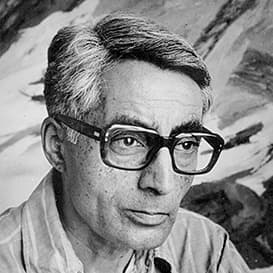
Ram Kumar
Born in 1924 in Simla, Ram Kumar was among the leading figures of modern Indian art. During the early 1930s, while still at school, he initially aspired to become a writer rather than a painter, and it was only around 1945 that he began to pursue art seriously. After studying economics at St Stephen’s College, New Delhi, he worked briefly as a journalist before travelling to Paris in 1949. There, he studied painting under André Lhote and Fernand Léger until 1952. Kumar later emerged as a vital member of the first generation of post-colonial Indian artists and was associated with the influential Progressive Artists’ Group, alongside F N Souza, S H Raza and M F Husain.
In 1960, a young Ram Kumar travelled to the pilgrimage city of Varanasi, an experience widely regarded as a turning point in the artist’s life. Until then, his work had largely been devoted to figuration, often presenting stark and angular depictions of India’s disenfranchised and marginalised communities. Following this visit, however, Kumar began to redirect his creative energies towards increasingly abstract landscapes.
His gradual move away from the human figure during the late 1950s and 1960s marked a significant new phase in his artistic career, ushering in a period of deeply nuanced and contemplative abstraction. Kumar translated cityscapes onto the canvas through irregular, grid-like lines that suggest architectural structures and spatial divisions. The use of thick impasto lends the surface a strong material presence and rhythm, while jagged lines articulate the boundaries between land, built forms and sky.
During his lifetime, Kumar received several honours, including the Padma Shri in 1972 and the Prem Chand Puraskar for a collection of short stories. His works have been featured in numerous exhibitions, including Split Visions: Abstractions in Modern Indian Painting at Aicon Gallery, New York (2016), and retrospectives such as Masterpieces of Indian Modern Art at DAG Modern (2016) and After Midnight: Indian Modernism to Contemporary India, 1947–1997 at the Queens Museum, New York (2015), among others.
Ram Kumar passed away in New Delhi in 2018.
In 1960, a young Ram Kumar travelled to the pilgrimage city of Varanasi, an experience widely regarded as a turning point in the artist’s life. Until then, his work had largely been devoted to figuration, often presenting stark and angular depictions of India’s disenfranchised and marginalised communities. Following this visit, however, Kumar began to redirect his creative energies towards increasingly abstract landscapes.
His gradual move away from the human figure during the late 1950s and 1960s marked a significant new phase in his artistic career, ushering in a period of deeply nuanced and contemplative abstraction. Kumar translated cityscapes onto the canvas through irregular, grid-like lines that suggest architectural structures and spatial divisions. The use of thick impasto lends the surface a strong material presence and rhythm, while jagged lines articulate the boundaries between land, built forms and sky.
During his lifetime, Kumar received several honours, including the Padma Shri in 1972 and the Prem Chand Puraskar for a collection of short stories. His works have been featured in numerous exhibitions, including Split Visions: Abstractions in Modern Indian Painting at Aicon Gallery, New York (2016), and retrospectives such as Masterpieces of Indian Modern Art at DAG Modern (2016) and After Midnight: Indian Modernism to Contemporary India, 1947–1997 at the Queens Museum, New York (2015), among others.
Ram Kumar passed away in New Delhi in 2018.

KNOW MORE
Buy
Sell
Request an Estimate
FAQs
Seller Terms
Store Terms
SERVICES
Client Advisory
Restoration
DOWNLOAD THE APP


Copyright 2026 AstaGuru. All Rights Reserved


