
Artists Profile
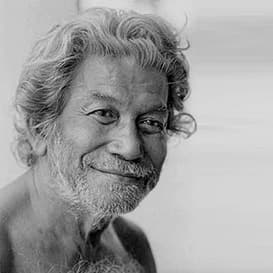
Ramkinkar Baij
Born in 1906 in Bankura, West Bengal, Ramkinkar Baij was one of the most pioneering figures in the history of modern Indian art. He enrolled at Kala Bhavan, Visva-Bharati University, Santiniketan in 1925, where he came under the guidance of Rabindranath Tagore and Nandalal Bose. Early exposure to modelling under visiting European sculptors, including one trained in the lineage of Antoine Bourdelle, introduced him to sculptural practice, yet Baij quickly developed a distinctive language that was independent of academic conventions. Raised in a rural environment, he drew deeply from the rhythms of nature and the visual culture of the Santhal community, influences that remained central to his artistic vision. He later served as the head of the Department of Sculpture at Kala Bhavan.
Working during a period when Indian art was moving away from academic naturalism towards modernist experimentation, Baij emerged as a transformative figure. He was among the earliest Indian artists to explore abstract tendencies in sculpture and to experiment freely across mediums. His works, whether sculptural or painterly, possess an unmistakable vitality characterised by bold movement, organic growth and an earthy dynamism. Through his monumental public sculptures as well as his smaller works, Baij redefined the possibilities of modern Indian sculpture and expanded its expressive vocabulary.
Baij was also a restless experimenter with materials and techniques. He pioneered the use of cement concrete casting as a practical alternative to plaster and employed unconventional methods in his painting practice. Among the first artists at Santiniketan to use oil paint for modern and abstract compositions, he worked on a wide variety of surfaces, including Santhal wraps, often using improvised tools and materials. His innovative approach to both material and process reflected a refusal to be bound by formal doctrines and an enduring commitment to creative exploration.
Although celebrated primarily as a sculptor, Baij was an accomplished painter whose watercolours and oils reveal the same sense of rhythm and vitality seen in his sculptural practice. He passed away in 1980, leaving behind a body of work that profoundly shaped the course of modern Indian art.
Working during a period when Indian art was moving away from academic naturalism towards modernist experimentation, Baij emerged as a transformative figure. He was among the earliest Indian artists to explore abstract tendencies in sculpture and to experiment freely across mediums. His works, whether sculptural or painterly, possess an unmistakable vitality characterised by bold movement, organic growth and an earthy dynamism. Through his monumental public sculptures as well as his smaller works, Baij redefined the possibilities of modern Indian sculpture and expanded its expressive vocabulary.
Baij was also a restless experimenter with materials and techniques. He pioneered the use of cement concrete casting as a practical alternative to plaster and employed unconventional methods in his painting practice. Among the first artists at Santiniketan to use oil paint for modern and abstract compositions, he worked on a wide variety of surfaces, including Santhal wraps, often using improvised tools and materials. His innovative approach to both material and process reflected a refusal to be bound by formal doctrines and an enduring commitment to creative exploration.
Although celebrated primarily as a sculptor, Baij was an accomplished painter whose watercolours and oils reveal the same sense of rhythm and vitality seen in his sculptural practice. He passed away in 1980, leaving behind a body of work that profoundly shaped the course of modern Indian art.

KNOW MORE
Buy
Sell
Request an Estimate
FAQs
Seller Terms
Store Terms
SERVICES
Client Advisory
Restoration
DOWNLOAD THE APP


Copyright 2026 AstaGuru. All Rights Reserved


