
Artists Profile
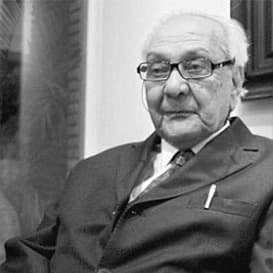
S H Raza
Born in Babaria, Madhya Pradesh, on 22 February 1922, Raza moved to Bombay to pursue his artistic training, enrolling at the Sir J J School of Art in 1943 and completed his studies there in 1947. During this period, he supported himself through commercial design work while developing a body of early watercolours inspired by the urban vitality of the city. Alongside F. N. Souza and M. F. Husain, S H Raza co-founded the Progressive Artists' Group, a collective that played a decisive role in shaping the trajectory of Indian modernism in the years following Independence.
A pivotal moment came in 1948, when a visit to Kashmir intensified his engagement with landscape painting, earning him recognition through a gold medal from the Bombay Art Society. It was also in Kashmir that he encountered the French photographer Henri Cartier-Bresson, whose remarks on structure and composition prompted Raza to study the work of Paul Cézanne. Encouraged by this exposure to European artistic ideas, Raza moved to Paris in 1950 on a French government scholarship. There, he immersed himself in the artistic milieu of post-war Europe, absorbing the structural discipline of Cézanne's work. S H Raza's Paintings from the 1950s reflect this engagement, marked by a Cubist sensibility and a concern for order, balance and pictorial construction.
By the 1960s, Sayed Haider Raza began to move away from structured compositions towards a more intuitive and expressive abstraction. Exposure to international movements, including the work of Mark Rothko, encouraged a shift towards gestural painting, where colour assumed an emotional and symbolic role. His canvases from this period are characterised by vibrant chromatic fields and a dissolution of conventional distinctions between form and space.
In the following decade, S H Raza's practice underwent another significant transformation as he turned inward, drawing upon Indian philosophical thought and his own memories of the landscape. This culminated in the emergence of the bindu, a central motif that came to define his mature style. Raza died on 23 July 2016, having returned to India in his final years after living and working in France for most of his career.
A pivotal moment came in 1948, when a visit to Kashmir intensified his engagement with landscape painting, earning him recognition through a gold medal from the Bombay Art Society. It was also in Kashmir that he encountered the French photographer Henri Cartier-Bresson, whose remarks on structure and composition prompted Raza to study the work of Paul Cézanne. Encouraged by this exposure to European artistic ideas, Raza moved to Paris in 1950 on a French government scholarship. There, he immersed himself in the artistic milieu of post-war Europe, absorbing the structural discipline of Cézanne's work. S H Raza's Paintings from the 1950s reflect this engagement, marked by a Cubist sensibility and a concern for order, balance and pictorial construction.
By the 1960s, Sayed Haider Raza began to move away from structured compositions towards a more intuitive and expressive abstraction. Exposure to international movements, including the work of Mark Rothko, encouraged a shift towards gestural painting, where colour assumed an emotional and symbolic role. His canvases from this period are characterised by vibrant chromatic fields and a dissolution of conventional distinctions between form and space.
In the following decade, S H Raza's practice underwent another significant transformation as he turned inward, drawing upon Indian philosophical thought and his own memories of the landscape. This culminated in the emergence of the bindu, a central motif that came to define his mature style. Raza died on 23 July 2016, having returned to India in his final years after living and working in France for most of his career.

KNOW MORE
Buy
Sell
Request an Estimate
FAQs
Seller Terms
Store Terms
SERVICES
Client Advisory
Restoration
DOWNLOAD THE APP


Copyright 2026 AstaGuru. All Rights Reserved


