
Artists Profile
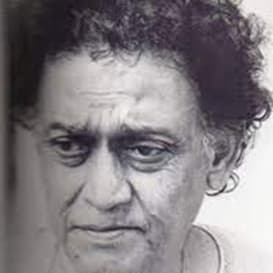
Sunil Das
Sunil Kumar Das (b. 1952, Kolkata) was a distinguished Indian sculptor whose practice bridged modernist abstraction with deeply rooted figurative traditions. Trained at the Indian College of Art and Draftsmanship, Kolkata, Das developed a sculptural language that combined technical rigour with an intuitive sensitivity to form. Emerging from the culturally rich milieu of Kolkata, his early exposure to classical Indian art and modernist movements informed a practice that sought to reconcile tradition with contemporary visual expression.
Das’s work is best understood through his sustained engagement with the human and animal form, which he distilled into simplified yet resonant sculptural expressions. Influenced by cubist principles, his sculptures often break down volume into geometric planes while retaining an identifiable essence. This approach, coupled with what may be described as an abstract realism, allowed him to move beyond literal representation toward capturing emotional and symbolic depth. His mastery lay in his ability to suggest posture, poise, and movement with remarkable economy, creating works that are both minimal and evocative.
A defining feature of Das’s sculptural practice is his sophisticated handling of positive and negative space. Rather than treating voids as incidental, he integrated them as active elements within his compositions, lending his works a sense of rhythm, balance, and dynamism. Working primarily in bronze and stone, he explored a range of textures, from smooth, polished finishes to more tactile, rough-hewn surfaces, allowing the material itself to shape the expressive quality of the form. Recurring themes in his oeuvre include animal forms such as bulls, horses, and mythological vahanas, which embody strength, grace, and spiritual symbolism, as well as human figures that evoke introspection and quiet emotional states.
Das exhibited widely in India, participating in shows at institutions such as the Academy of Fine Arts, Kolkata, and the Lalit Kala Akademi, New Delhi, alongside numerous gallery exhibitions. His work earned critical acclaim for its formal sophistication and emotional depth. Today, Sunil Kumar Das is remembered for his ability to achieve profound expressiveness through restraint, leaving behind a legacy that continues to influence contemporary sculptural practice in India. The artist breathed his last in 2021
Das’s work is best understood through his sustained engagement with the human and animal form, which he distilled into simplified yet resonant sculptural expressions. Influenced by cubist principles, his sculptures often break down volume into geometric planes while retaining an identifiable essence. This approach, coupled with what may be described as an abstract realism, allowed him to move beyond literal representation toward capturing emotional and symbolic depth. His mastery lay in his ability to suggest posture, poise, and movement with remarkable economy, creating works that are both minimal and evocative.
A defining feature of Das’s sculptural practice is his sophisticated handling of positive and negative space. Rather than treating voids as incidental, he integrated them as active elements within his compositions, lending his works a sense of rhythm, balance, and dynamism. Working primarily in bronze and stone, he explored a range of textures, from smooth, polished finishes to more tactile, rough-hewn surfaces, allowing the material itself to shape the expressive quality of the form. Recurring themes in his oeuvre include animal forms such as bulls, horses, and mythological vahanas, which embody strength, grace, and spiritual symbolism, as well as human figures that evoke introspection and quiet emotional states.
Das exhibited widely in India, participating in shows at institutions such as the Academy of Fine Arts, Kolkata, and the Lalit Kala Akademi, New Delhi, alongside numerous gallery exhibitions. His work earned critical acclaim for its formal sophistication and emotional depth. Today, Sunil Kumar Das is remembered for his ability to achieve profound expressiveness through restraint, leaving behind a legacy that continues to influence contemporary sculptural practice in India. The artist breathed his last in 2021

KNOW MORE
Buy
Sell
Request an Estimate
FAQs
Seller Terms
Store Terms
SERVICES
Client Advisory
Restoration
DOWNLOAD THE APP


Copyright 2026 AstaGuru. All Rights Reserved


