12 most famous butterfly paintings from the last quincentenary
.jpg&w=3840&q=75)
Butterflies are enchanting and transformative creatures, admired worldwide for their delicate wings and profound metamorphosis from caterpillar to beauty. They symbolize the soul, resurrection, and fleeting joy in cultures across history. Artists have long captured their ephemeral grace in paintings, from scientific illustrations to symbolic vanitas. This fascination spans centuries, evident in masterpieces where butterflies represent life's cycles and spiritual renewal. In Renaissance and Baroque still lifes, they perched on flowers as emblems of transience; modern works like Damien Hirst's installations explore their life-and-death drama.
Today, butterfly lovers adorn homes with prints, sculptures, and custom art to evoke wonder. Yet, the ultimate tribute remains commissioning or creating a butterfly painting yourself. Icons like Maria Sibylla Merian's engravings and Vincent van Gogh's vibrant series became art history milestones.
From Dutch Golden Age floral vanitas to contemporary conceptual pieces, butterflies embody hope, change and beauty. In the list below of the 12 most famous butterfly paintings from the last 500 years (1526–2026), we'll explore these luminous works that shaped visual culture.
1. Still Life with Flowers – Jan Brueghel the Elder (c. 1606)
• Artist and Background - Jan Brueghel the Elder was a Flemish Baroque painter renowned for his detailed still lifes and natural subjects. He worked during a time when botanical accuracy and symbolism were highly valued in art.
• Painting Description - This richly detailed floral still life includes butterflies delicately resting among blossoms. Each insect is painted with scientific precision, emphasizing texture and color.
• Historical Importance - The painting reflects the early modern fascination with nature and scientific discovery, blending art with natural history and symbolic meaning.
2. Madonna with Child and Butterflies – Albrecht Dürer (c. 1506)
• Artist and Background - Albrecht Dürer was a German Renaissance master celebrated for his engravings and meticulous observation of nature.
• Painting Description - The butterfly appears subtly near the Christ Child, rendered with realism and restraint.
• Historical Importance - Butterflies in Renaissance religious art symbolized resurrection and the soul, reinforcing Christian themes through natural imagery.
3. Still Life with Insects – Rachel Ruysch (c. 1700)
• Artist and Background - Rachel Ruysch was a Dutch Golden Age painter and one of the most successful female artists of her era, specializing in floral still lifes.
• Painting Description - Butterflies flutter among flowers alongside beetles and other insects, painted with astonishing realism.
• Historical Importance - Ruysch elevated still life painting, and her inclusion of butterflies emphasized themes of life, decay, and renewal.
4. Butterfly and Poppy – Vincent van Gogh (1889)
• Artist and Background - Vincent van Gogh was a Post-Impressionist painter whose emotionally charged works transformed modern art.
• Painting Description - A bright butterfly contrasts against bold, expressive brushstrokes and vivid colors.
• Historical Importance - Van Gogh often used butterflies as symbols of hope and transformation, mirroring his own emotional struggles and artistic evolution.
5. The Butterfly – Odilon Redon (c. 1910)
• Artist and Background - Odilon Redon was a Symbolist artist known for dreamlike and mystical imagery.
• Painting Description - The butterfly appears ethereal and otherworldly, floating in a surreal environment.
• Historical Importance - Redon’s butterflies represent the inner life and imagination, marking a shift away from realism toward symbolic expression.
6. Still Life with Butterflies – Maria Sibylla Merian (1705)
• Artist and Background - Merian was a naturalist and painter whose work bridged art and scientific illustration.
• Painting Description - Butterflies are shown at various life stages, interacting with plants in a natural setting.
• Historical Importance - Her work revolutionized the scientific understanding of metamorphosis and influenced both art and biology.
7. Butterfly Dream – Salvador Dalí (1947)
• Artist and Background - Salvador Dalí was a leading figure of Surrealism, known for exploring dreams and the subconscious.
• Painting Description - A butterfly emerges in a surreal, dreamlike landscape filled with symbolic imagery.
• Historical Importance - Dalí used butterflies to symbolize transformation and psychological rebirth in post-war surrealist art.
8. Still Life with Butterflies and Fruit – Juan Sánchez Cotán (c. 1602)
• Artist and Background - Cotan was a Spanish Baroque painter famous for austere still lifes.
• Painting Description - Butterflies appear alongside fruits suspended in dramatic lighting.
• Historical Importance - The contrast between fragile life and decay reflects early Baroque themes of mortality and transience.
9. Butterfly and Iris – Katsushika Hokusai (c. 1830)
• Artist and Background - Hokusai was a Japanese ukiyo-e master whose work influenced Western art.
• Painting Description - A butterfly flutters near an iris flower in a minimalist, elegant composition.
• Historical Importance - Though not Western oil painting, Hokusai’s work influenced Impressionists and broadened global artistic perspectives.
10. Girl with Butterflies – Frida Kahlo (1939)
• Artist and Background - Frida Kahlo was a Mexican painter known for deeply personal and symbolic works.
• Painting Description - Butterflies appear around the figure, symbolizing transformation and endurance.
• Historical Importance - Butterflies in Kahlo’s work often reflect rebirth, pain, and identity, central themes in modern autobiographical art.
11. Butterfly Explosion – Yayoi Kusama (2010)
• Artist and Background - Yayoi Kusama is a contemporary Japanese artist celebrated for immersive and repetitive motifs.
• Painting Description - Butterflies appear in vibrant, repeating patterns that create visual intensity.
• Historical Importance - The work represents infinity, self-obliteration, and psychological experience in contemporary art.
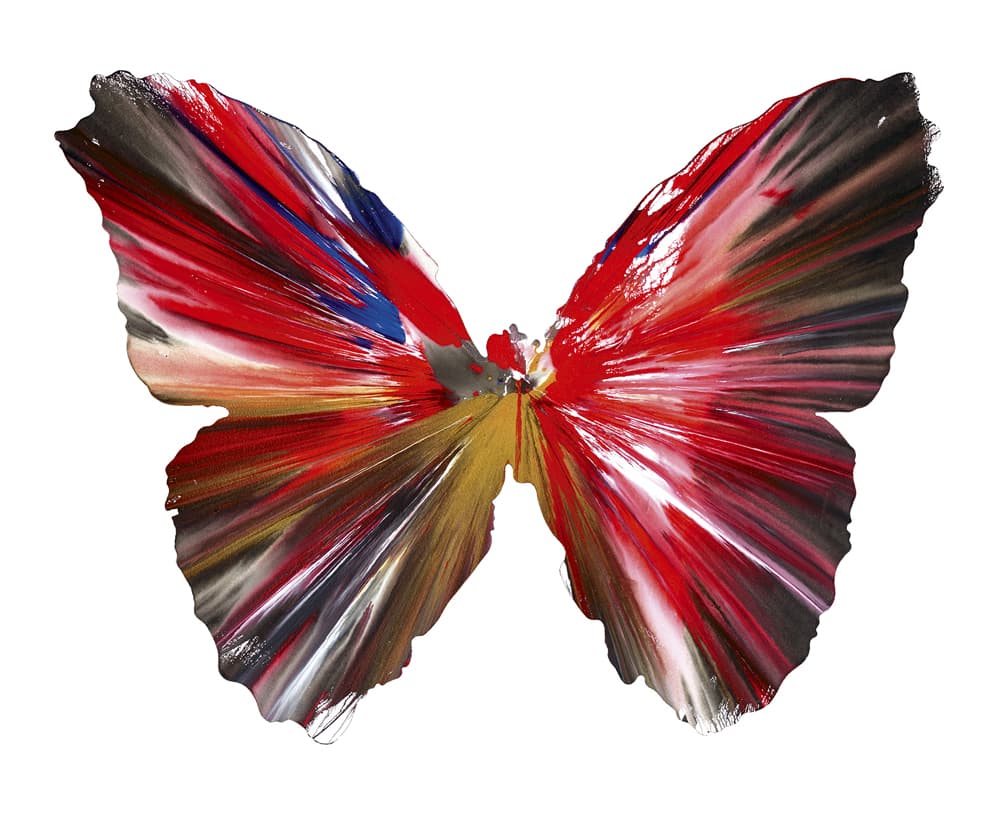 12. Butterfly – Damien Hirst (2008)
• Artist and Background - Damien Hirst is a contemporary British artist associated with the Young British Artists movement.
• Painting Description - Real butterfly wings are arranged into kaleidoscopic patterns.
• Historical Importance - The work explores beauty, death, and ethical boundaries in modern art.
Conclusion
From Renaissance symbolism to modern conceptual installations, butterfly paintings over the last 500 years reveal humanity’s enduring fascination with transformation, beauty, and the fleeting nature of life. Whether rendered with scientific accuracy or symbolic abstraction, these works continue to captivate viewers and secure butterflies a lasting place in the visual history of art.