20 famous paintings by henri matisse [french visual artist]
![20 famous paintings by henri matisse [french visual artist]](/_next/image?url=https%3A%2F%2Fcms-assets.astaguru.com%2Fupload%2F07082025_062022_Screenshot_2025-07-08_181449_(1).jpg&w=3840&q=75)
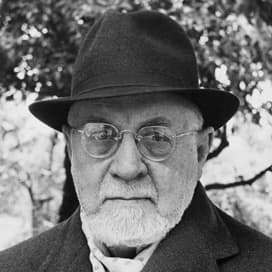
Henri Matisse (1869–1954), a pioneering figure in Fauvism, was a French artist renowned for his masterful use of bold color and fluid draftsmanship. His work is distinguished by vibrant palettes, dynamic patterns, and an enduring sense of joy and spontaneity. As a central leader of the Fauvist movement, Matisse prioritized the expressive potential of color and form over strict realism, seeking to evoke emotion through visual harmony. His paintings are widely regarded as foundational to modern art, celebrated for their innovation, beauty and emotional depth.
In the following article, we explore 20 Henri Matisse’s most iconic and celebrated paintings, examining their artistic significance and where they can be viewed today.
1. The Dance (1910)
A dynamic composition of five nude figures holding hands in a circle. It reflects Matisse's love for rhythm and movement and is a landmark of Fauvism.
• Location: Hermitage Museum, St. Petersburg, Russia
• Why It’s Famous: A Fauvist masterpiece symbolizing primal energy and harmony through movement and color. It marked a pivotal moment in modern art.
2. Woman with a Hat (1905)
A portrait of Matisse’s wife, Amélie, featuring expressive brushwork and non-naturalistic colors. It caused a stir at the 1905 Salon d'Automne.
• Location: San Francisco Museum of Modern Art (SFMOMA), USA
• Why It’s Famous: Debuted at the 1905 Salon d'Automne, this portrait caused an uproar and helped define the Fauvist movement with its bold, unnatural colors.
3. The Red Room (Harmony in Red) (1908)
A domestic interior dominated by a vivid red palette. The flat perspective and decorative patterning emphasize abstraction.
• Location: Hermitage Museum, St. Petersburg, Russia
• Why It’s Famous: Celebrated for its flat perspective and dominance of red, it epitomizes Matisse’s decorative style and rejection of traditional depth.
4. The Snail (1953)
A late cut-out work created from painted paper, arranged in a spiral to resemble a snail. It represents Matisse’s shift toward collage in his later years.
• Location: Tate Modern, London, UK
• Why It’s Famous: A key example of Matisse’s late “cut-out” phase, it uses abstract shapes and colors to form a spiral resembling a snail.
5. Blue Nude (1907)
This controversial nude challenges traditional representations of the body, with bold contours and simplified forms.
• Location: Baltimore Museum of Art, USA
• Why It’s Famous: This stylized nude shocked traditional audiences and influenced early 20th-century modernists, including Picasso.
6. The Green Stripe (Portrait of Madame Matisse) (1905)
A radical portrait featuring a green line down the subject’s face, highlighting Matisse’s experimental color approach.
• Location: Statens Museum for Kunst, Copenhagen, Denmark
• Why It’s Famous: Known for the green line dividing the face, it represents Matisse’s break with realism and commitment to expressive color.
7. The Open Window (1905)
A colorful depiction of a balcony scene in Collioure. It’s an early example of his Fauvist style.
• Location: National Gallery of Art, Washington, D.C., USA
• Why It’s Famous: A seminal work in Fauvism, this painting radiates with vibrant color and introduces his theme of windows as metaphors for freedom.
8. Dance II (1932–33)
A mural for the Barnes Foundation. This large-scale work reprises the theme of dancing figures with even more abstraction.
• Location: Barnes Foundation, Philadelphia, USA
• Why It’s Famous: A large mural commissioned by Albert Barnes, it revisits his theme of dancing figures in a more abstract, monumental form.
9. The Dessert: Harmony in Red (1908)
Also known as "Red Room", it emphasizes decorative design over traditional perspective and depth.
• Location: Hermitage Museum, St. Petersburg, Russia
• Why It’s Famous: Often confused with The Red Room, this version emphasizes color harmony over traditional spatial logic.
10. The Yellow Curtain (1915)
A still-life featuring bold color blocks and a sense of spatial ambiguity, reflecting Cubist influence.
• Location: Museum of Modern Art (MoMA), New York, USA
• Why It’s Famous: Demonstrates Matisse’s interest in abstraction and his dialogue with Cubism through simplified forms and bold contrasts.
11. Goldfish (1912)
A contemplative still life that highlights the serenity and symbolism of goldfish, a recurring theme in Matisse’s work.
• Location: Pushkin Museum of Fine Arts, Moscow, Russia
• Why It’s Famous: A meditative still life showcasing Matisse’s fascination with exotic serenity and the symbolism of goldfish.
12. Interior with a Young Girl (1905–1906)
Combines interior and portraiture, focusing on decorative elements and emotional tone.
• Location: Musée de l'Orangerie, Paris, France
• Why It’s Famous: Combines portraiture and interior design, marking an early move toward Matisse’s decorative style.
13. Music (1910)
Created as a pair to The Dance, it explores human expression through simplified, lyrical forms.
• Location: Hermitage Museum, St. Petersburg, Russia
• Why It’s Famous: A companion piece to The Dance, this work emphasizes rhythm and abstraction over detail, reflecting musical harmony.
14. La Blouse Roumaine (1940)
A portrait celebrating Romanian folk costumes, known for its intricate detail and vibrant color palette.
• Location: Centre Pompidou, Paris, France
• Why It’s Famous: A tribute to Romanian folk costumes and identity, showcasing Matisse’s interest in cultural expression and textile-like patterns.
15. Zorah on the Terrace (1912–1913)
Depicts a Moroccan woman in traditional dress, part of Matisse’s exploration of Orientalism.
• Location: Pushkin Museum of Fine Arts, Moscow, Russia
• Why It’s Famous: Reflects Matisse’s Moroccan period and his fascination with North African light, clothing, and patterns.
16. Odalisque with Grey Trousers (1926–27)
Part of his "odalisque" series, this painting blends exoticism with a deep interest in pattern and form.
• Location: Private Collection (various exhibitions)
• Why It’s Famous: Part of the odalisque series, it exemplifies Matisse’s interest in Orientalist themes, sensual forms, and decorative interiors.
17. Still Life with Geraniums (1910)
An example of his transition to more structured compositions, this work uses color to suggest depth.
• Location: Pinakothek der Moderne, Munich, Germany
• Why It’s Famous: An early example of Matisse’s shift to more structured still life, balancing color with spatial experimentation.
18. Interior with Eggplants (1911)
A vivid, patterned room filled with bold colors and complex spatial arrangement, typical of his decorative interiors.
• Location: Museum of Modern Art (MoMA), New York, USA
• Why It’s Famous: A vibrant interior that dissolves traditional depth through color and pattern, typical of his decorative phase.
19. The Moroccans (1915–16)
A complex, abstracted composition based on Matisse’s trips to North Africa. It merges cultural observation with modernist form.
• Location: Museum of Modern Art (MoMA), New York, USA
• Why It’s Famous: A modernist collage of Moroccan life and landscape; abstract and political, it shows Matisse’s move toward symbolic structure.
20. Blue Nude II (1952)
Part of his famous “Blue Nudes” series created with cut paper. It shows a reclining figure in abstract, flowing form.
• Location: Musée Matisse, Nice, France
• Why It’s Famous: One of the most iconic pieces from his “Blue Nudes” cut-out series, known for its sculptural simplicity and bold design.
Lesser-Known Facts
 • Matisse initially studied law before discovering his passion for painting.
• He was friends with Pablo Picasso and other prominent artists of his time.
• Matisse's cut-out technique, developed in his later years, has inspired graphic designers and illustrators.
• His work often features his family members, including his wife Amélie and daughter Marguerite.
Conclusion:
Henry Matisse’s paintings revolutionized how we think about color, space, and the emotional power of art. His journey from early realism through Fauvism to paper cut-outs shows a restless creativity and a deep belief in the joy of visual expression. Whether through vibrant nudes, serene interiors, or abstract collages, Henri Matisse created a body of work that continues to inspire artists and captivate viewers worldwide.