5 important warli artists who are promoting the tribal art form
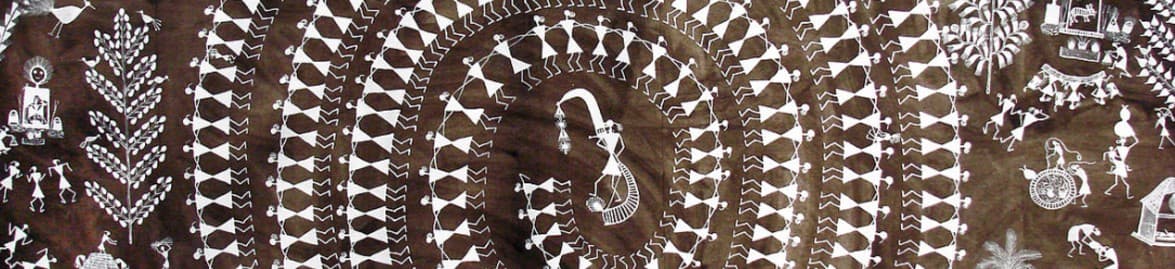
Warli art, with its spare white lines, stick-figures and ritual grids is one of India’s most instantly recognizable tribal art languages. For decades a community ritual practiced on interior mud walls, it has been carried into galleries, public murals, workshops and products by a handful of dedicated artists and collectives. Below are some of the most important Warli artists and groups today who are actively preserving, adapting and promoting the form and how they’re doing it.
1. Jivya Soma Mashe
Jivya Soma Mashe (1934–2018) is widely credited with transforming Warli from a ritual, village-bound practice into an art form presented on paper and canvas and shown in national and international galleries. Starting in the 1970s he deliberately painted outside ritual contexts, developed large, intricate compositions and brought Warli imagery to new audiences becoming known as the modern father of Warli art. His career opened doors for many younger Warli practitioners.
2. Balu Mashe
Balu Jivya Mashe (and other members of Jivya’s family) continued and evolved the practice started by his father. He paints in the Warli idiom while exploring new motifs and materials, helping the tradition remain visible in galleries and auctions and demonstrating how family lineages transmit and adapt Warli across generations.
3. Ramesh Laxman Hengadi
Ramesh Hengadi is a contemporary Warli artist who works from Dahanu/Palghar and has exhibited and taught widely including artist residencies and international shows. He and other practicing artists like him translate village visual vocabularies into murals, commissioned works and curated gallery projects, helping Warli reach urban public spaces and overseas collectors.
4. Subhash Nathu Sutar
Younger Warli artists such as Subhash Nathu Sutar who learned the craft within family lineages are active in workshops, school programmes and government cultural outreach. Cultural centres and ministries have invited such artists to teach and run workshops so Warli skills are transmitted beyond the tribe and reach city audiences and students.
5. Ganesh Mahadev Vangad
Many local artists from Dahanu, Talasari and surrounding villages (for example Ganesh Vangad) keep Warli as a living village practice while also accepting commissions, making works for fairs and selling directly through co-ops and crafts platforms. These grassroots practitioners are vital: they keep techniques, motifs and the ritual knowledge alive while earning livelihoods from the art.
How These Artists Promote Warli Art
• Exhibitions & residencies: Showing work in city galleries and museums (national and international) raises visibility and value.
• Workshops & public teaching: Artists teach in schools, cultural centres and summer workshops so the technique spreads beyond the tribe.
• Murals & public art: Large outdoor Warli murals place the form in urban public life and demonstrate how it scales beyond mud walls.
• Art-market channels: Selling through galleries, online platforms and crafts fairs provides income and recognition (while raising questions about appropriation and fair payment, which many activists and collectives are addressing).
• Cultural protection & GI: Securing legal recognition and collective trademarks helps prevent misuse and supports livelihoods.
Collectives & NGOs - Protecting The Art & The Artists
Organizations such as Adivasi Yuva Seva Sangh (AYUSH) have played a major role in protecting Warli as cultural IP (for instance pursuing the Geographical Indication recognition) and in organising training, markets and fairs. These groups help artists access institutional support, legal recognition and fair marketplaces essential for sustainable promotion.
Why Warli Art Matters
Warli is not only a visual style, it contains ritual meanings, community stories and a specific material practice (mud walls, rice-paste pigment, reed brushes). When artists and organizations promote Warli carefully by crediting artists, protecting cultural rights and ensuring artists are paid. They preserve both form and the people who own it. Leaders like Jivya Soma Mashe showed how the art can evolve without losing identity; today’s artists and collectives carry forward that balance.
Image Credit:
“Warli painting by Jivya Soma Mashe”, Unknown, via Wikimedia Commons
– Public Domain.