amrita sher-gil portrait of mother (1930)

Amrita Sher-Gil is widely considered one of India’s most significant modern artists, celebrated for her fusion of European training and Indian sensibility. Her early years, particularly her period studying in Paris, laid the foundation for a career of remarkable intensity despite its brevity. One of her lesser-discussed works is Portrait Of Mother (1930). This work stands at the intersection of personal portraiture and the international development of her style. Below is an overview of the artist, the painting’s context and its significance.
Artist Background & Context
Amrita Sher Gil was born in Budapest to a Sikh aristocrat father (Umrao Singh Sher-Gil) and a Hungarian opera-singer mother (Marie Antoinette Gottesmann). Her bi-cultural upbringing fostered exposure to both European and Indian worlds. In 1929 she moved to Paris and studied at the École des Beaux-Arts and the Académie de la Grande Chaumière. There she absorbed academic techniques, post-Impressionist colour, the figure studies of Gauguin and Cézanne, and began producing portraits, still-lifes and figure paintings. By around 1930 she was creating portraits of acquaintances and family, experimenting with oil paint and building surface texture in a manner that would inform her later Indian work.
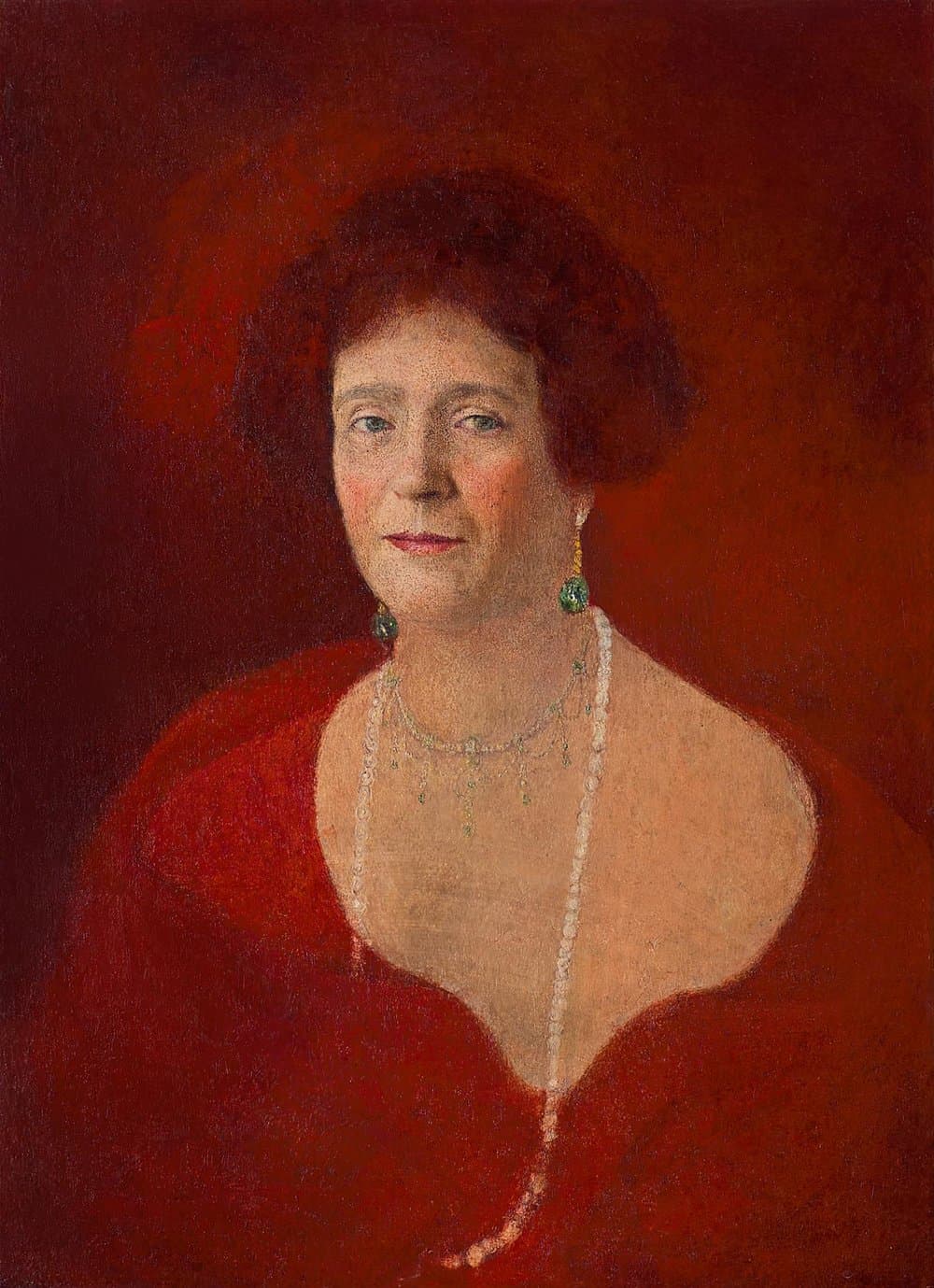 Portrait Of Mother (1930) Details
• Title: Portrait Of Mother
• Year: 1930
• Medium: Oil on canvas (inferred from her early Paris period oil practice)
• Place: Executed during her Paris student years
Visual & Technical Characteristics
• Created during her Paris period: at this time Sher-Gil was focused on portraiture and figure work, employing oil paint, thickened surfaces, and combining European formalism with personal touch.
• The subject, her mother suggests a personal and intimate dimension, contrasting with her later Indian rural themes.
• The date (1930) places the work at the threshold of her major development: she was around 17 years old, still in Paris, building her technical mastery and finding her voice.
• Because Amrita Sher-Gil at that time engaged academically with portraiture, the painting likely shows strong draftsmanship, careful handling of light/colour, and an emerging modernist sensibility.
Personal Dimension
Portrait Of Mother brings together Amrita Sher-Gil’s familial identity and her artistic ambition. To portray one’s mother at this formative stage underscores a personal commitment to art as not just scene-making, but self-defining. Her European training and Indian roots meet in this portrait’s theme.
Artistic Practice
• The work reflects the early phase of Amrita Sher-Gil’s modernist formation when she mastered oil painting and surface texture, which later became hallmarks of her Indian-period works.
• Portraiture in this period served as technical ground: she produced many portraits, figure studies and self-portraits between 1930-32.
• In terms of broader modern Indian art, this work contributes to how Sher-Gil brought the modern portrait into India’s art narrative not as colonial academic mimicry, but as a personal language of painting.
Historical & Contextual Value
• The year 1930 positions the work before her return to India (1934) where she shifted to depicting Indian themes, women’s lives and rural subjects. Thus, Portrait Of Mother marks a transitional moment.
• In Amrita Sher-Gil’s oeuvre, works from her Paris period are fewer in public awareness compared to her Indian period works; thus the painting adds depth to our understanding of her evolution.
Conclusion
Portrait Of Mother (1930) is a significant work in the early career of Amrita Sher-Gil, an intimate portrait that encapsulates her European training, personal background, and emergent modernist voice. Though not as publicly celebrated as her later Indian-period paintings, it offers a critical lens into how Amrita Sher Gil was honing her technique and identity. As part of her artistic trajectory, this painting helps map the journey from Parisian portraiture to the intensely Indian and profoundly expressive modern works that followed.