

Blogs
.jpg&w=3840&q=75)
A Brief History Of The First Origins Of Persian Isfahan Carpet
Yungming Wong | 5 Feb, 2026
Few decorative arts embody refinement and cultural heritage as completely as the Persian Isfahan carpet. Known for exceptional craftsmanship, intricate floral designs, and remarkable silk and wool quality, these carpets are among the most admired handwoven textiles in the world. Originating from the historic city of Isfahan in central Iran, Isfahan carpets represent centuries of artistic excellence and Persian tradition.
History
The golden age of Isfahan carpet weaving dates back to the 16th and 17th centuries during the reign of Shah Abbas I of the Safavid dynasty. When Shah Abbas made Isfahan his capital, he transformed it into a flourishing center of art, architecture, and craftsmanship. Carpet weaving became one of the most prestigious court sponsored arts.
Royal workshops were established, attracting master designers and weavers from across Persia. Carpets produced during this era were created for palaces, mosques, and diplomatic gifts. Many Safavid era carpets are now preserved in major museums and private collections worldwide.
Although production declined after the fall of the Safavid dynasty, Isfahan weaving was revived in the early 20th century, restoring the city's reputation for producing some of the finest Persian rugs.
Design Characteristics
Isfahan carpets are admired for their balanced compositions and refined detail. Some defining features include:
1. Central Medallion Design - Many Isfahan carpets feature a prominent central medallion surrounded by symmetrical floral patterns. The layout is harmonious and carefully proportioned.
2. Floral and Arabesque Motifs - Designs often include intricate vines, scrolling leaves, palmettes, and stylized flowers. These patterns are influenced by Persian miniature painting and Islamic art.
3. Fine Knot Density - Isfahan rugs are known for their high knot density, sometimes exceeding 500 knots per square inch. This allows for extremely detailed patterns and smooth curves in the design.
4. Silk Highlights - While traditionally woven with high quality wool, many Isfahan carpets incorporate silk for added luster and fine detailing. Some luxury pieces are made entirely of silk.
Materials and Craftsmanship
The foundation of a Persian Isfahan carpet is typically made from cotton, providing durability and structural stability. The pile is usually crafted from kork wool, which is taken from the soft undercoat of sheep and prized for its fineness.
In premium examples, silk is used either for highlights or for the entire carpet. Natural dyes derived from plants, roots, and insects traditionally give the rugs their rich colors, including deep reds, ivory, navy, turquoise, and soft beige tones.
Each carpet is hand knotted, a process that can take months or even years depending on size and complexity. The level of precision reflects generations of inherited knowledge and artistic discipline.
Cultural Significance
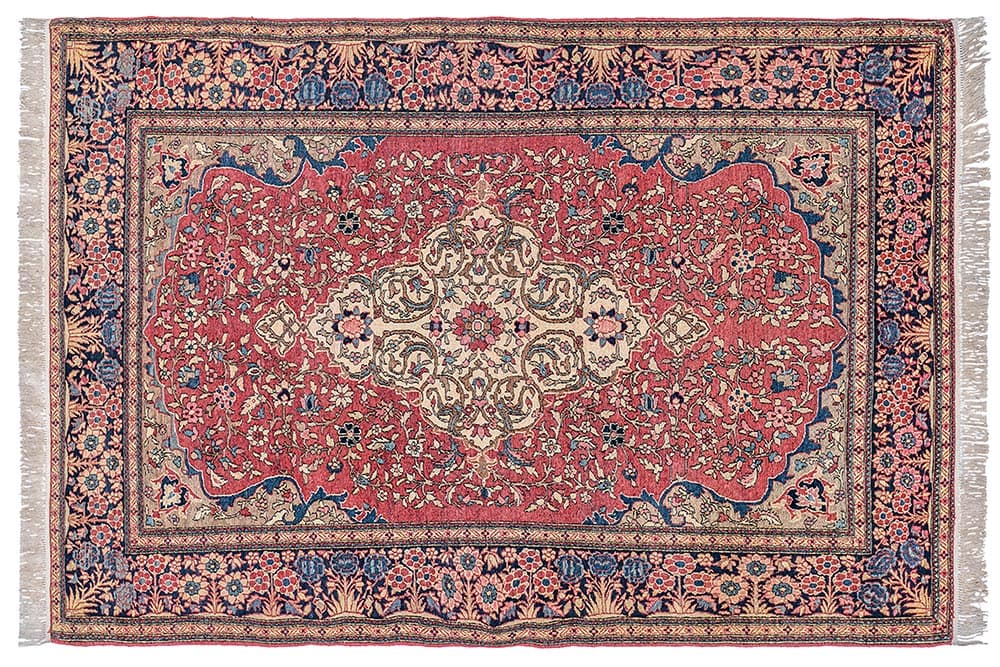 Persian Isfahan carpets are more than decorative objects. They symbolize Persian identity, artistry, and continuity. The motifs often reflect themes of paradise gardens, harmony, and spiritual beauty, concepts deeply rooted in Persian culture.
Owning an Isfahan carpet has long been considered a mark of sophistication and appreciation for fine art. Today, collectors and interior designers continue to prize these carpets for both their beauty and investment value.
Modern Production
Contemporary Isfahan carpets remain highly regarded, though true masterworks are less common than during the Safavid golden age. Skilled workshops in Isfahan continue to produce carpets that honor traditional patterns while occasionally incorporating modern color palettes and design adaptations. Authentic pieces are typically signed by the master weaver, adding to their collectability and provenance.
Conclusion
The Persian Isfahan carpet stands as one of the most refined achievements in textile art. Rooted in the cultural renaissance of Safavid Iran and sustained by centuries of craftsmanship, these carpets combine technical mastery with aesthetic elegance. Whether displayed as a floor covering or wall tapestry, an Isfahan carpet is not merely a furnishing, but a timeless work of art woven with history, tradition, and extraordinary skill.
The Timeless Beauty Of Exceptional Carpets And Rugs And The Art Of Collecting Them
27 Jan, 2020
5 Unforgotten Craftsmanship Of The Rich Culture Of India
20 Jan, 2020
The Diverse & Ornate Carpets Of Persia
24 Feb, 2023
6 Key Motifs Found in Oriental Rugs: A Cultural Insight
22 Aug, 2024
What Are Kashan Carpets & Why You Should Get One
23 Feb, 2026
Guide To Bakhtiari Carpets: Hand-Knotted Rugs From Zagros Mountains, Iran
13 Feb, 2026
Heriz Carpets: Vibrant Craftsmanship From The Heart Of Azerbaijan
9 Feb, 2026
The History Of Caucasian Carpet & Their Beautiful Features
17 Feb, 2026
Ersari Rugs: A Deep Dive Into The Kepse & Tauk Nuska Gul
18 Feb, 2026

KNOW MORE
Buy
Sell
Request an Estimate
FAQs
Seller Terms
Store Terms
SERVICES
Client Advisory
Restoration
DOWNLOAD THE APP


Copyright 2026 AstaGuru. All Rights Reserved


