11 major types of painting: from realism to fauvism
.jpg&w=3840&q=75)
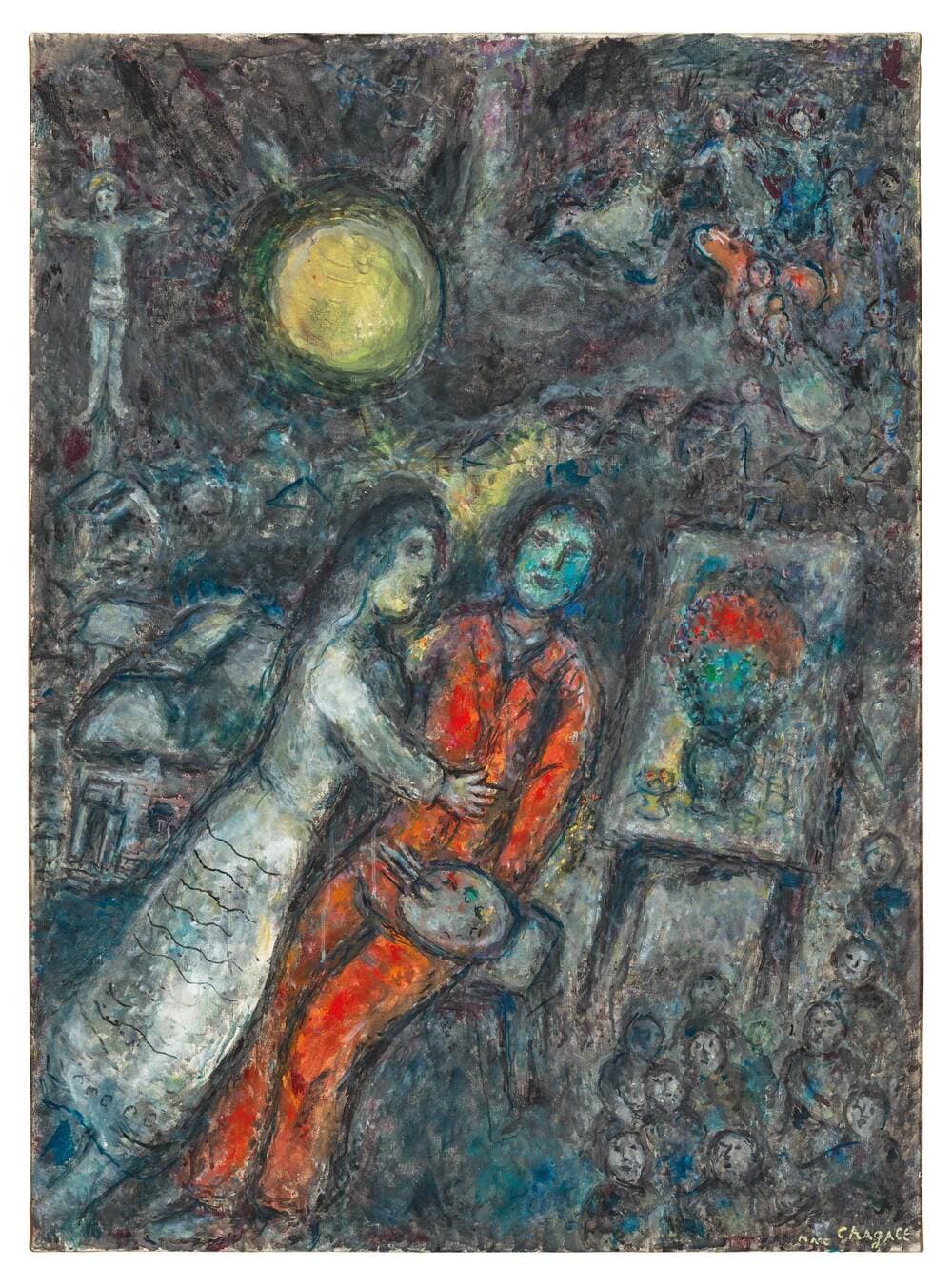 o Realism emphasizes truthful, detailed depiction of everyday life, rejecting idealization.
o Impressionism captures fleeting light and color effects with loose brushwork and vibrant colors, often painting outdoors.
o Expressionism focuses on conveying intense emotions using distorted forms and exaggerated colors.
o Abstract art moves away from recognizable subjects, using shapes, colors, and forms to express ideas or emotions.
o Cubism breaks subjects into geometric shapes, showing multiple perspectives simultaneously.
o Surrealism explores dreams and the unconscious through bizarre, fantastical, and illogical imagery.
o Minimalism strips art to basic geometric forms and limited colors to emphasize simplicity and materiality.
o Pop Art critiques mass culture by incorporating imagery from advertising, comics, and celebrity culture with bold graphic style.
o Futurism celebrates speed, technology, and modern life with dynamic compositions depicting movement.
o Dadaism rejects traditional art and logic, using absurdity, chance, and ready-made objects as a form of anti-art.
o Fauvism uses wild, vivid colors and bold brushwork to evoke emotion, breaking from realistic color representation.
Throughout history, painting has evolved across cultures, philosophies, and technologies constantly reinventing itself to express new ideas, emotions, and experiences. Among the countless styles and movements that have emerged, some have left a lasting impact on both art history and contemporary practice. This article explores 11 major types of paintings, providing an in-depth look at their origins, features, philosophies, and influence.
1. Realism
Overview:
Realism, born in mid-19th-century France, emerged as a counter to the idealized and dramatic subjects favored by Romanticism and academic painting. Realist artists sought to depict everyday scenes and ordinary people with unembellished accuracy, avoiding moralizing narratives and mythological embellishments. This movement emphasized observation, authenticity, and the dignity of everyday life.
Pioneers such as Gustave Courbet and Jean-François Millet created works that reflected the social realities and conditions of their time. Their artworks resonated as much with the working class and rural communities as they did with sophisticated audiences, thereby opening the door to art as social commentary and laying a foundation for later movements like Social Realism.
Key Characteristics:
• Accurate, detailed representation of subjects
• Focus on working-class people and real-life situations
• Avoidance of exaggerated drama or emotion
Notable Artists:
• Gustave Courbet
• Jean-François Millet
• Ilya Repin
Legacy: Realism laid the foundation for documentary art, social commentary in painting, and later influenced movements like Naturalism and Social Realism.
2. Impressionism
Overview:
Originating in France in the late 19th century, Impressionism marked a major shift in how artists approached light, color, and modern life. Frustrated with the constraints of studio work, Impressionist artists like Claude Monet and Pierre-Auguste Renoir painted en plein air, capturing the rapidly changing qualities of light and atmosphere with vibrant, unblended colors and loose, visible brushstrokes.
Monet’s Impression, Sunrise lent its name to the movement, initially coined as a derisive label but embraced by the artists themselves. By prioritizing perception over detail, Impressionism introduced an art defined by immediacy, movement, and sensory experience; fundamentally transforming the relationship between artist and viewer.
Key Characteristics:
• Loose, visible brushstrokes
• Bright, unmixed colors
• Focus on light, weather, and movement
• Modern subjects: leisure, landscapes, city life
Notable Artists:
• Claude Monet
• Pierre-Auguste Renoir
• Edgar Degas
• Berthe Morisot
Legacy: Impressionism transformed modern art by emphasizing perception over perfection and opened the door for more experimental movements to follow.
3. Expressionism
Overview:
Expressionism arose in early 20th-century Germany as a raw, subjective counter to realism and Impressionism. It aimed to externalize emotional experience rather than physical reality, using distortion of form, bold color, and dynamic brushwork to convey inner turmoil and the anxieties of modern life.
Artists such as Edvard Munch (famous for The Scream), alongside members of groups like Die Brücke and Der Blaue Reiter, used art as a tool to explore psychological states and existential dread. This movement’s emphasis on inner vision and emotional resonance paved the way for various forms of expression in the arts; spanning painting, literature, film, and theate
Key Characteristics:
• Bold colors and exaggerated forms
• Emotional intensity and symbolism
• Distorted perspectives
Notable Artists:
• Edvard Munch (The Scream)
• Egon Schiele
• Wassily Kandinsky
• Ernst Ludwig Kirchner
Legacy: Expressionism influenced not only visual art but also literature, film, and theatre, offering a raw, psychological lens through which to interpret the modern world.
4. Abstract
Overview:
Abstract art emerged in the early 20th century as a transformative departure from representational styles, favoring color, form, and composition as autonomous elements. Artists such as Wassily Kandinsky and Piet Mondrian moved toward creating works devoid of recognizable subjects, exploring visual language in its purest form.
This movement grew out of the influence of earlier styles like Impressionism and Expressionism but took a bold step toward non-objectivity. Religion, mysticism, and spiritual theories also influenced early abstractionists, reinforcing the idea that abstract art could evoke timeless emotional or spiritual responses without depicting tangible realities
Key Characteristics:
• Non-representational forms
• Emphasis on shapes, lines, and colors
• Often explores rhythm, balance, or emotion
Notable Artists:
• Wassily Kandinsky
• Piet Mondrian
• Mark Rothko
• Jackson Pollock
Legacy: Abstract art has become a dominant language in modern and contemporary painting, pushing the boundaries of visual expression.
5. Cubism
Overview:
Cubism, conceived by Pablo Picasso and Georges Braque in the early 1900s, radically deconstructed traditional perspective by breaking objects into geometric forms and representing multiple viewpoints simultaneously. This analytical approach reimagined space and form, abandoning realistic singular viewpoints.
Cubism evolved into its Synthetic phase, which embraced brighter colors and collage elements bringing everyday materials into fine art. The movement profoundly influenced modern visual perception and laid crucial groundwork for future abstraction and avant-garde design
Key Characteristics:
• Fragmented forms
• Overlapping planes
• Limited color palette in early Cubism (Analytical Cubism)
• Use of collage in later stages (Synthetic Cubism)
Notable Artists:
• Pablo Picasso
• Georges Braque
• Juan Gris
Legacy: Cubism redefined the structure of painting and laid the groundwork for abstract art and modern design principles.
6. Surrealism
Overview:
Surrealism, emerging in the 1920s, was infused with Freudian psychoanalysis and sought to meld dream imagery with precise, realistic technique. Artists like Salvador Dalí and René Magritte created bizarre and uncanny scenes that challenged logic and tapped into the unconscious and imaginative potentials of visual storytelling.
Surrealists often employed techniques like automatism, decalcomania, and grattage to bypass rational thought and ignite spontaneous creativity. Through bizarre juxtapositions and symbolic motifs, Surrealism expanded both the narrative and visual boundaries of art, influencing not just painting but literature, film, and broader cultural imagination
Key Characteristics:
• Dream-like imagery
• Illogical scenes or juxtapositions
• Symbolism and fantasy
• Automatism (creating without conscious control)
Notable Artists:
• Salvador Dalí
• René Magritte
• Max Ernst
• Joan Miró
Legacy: Surrealism expanded artistic boundaries by embracing the irrational and remains a vital influence in painting, film, and literature.
7. Minimalism
Overview:
Minimalism, primarily American and rooted in the 1960s, reacted against the emotional intensity of Abstract Expressionism by stripping art to its essential forms. Using clean lines, geometric shapes, and industrial materials, Minimalist artists such as Frank Stella and Donald Judd emphasized the physical presence of the object and reduced personal expression to a minimum.
The movement foregrounded the viewer’s direct engagement with the artwork’s form, material, and context “What you see is what you see,” as Stella famously stated. Minimalism’s influence transcended visual art, resonating across architecture, design, music, and beyond as a philosophy of simplicity and materially grounded perception
Key Characteristics:
• Limited color palettes
• Geometric shapes
• Repetition and symmetry
• Emphasis on space and materials
Notable Artists:
• Frank Stella
• Agnes Martin
• Ellsworth Kelly
• Donald Judd (though often associated with sculpture)
Legacy: Minimalism shifted focus to the essence of form, influencing design, architecture, and conceptual art.
8. Pop Art
Overview:
Pop Art emerged in the 1950s–60s, blending high art with popular culture by incorporating imagery from advertising, comics, and mass media. Pioneers like Andy Warhol and Roy Lichtenstein used flat, bold colors and repetition to highlight and critique consumerism and mass production.
By elevating everyday icons; cans of soup, comic panels, consumer branding to the level of fine art, Pop Art blurred the line between elite and popular culture. Its ironic, accessible approach had a lasting impact on visual culture, design, and the commercialization of art.
Key Characteristics:
• Bright, flat colors
• Repetition and mass production themes
• Use of commercial and mass media imagery
• Irony and parody
Notable Artists:
• Andy Warhol
• Roy Lichtenstein
• Richard Hamilton
• James Rosenquist
Legacy: Pop Art transformed visual culture, making art accessible, relatable, and reflective of consumer society.
9. Futurism
Overview:
Originating in Italy around 1909, Futurism was an avant-garde celebration of speed, industrialization, and urban dynamism. Artists like Umberto Boccioni and Giacomo Balla depicted movement using dynamic lines and overlapping forms to evoke the energy of modern city life.
Though later compromised by its association with fascist ideology, Futurism’s formal innovations, its visualization of motion and mechanistic aesthetic profoundly influenced modern art, architecture, and design theory.
Key Characteristics:
• Motion lines and blurred forms
• Urban and machine subjects
• Glorification of war, energy, and youth
Notable Artists:
• Umberto Boccioni
• Giacomo Balla
• Carlo Carrà
Legacy: Though short-lived, Futurism influenced later movements such as Vorticism, Constructivism, and aspects of modern digital art and design.
10. Dadaism
Overview:
Dadaism emerged during World War I as a rebellious, anti-art response to the irrationality and devastation of the era. Centers in Zürich and Berlin became hotbeds of experimentation, where artists such as Marcel Duchamp and Hannah Höch used collage, ready-mades, and absurdity to undermine conventional aesthetics and critique societal norms.
Rejecting logic, reason, and bourgeois taste, Dada’s playful chaos and subversive strategies challenged the very definition of art. Although short-lived, Dada’s conceptual impulses seeded movements like Surrealism and Conceptual Art, embedding irreverence and institutional critique into 20th-century art.
Key Characteristics:
• Collage, readymades, and found objects
• Anti-art and anti-establishment themes
• Randomness and chaos
• Satirical and political content
Notable Artists:
• Marcel Duchamp
• Hannah Höch
• Tristan Tzara
• Man Ray
Legacy: Dadaism set the stage for conceptual art, performance art, and the use of satire and absurdity in modern creative expression.
11. Fauvism
Overview:
Fauvism, active roughly from 1905 to 1910, was a brief but vibrant movement marked by intense, non-naturalistic colors and simplified forms. Led by artists like Henri Matisse and André Derain, the Fauves (“wild beasts”) sought emotional expression through color rather than realistic representation.
Though short-lived, Fauvism’s radical chromaticism and expressive brushwork influenced Expressionism and modern abstraction, challenging artists to prioritize emotional impact over mimetic fidelity.
Key Characteristics:
• Bright, pure colors applied in large strokes
• Simplified forms
• Emotional and decorative quality
• Less concern for realistic perspective
Notable Artists:
• Henri Matisse
• André Derain
• Maurice de Vlaminck
Legacy: Fauvism was brief but powerful, influencing later developments in modernism, especially Abstract Expressionism and Color Field Painting.
Conclusion
These 11 types of painting represent not only shifts in technique and subject matter but also transformations in how artists relate to the world around them. From the stark honesty of Realism to the visual poetry of Surrealism and the bold flatness of Pop Art, each movement tells a story of innovation, resistance, and redefinition. Understanding these styles deepens our appreciation of art; past, present, and future and helps us see how painters have continually reshaped our perception of reality, emotion, and imagination.