An Introduction to the World Renowned Mozambique Pigeon-Blood Ruby
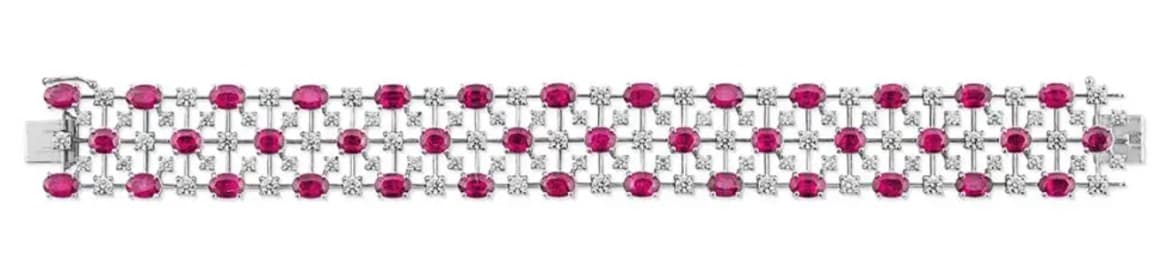
For centuries, the phrase "finest ruby" was synonymous with a single place: Burma. The storied mines of Mogok Valley supplied the royal treasuries of Asia and Europe with stones of such extraordinary depth and fire that no other origin could compete. Then, in the early 2000s, a quiet revolution began in the southern African nation of Mozambique. By the 2010s, it had fundamentally redrawn the map of the global ruby trade. Today, Mozambique rubies, and in particular those bearing the coveted designation of "pigeon-blood" are acknowledged by gemologists, auction houses, and collectors worldwide as among the finest coloured gemstones on earth. This article traces the full story of the Mozambique pigeon-blood ruby: what it is, where it comes from, how it is evaluated, why it matters, and what its rise means for the future of the gem world.
What Is a Pigeon-Blood Ruby?
Before examining Mozambique specifically, it is essential to understand the term "pigeon-blood" because it is one of the most evocative, and most contested, designations in all of gemology.
The Historical Definition
The term originates in the gemstone markets of Burma and South and Southeast Asia, where traders and royalty alike described the most prized rubies as having the colour of the first two drops of blood from the nose of a freshly killed pigeon: a vivid, almost fluorescent red with a slight bluish undertone. The precise hue was neither too orange nor too purple, but a saturated, pure red that seemed to glow from within, even under subdued light.
For most of recorded history, achieving this colour was thought possible only in stones from the Mogok Valley of Upper Burma (present-day Myanmar), where a fortunate combination of geological chemistry, particularly low iron content and high chromium concentration, produced rubies of unparalleled saturation and luminosity.
The Modern Gemological Standard
 Today, major gemological laboratories including the Gübelin Gem Lab and the Swiss Gemmological Institute (SSEF) have formalised the pigeon-blood designation into a defined colour grading system. To qualify, a ruby must satisfy several specific criteria:
Hue: The dominant colour must be red, typically described as pure red to slightly purplish-red. No strong orange or brown modifiers are permissible.
Saturation: The colour must be vivid to intense, neither pale nor overtly dark. Gemologists use terms like "strong" or "vivid" saturation.
Tone: The stone must fall in a medium to medium-dark tone range. Stones that are too light (pink sapphire territory) or too dark (blackish red) do not qualify.
Fluorescence: A strong red fluorescence under ultraviolet light, a hallmark of low-iron rubies, contributes to the visual effect by amplifying the perceived colour, particularly in natural daylight.
Crucially, the designation is not exclusive to Burmese stones. Mozambique rubies began receiving pigeon-blood certificates from Gübelin and SSEF in the early 2010s, signalling a seismic shift in the perception of African gems.
The Geology of Mozambique's Ruby Deposits
• The Montepuez Ruby Fields
The story of Mozambique rubies begins, geologically speaking, billions of years ago, but the discovery by modern mining operations is relatively recent. The primary source is the Montepuez ruby deposit, located in the Cabo Delgado province in the north of the country. The deposit was first prospected on a commercial scale around 2009 to 2011, and mining operations expanded dramatically thereafter.
Montepuez is geologically significant because it hosts two distinct types of ruby occurrence within a relatively compact area:
• Primary (Hard Rock) Deposits: These occur in marble and amphibolite rock formations, created when corundum crystallised from carbonate sediments under intense heat and pressure during ancient metamorphic events. The marble-hosted rubies tend to have lower iron content, which is directly responsible for their potential to achieve the fluorescent, vivid red hue characteristic of the finest pigeon-blood stones. This geological setting is directly analogous to the Mogok Valley, which also hosts rubies in marble.
• Secondary (Eluvial and Alluvial) Deposits: Weathering and erosion have transported ruby crystals from their original rock into surrounding soils, river sediments, and gravels. These secondary deposits are often easier to mine using open-cast methods, and the tumbling and sorting action of water and time can produce exceptionally clean, well-formed stones.
Why Mozambique Produces Pigeon-Blood Quality
The critical factor is the chemical environment during crystal formation. The Montepuez rubies formed in iron-poor marble, and iron is the enemy of the pigeon-blood designation. High iron levels suppress fluorescence and shift colour toward brownish or darker tones. In Mozambique's marble-hosted rubies, chromium, the element responsible for red colouration in corundum, is present without significant iron interference. The result is a stone with the chemical pedigree to achieve the incandescent red glow that defines the world's finest rubies.
The Rise of Mozambique on the World Stage
• From Artisanal Mining to Industrial Operations
The early years of Mozambique ruby mining were characterised by artisanal and small-scale miners working the surface deposits around Montepuez with basic tools. Word spread quickly through the gem trade, and international attention, and capital, followed.
The landmark moment came in 2011 when Gemfields, a London-listed coloured gemstone mining company already known for its Zambian emerald operations, entered into a joint venture with Mwiriti Limitada, a Mozambican company, to create Montepuez Ruby Mining (MRM). This brought industrial-scale investment, technology, and, critically, ethical and transparent supply chain practices to the deposit, which helped position Mozambique rubies in the premium legitimate market.
• Auction House Recognition
The clearest measure of a gemstone's status is the price it commands at the world's leading auction houses. The trajectory of Mozambique rubies at AstaGuru through the 2010s and 2020s tells the story better than any gemological report.
Notable auction milestones for Mozambique rubies include stones sold in partnership with Gemfields that have achieved per-carat prices in the tens of thousands of dollars for exceptional pigeon-blood specimens. Importantly, certified Mozambique pigeon-blood rubies regularly outperform non-pigeon-blood Burmese rubies at auction, demonstrating that colour quality now trumps geographic origin in the minds of the most sophisticated collectors.
• Laboratory Certification and the Pigeon-Blood Milestone
The turning point in Mozambique ruby's acceptance came when the world's two most respected independent gemological laboratories, the Gübelin Gem Lab (Switzerland) and SSEF (Swiss Gemmological Institute), began issuing pigeon-blood colour quality reports for Mozambique-origin rubies. This was not a commercial decision but a scientific one: the stones met the objective criteria. Collectors and dealers, who had previously associated the designation exclusively with Burma, were compelled to revise their assumptions.
Characteristics of the Finest Mozambique Pigeon-Blood Rubies
• Colour
At the heart of the pigeon-blood designation is colour, and Mozambique's finest specimens deliver a pure, vivid red with just a whisper of blue, the precise hue that the greatest ruby collectors have sought for centuries. Under natural daylight, a top-grade Mozambique pigeon-blood ruby appears almost to generate its own light, a phenomenon attributable to the combination of strong chromium fluorescence and high saturation.
• Clarity
Rubies are Type II gemstones, meaning that inclusions are expected and accepted by the trade far more readily than in diamonds. The most common inclusions in Mozambique rubies include:
Needle-like rutile inclusions, which, when densely arranged, can produce the asterism (star effect) seen in star rubies.
Crystal inclusions of apatite, zircon, and other minerals.
Fractures and fingerprints, which are common in virtually all natural rubies.
Eye-clean or near-eye-clean Mozambique rubies of significant size are exceptionally rare and command a substantial premium. The finest pigeon-blood specimens combine colour and clarity in a way that places them in the very highest tier of the coloured gemstone market.
• Size and Weight
Large, fine-quality rubies are far rarer than equivalent diamonds. Mozambique has been the source of some notable large stones, with gem-quality crystals of several carats emerging from the Montepuez deposit. Stones above five carats of pigeon-blood quality are considered extraordinary rarities; those above ten carats in such quality are among the rarest objects in the natural world.
• Cut
The cutting of a ruby is a skilled art with significant financial stakes. The cutter must balance several competing considerations: maximising colour and fluorescence, retaining as much weight as possible from the rough crystal, and achieving pleasing proportions and brilliance. Mozambique rubies are typically cut in classic shapes, oval, cushion, pear, that maximise the display of colour in the face-up position. Shallow cutting can produce a lighter stone; too deep and the centre may appear dark or "dead."
Distinguishing Natural from Treated Mozambique Rubies
• The Prevalence of Heat Treatment
The overwhelming majority of commercial rubies, estimated at over 90%, have been subjected to heat treatment. This process, conducted at temperatures above 1,000°C, dissolves silk (fine rutile needles) and improves both colour and clarity. Heat treatment of rubies is universally accepted in the trade, provided it is disclosed. The key distinction is between:
Heat treatment only: Widely accepted; standard practice.
Lead glass filling: A more controversial enhancement where fractures are filled with lead-rich glass to dramatically improve clarity. This is not accepted at the fine jewellery level and must be disclosed.
Beryllium diffusion: A treatment that alters colour through diffusion of beryllium into the lattice. Considered a significant enhancement requiring full disclosure.
All reputable laboratory reports will detail any detected treatments. Unheated rubies of fine quality command a significant premium, sometimes 30 to 50% above comparable heated stones, and certificates from Gübelin or SSEF specifically note the absence of heat treatment.
• The "No Heat" Premium
Among collectors of the highest calibre, an unheated Mozambique pigeon-blood ruby represents perhaps the ultimate achievement: a stone that has arrived at its magnificent colour entirely through geological processes, unassisted by human intervention. The rarity of such stones, combined with the pigeon-blood designation from a top laboratory, places them in a category that commands prices per carat rivalling the world's finest Burmese rubies.
Mozambique vs. Burma: The Great Ruby Debate
• The Legacy of Burma
It would be dishonest to ignore the fact that Burma's Mogok Valley still holds a special mystique in the ruby world. The long history, the legendary stones, including the Sunrise Ruby and the Graff Ruby, both Burmese, and the cultural associations of Mogok rubies with the world's royal families mean that top Burmese stones remain extraordinarily desirable. Origin still commands a premium in the highest tier of the market, all else being equal.
• Why Mozambique Has Narrowed the Gap
However, the market has fundamentally changed. Several factors have worked in Mozambique's favour:
Supply reliability: Political instability and increasingly restrictive export conditions from Myanmar have significantly constrained the legitimate supply of Burmese rubies in recent years, particularly for buyers in Western markets subject to sanctions. Mozambique offers a stable, legal, and well-documented supply chain.
Ethical sourcing: Gemfields' operations at Montepuez have prioritised community investment, environmental standards, and supply chain transparency, credentials that resonate powerfully with today's luxury consumers, particularly younger buyers.
Objective quality: As established above, the pigeon-blood certification from Gübelin and SSEF has removed the last scientific objection to Mozambique rubies being considered equals to the finest Burmese stones on the basis of colour alone.
Value proposition: For equivalent quality, Mozambique rubies frequently trade at a discount to Burmese rubies of comparable certification, offering sophisticated buyers the opportunity to acquire objectively exceptional colour at relatively better value.
The Investment Case for Mozambique Pigeon-Blood Rubies
• Coloured Gemstones as an Asset Class
Over the past two decades, the finest coloured gemstones have attracted serious attention from investors and family offices seeking hard assets with low correlation to financial markets. Rubies, in particular, have demonstrated consistent long-term price appreciation at the top end of the quality spectrum.
• Why Pigeon-Blood Specifically
Within the ruby category, the pigeon-blood designation functions as a quality threshold above which stones enter a rarefied market of global collectors and connoisseurs. Supply is structurally constrained, pigeon-blood rubies represent a tiny fraction of all rubies mined, while demand is growing, driven by wealth creation in Asia, the Middle East, and among global collectors.
• Liquidity and Documentation
An investment-grade Mozambique pigeon-blood ruby should ideally be accompanied by:
A certificate from Gübelin, SSEF, or the American Gemological Laboratories (AGL) confirming origin, colour quality (pigeon-blood), and treatment status.
Documentation of provenance and chain of custody where available.
A current independent valuation.
• Caring for a Mozambique Ruby
Ruby (corundum, Al₂O₃) is the second hardest natural mineral at Mohs 9, making it highly resistant to scratching and well suited to everyday wear. However, several care considerations apply:
Cleaning: Warm soapy water and a soft brush are safe for untreated or heat-treated rubies. Ultrasonic cleaners are generally safe for untreated or heat-treated stones but should be avoided for fracture-filled or cavity-filled rubies.
Chemicals: Avoid prolonged exposure to household chemicals, bleach, and solvents, which can damage settings or, in the case of filled stones, affect the filling material.
Storage: Store separately from other gemstones and hard objects. Though rubies resist scratching from most materials, they can scratch softer gems and be scratched only by other corundum or diamond.
Setting security: Periodic inspection of the setting, particularly prongs, is advisable for any precious gemstone, as physical impacts can loosen stones over time.
The Cultural and Symbolic Significance of Rubies
The ruby is among the most symbolically charged of all gemstones. In Sanskrit it was called ratnaraj, "king of gems." Ancient Burmese warriors believed rubies made them invincible in battle. Rubies were set into the regalia of European monarchs, the jewels of Indian maharajas, and the rings of Catholic cardinals, who wore them as symbols of divine authority.
In the modern world, rubies retain their status as the birthstone for July and as the traditional gift for a 40th wedding anniversary. Their association with passion, vitality, protection, and prosperity transcends cultures and centuries. A Mozambique pigeon-blood ruby carries all of this history in its crystal lattice, adding to it the fascination of a discovery that continues to unfold in real time.
The Future of Mozambique Rubies
• Continued Mining Development
The Montepuez deposit is still, by most geological assessments, in relatively early stages of development relative to its total resource potential. Continued investment in exploration, technology, and responsible extraction is expected to produce exceptional stones for years to come. The challenge for the industry will be maintaining quality standards and ethical practices as commercial pressures grow.
• Evolving Market Dynamics
The global coloured gemstone market is being reshaped by several trends: growing demand from Chinese, Indian, and Middle Eastern collectors; increasing emphasis on ethical sourcing and sustainability; and the rise of digital platforms enabling global price discovery and broader collector participation. Mozambique pigeon-blood rubies are exceptionally well-positioned in this environment.
• The Role of Technology
Advances in gemological testing, including laser ablation inductively coupled plasma mass spectrometry (LA-ICP-MS) and photoluminescence spectroscopy, are making geographic origin determination more precise than ever. This supports market confidence in Mozambique origin certificates and provides buyers with ever more robust documentation of what they are purchasing.
Conclusion: A New Chapter in the History of the World's Most Celebrated Gem
The story of the Mozambique pigeon-blood ruby is, at its heart, a story about the earth's capacity to produce beauty in unexpected places. For five centuries, one corner of Southeast Asia held a near-monopoly on the world's finest rubies. The emergence of Mozambique as a source of pigeon-blood quality stones is not a diminishment of that legacy, it is an enrichment of the broader story of one of humanity's oldest and most enduring fascinations.
Whether examined through the lens of geology, gemology, history, aesthetics, or investment, the Mozambique pigeon-blood ruby demands attention and commands respect. It is a stone that has earned its place at the very summit of the gemstone world, not through geography or tradition alone, but through the objective, measurable, and unmistakable quality of its colour.