anjolie ela menon - revolutionary artist who changed indias art scene with her brush strokes
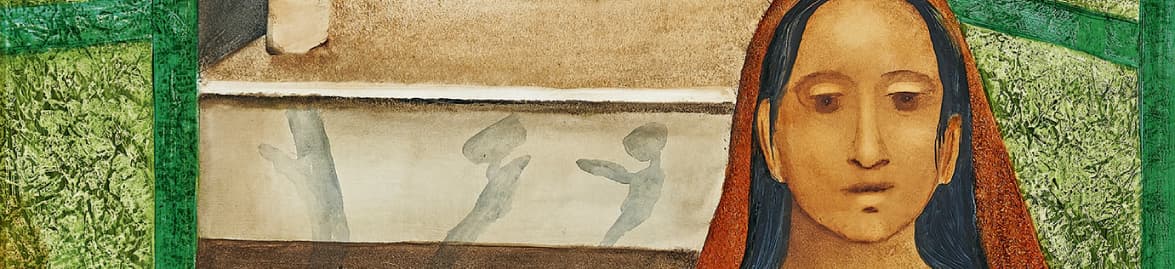
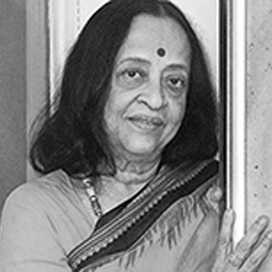 Artist Anjolie Ela Menon (born 17 July 1940) is a renowned Indian painter and muralist, famous for her unique style of figurative painting that blends elements of Indian miniature painting, European Renaissance and Abstract Expressionism. Her travels to different parts of the world greatly fuelled her imagination and her artistic oeuvre. She skillfully blends traditional Indian themes and techniques with modern artistic expressions, fostering a greater appreciation for Indian cultural heritage in contemporary art. Let’s explore the evolution of Anjolie Ela Menon’s artistic style over the decades and the impact of Indian cultural traditions in Anjolie Ela Menon’s art.
Early Life & Education
Indian contemporary artist Anjolie Ela Menon was born in Burnpur, West Bengal. She studied at Lawrence School, Lovedale, in Tamil Nadu. At the age of 15, the artist had already sold a few paintings and went on to briefly study art at Sir J J School of Art, Mumbai. During her time in Miranda House, while pursuing a degree in English Literature, she found inspiration in the works of M F Husain, Amrita Sher Gil, Vincent Van Gogh, Amedeo Modigliani, and other eminent artists.
She further studied Fresco techniques at École des Beaux-Arts from 1959-1969 and travelled extensively around the world and was deeply inspired by Byzantine art and Romanesque art. Her artistic journey began at 18 when she exhibited her works at a solo exhibition organised by M F Husain who also designed the invitation for the show. In 1959, she travelled to New York which had a huge influence on her artistic vision, observing the vibrant culture of Harlem. She created a series of works after receiving an invitation from Edgar Kaufmann Jr, the Museum of Modern Art to be part of a residency in Fallingwater, a house (now converted into a museum) built by Frank Lloyd Wright.
Family Background
Parents - Her father (K. C. Menon) was a civil engineer, and her mother (Ela Menon) was a painter, which greatly influenced her artistic pursuits.
Spouse - Anjolie married Admiral K. Raja Menon, a naval officer from Kerala. This marriage brought new cultural influences into her life and art
Children - She has two sons and four grandchildren. Anjolie's family life has been a source of inspiration for her work, although she has notably avoided painting direct portraits of her immediate family.
Painting Style
Anjolie Ela Menon has experimented with a variety of mediums including graphics, Murano glass, acrylic, ceramics and oil on masonite, her most preferred medium. She incorporates traditional Indian techniques and materials, which add layers of meaning related to her cultural background. The textures can evoke a sense of place and history, connecting contemporary themes with traditional narratives.
Menon's paintings often feature lush, vibrant depictions of nature including flowers, trees, and landscapes. Her style is characterized by bold brushstrokes, vivid colors, and a sense of movement and energy. Her themes often explore the relationship between nature and human emotions, as well as the fleeting nature of life.
She utilises traditional Indian techniques and materials, which add layers of meaning related to her cultural background, evoking a sense of place and history, and connecting contemporary themes with traditional narratives. She is best known for her works created in her unique figurative style with bold brushstrokes that emphasise the female form and identity, contributing to the representation of women in art.
Artist Philosophy
Menon was quoted saying, “I hardly draw. I think in colour. Its depth or intensity, translucence, or opacity form the nuances of my whole creative output. It is with colour that one sings, with colour that one plummets the depths. When I dream I see colour... the overlaying of harmony, discord, syncopation...”. Each work by the artist represents different facets of the human experience, reflecting complexity in themes such as identity, memory, and cultural heritage.
Impact Of Indian Cultural Traditions In Anjolie Ela Menon’s Art
The influence of Indian heritage can also be seen in Menon’s works featuring Indian backgrounds where the artist has incorporated traditional motifs and techniques while maintaining a contemporary approach. The glimpses of a strong emotional resonance in her work, capture the complex feelings and states of being. Many of her works evoke a dreamlike or mystical quality, blurring the lines between reality and imagination. Her paintings convey deeper meanings, inviting viewers to explore their interpretations. These characteristic features of her paintings have greatly contributed to Menon's reputation as a significant figure in contemporary Indian art.
Menon's work focuses on the human figure, particularly women-centric themes. Her subjects are portrayed with a sense of depth and emotion, as she employs a rich and vibrant colour palette, often blending warm and cool tones to create mood and atmosphere. Her paintings exhibit a strong sense of texture, achieved through layering and the use of different materials, giving them a tactile quality. She frequently incorporates symbolic elements, reflecting themes of identity, femininity, and cultural heritage. The recurring motifs in her works include the charpoys inspired by her travels through rural Kerala, portraits of her mother and grandmother, people she met during her travels, religious figures, vivid creatures, loss, solitude, and animal forms.
The Significance Of Texture And Layering In Anjolie Ela Menon’s Paintings
Anjolie’s use of symbolism through texture and layering invites viewers to engage with deeper narratives and emotional contexts, enriching the storytelling aspect of visual art in India. The use of texture can also symbolise the complexities of life. For example, rough textures might represent struggles, while smoother areas can signify peace or resolution, adding to the narrative quality of her work. The layering effect in her works enhances the three-dimensional quality of her work, adding to its visual intrigue and emotional resonance. Each viewer may interpret the textures and layers differently, making the experience of Menon’s work highly personal. This open-ended quality encourages a deeper connection and reflection on one’s own experiences.
Spirituality And Modernism In Anjolie Ela Menon’s Works
Through her art, Menon displays the relationship between mythical forms and the human world by blending modern perspectives but staying true to her traditional roots. The influence of Christian iconography in Anjolie Ela Menon’s paintings is evident. Many of her paintings and glassworks resemble Buddhist imagery and Islamic calligraphy. Her “Divine Mother” series represents her faith in women's power but also the role of Shakti in the lives of humans. Some of her other notable works include Pastoral II (2002), Mother & Child, Yashodha and Krishna, Visarjan (1990), and Pieta (1996).
"Vrindavan" Series
In her "Vrindavan" series, Anjolie Ela Menon has incorporated scenes of daily life depicting kids, animals, priests, lush green landscapes, and mythological figures. In a way, it is also an account of one's search for self tied to the invisible thread with the mythical world but the gateway to enter the realm opens through her paintings. Popular paintings from this series include the "Yashoda", "Namboodri", "Parvati" and "Nizamuddin Basti".
The Triptych "Yatra"
One of her notable works is the triptych titled "Yatra," which was created in 2006. This piece has garnered attention for its artistic depth and was acquired by the Asian Art Museum of San Francisco. The triptych "Yatra" (which means "journey" in Hindi) reflects Menon's exploration of themes related to identity, spirituality, and the human experience. It was featured in a solo exhibition at the Asian Art Museum, highlighting her status as a leading figure in contemporary Indian art. The work is celebrated not only for its aesthetic qualities but also for the profound narratives it conveys through its triptych format, which traditionally consists of three panels that are meant to be viewed together.
Art Related To Women Issue
Anjolie Ela Menon critiques societal expectations through rich symbolism, frequently drawing on mythology to reinterpret female figures from folklore in contemporary contexts. Her art captures a wide range of emotions, portraying the complexities of motherhood and women's inner lives, inviting empathy and deeper understanding. With a distinctive use of color and form, Menon's works foster dialogue about gender, identity, and the societal changes needed for women's empowerment, making her a significant voice in contemporary art. Some of her notable works that address women's issues:
"The Birth of the Goddess" (1968) - This painting depicts the birth of the goddess Kali, symbolizing the empowerment of women. It's a powerful representation of the feminine principle and the struggle for women's rights.
"The Women's War" (1975) - This painting shows a group of women fighting against oppression, highlighting the struggles faced by women in Indian society. It's a powerful statement against patriarchy and gender inequality.
"The Mother and the Child" (1978) - This painting explores the complex relationship between mothers and daughters, highlighting the emotional and psychological struggles that women face in their roles as caregivers.
"The Goddess and the Warrior" (1982) - This painting juxtaposes the feminine and masculine principles, symbolizing the struggle for women's empowerment and the need for balance between the two.
"The Women's Movement" (1985) - This painting celebrates the women's liberation movement, depicting women from different walks of life coming together to fight for their rights and dignity.
"The Rape of the Goddess" (1990) - This painting addresses the issue of sexual violence against women, highlighting the trauma and suffering that victims face. It's a powerful statement against gender-based violence.
"The Women's Body" (1995) - This painting explores the concept of the female body as a site of struggle and resistance, highlighting the ways in which women's bodies are often controlled and objectified.
Famous Paintings
Here are some of her famous paintings that showcases Anjolie Ela Menon's artistic prowess:
Madonna of Merriweather Road - This piece is significant in Menon's oeuvre, showcasing her ability to blend traditional themes with modern techniques.
Mother & Child -This work has achieved notable auction success, highlighting its impact and popularity in the art market.
Eden Revisited - This painting exemplifies her skill in portraying the human figure with emotional depth.
Kumbhmela - A recent work that continues to demonstrate her engagement with cultural themes.
Awards & Exhibitions
Recognition and awards received by Anjolie Ela Menon include the Padma Shri by the Government of India, 2000; Limca Book of Records Lifetime Achievement Award by the Government of Delhi, 2013; National Kalidas Samman for Visual Arts by the Government of Madhya Pradesh, 2018. Her solo exhibitions include Bhulabhai Desai Institute in Mumbai (1959); Blackheath Gallery in the UK (1965); Doma Khudozhnik in the USSR (1967); Gallerie Radicke in Bonn (1982); Winston Gallery in Washington (1984); Museum Gallery in Hong Kong (1996); Gallery Admit One in New York (2002); Aicon Gallery in New York (2006); and Asian Art Museum in San Francisco (2006).The artist has also participated in several group exhibitions including the Victoria and Albert Museum, New York, Singapore, Bangkok, and Washington. Menon has also showcased her works in three triennials in India and represented the country at the Algiers Biennale and Sao Paulo Biennale. Her works are part of various public and private collections in India and abroad.
Contributions & Impact on Indian Art
The artist has made significant contributions to Indian art, influencing both contemporary practices and perceptions. As one of the few prominent women in Indian art during her early career, Menon broke barriers and paved the way for future generations of female artists. Her work challenges traditional depictions and encourages a broader dialogue about gender and identity. Beyond her work as an artist, Menon has been involved in art education, mentoring young artists and promoting the importance of visual arts in society. Her participation in national and international exhibitions has helped elevate Indian art on the global stage, increasing awareness and appreciation for contemporary Indian artists.
Conclusion
Anjolie Ela Menon's dedication to her craft and her success serve as an inspiration for many aspiring artists, particularly women, encouraging them to pursue their artistic ambitions. Through her art, she has contributed to ongoing conversations about culture, gender, and society in India, prompting viewers to reflect on their own identities and experiences. Her legacy continues to shape the landscape of Indian contemporary art, making her a vital figure in its evolution.
We hope you enjoyed this article. For a comprehensive showcase of Anjolie Ela Menon original paintings, click here and explore her vibrant portfolio.