


artist laxman aelay - artworks, life & history
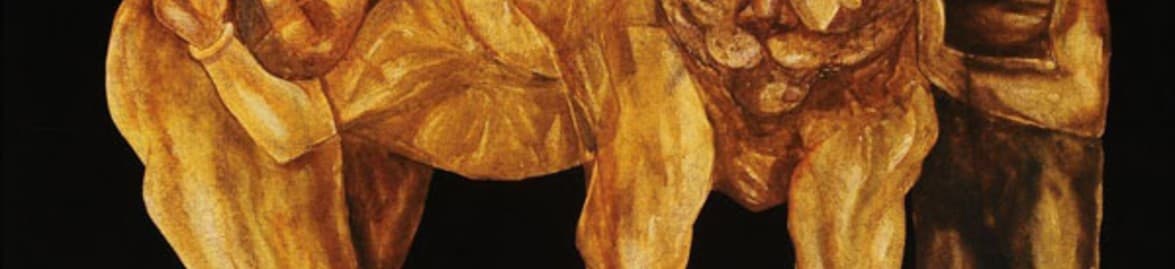
Laxman Ae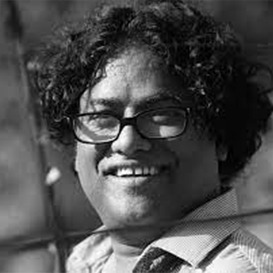 lay (born June 8, 1965) in Kadirenigudem, Nalgonda district, Telangana is a highly reputed Indian painter & visual artist who captures the life of his village including the women, instruments and politics through his abstract art. His works are mostly in acrylic and ink on canvas. Before Laxman Aelay established himself as a professional artist, he was a signboard artist and then a much-sought-after designer and illustrator of books. His early works are still regarded highly within many Telugu literary circles. This article explores his remarkable journey, the inspirations behind his work and the profound messages that make his art a powerful cultural statement.
Family
Laxman Aelay hails from an artisan's family belonging to the Padmashali caste, known for their traditional weaving and performing arts. His upbringing in this culturally rich community, under the guidance of his father, a professional weaver, deeply influenced his artistic sensibilities, especially his understanding of color and textile design, which prominently feature in his paintings. Laxman married Lalitha Aelay, a childhood acquaintance, at a very young age. Together, they have two daughters: Manasa Aelay, who works as a software professional in New Jersey, and Priyanka Aelay, a visual artist based in Hyderabad. The family's diverse talents reflect their deep-rooted connection to both tradition and contemporary pursuits.
Education
Laxman Aelay pursued a robust education in the arts, culminating in significant degrees that shaped his career as an artist. He completed his Bachelor of Fine Arts (BFA) in Painting from the Jawaharlal Nehru Architecture & Fine Arts University (JNAFAU) in Hyderabad. Following this, he furthered his studies by obtaining a Master of Fine Arts (MFA) from the same institution, which provided him with a solid foundation in artistic techniques and theories. Aelay's commitment to education did not stop there; he also earned a PhD from the English and Foreign Languages University (EFLU), focusing on subjects that reflect his deep engagement with cultural narratives and art forms. His educational journey has significantly influenced his artistic practice, allowing him to blend traditional themes with contemporary techniques in his work.
Early Life
Before Laxman Aelay became a professional artist, he embarked on a different creative journey. He initially worked as a signboard painter, a job that helped him hone his skills in design and color. Later, he gained recognition as a highly respected designer and illustrator of books, particularly within Telugu literary circles, where his work was widely admired. However, the call of painting was strong, and Aelay soon decided to pursue his true passion. He enrolled in college to earn a degree in Fine Arts, which provided him with the formal education and technical foundation necessary to transition into a full-time painter. With this newfound expertise, Aelay began to express the rich cultural narratives of rural Telangana through his evocative and vibrant paintings, marking the beginning of his successful career as an artist.
Painting Style
Laxman Aelay’s painting style is deeply rooted in the culture and life of his hometown, Kadirenigudem, in Telangana. His works reflect the simplicity and vibrancy of rural life, much like the people he grew up with. Aelay’s color palette primarily consists of earthy tones such as red, green, and yellow, which he uses to create striking contrasts and evoke a sense of warmth. While his use of colors is restrained, he skillfully plays with texture to add depth and character to his paintings, bringing out the richness of rural settings and traditions. His works often depict the daily lives of impoverished villagers, showcasing their struggles and joys with empathy and artistic finesse.
Women occupy a central place in Aelay’s art, often portrayed with tanned skin and expressive, goddess-like eyes. He captures their essence through subtle gestures, facial expressions, and body language, presenting them in natural settings like sunflower fields, bustling markets, or their modest homes. These women are adorned with traditional elements such as large bindis, toe rings, nose rings, and flowers in their hair, adding a cultural and aesthetic depth to his compositions. Aelay’s attention to detail is evident in the intricate patterns he draws on their sarees—floral motifs, polka dots, and other designs—as well as the stripes and checks in men’s clothing, which serve to root his subjects firmly in their cultural milieu.
Aelay’s artistic journey has evolved over the years, transitioning from large-scale works to smaller formats and back to monumental compositions in his recent series. His earlier works gained widespread recognition for their monochromatic palette of black, white, and grey, set against vibrant backgrounds of red, green, or ochre. This phase was followed by a shift to colorful yet realistic portrayals of people against textured and understated backgrounds. Music and traditional instruments of Telangana have also influenced his art, with depictions of musicians highlighting their cultural significance and evolution over time.
In recent years, Aelay has embraced a more vivid use of colors, moving away from monochromatic themes. He now incorporates bright, lively hues to depict flowers, jewelry, and traditional clothing, adding a fresh vibrancy to his work while retaining its underlying simplicity and emotional resonance. This evolution in his style underscores his ability to innovate while staying true to his roots, making Laxman Aelay’s paintings a profound celebration of rural Telangana’s life and culture.
Famous Paintings
Laxman Aelay is renowned for several significant works that reflect his deep connection to rural life and the cultural heritage of Telangana. His most famous paintings include:
• Poolamma Series: In this series, Aelay explores the figure of Poolamma, the goddess of flowers, representing empowerment and resilience among Telangana women. The paintings are notable for their bold colors and hyperrealistic style, celebrating the strength and beauty of women in rural communities.
• Song of the Village Series: This series is characterized by vibrant depictions of village life, showcasing the daily activities and interactions of people in his hometown. The works often feature intricate details in traditional clothing and jewelry, set against textured backgrounds that enhance the emotional depth of the scenes.
• Head of the Village: This artwork showcases Aelay's signature style, blending realism with vibrant colors. It often features a central figure representing the authority and wisdom of village leadership, encapsulating the cultural dynamics of rural communities.
• The Gathering: In this piece, Aelay depicts a communal gathering, illustrating the social interactions and relationships within village life. The painting captures the vibrancy of community events, emphasizing the connections among people through expressive figures and lively backgrounds.
• The Village Vendors: This work highlights the daily lives of local vendors, showcasing their interactions and the colorful market atmosphere. Aelay's attention to detail in clothing and expressions brings these characters to life, reflecting their integral role in rural economies.
• Yaadi: Laxman Aalay’s painting titled "Yaadi" explores themes of identity and tradition, focusing on the cultural practices of Telangana. The artwork often features traditional motifs and vibrant colors that celebrate local customs and heritage.
• Malli: This piece is part of Laxman Aelay's exploration of feminine strength and beauty, often depicting women in traditional attire engaged in daily activities. "Malli" emphasizes the resilience and vibrancy of women in rural settings, showcasing their roles within family and community life.
Films / Movies
Laxman Aelay has made notable contributions to the film industry, primarily as an art director and designer. He gained recognition for designing posters for the iconic films like ‘Rangeela’, ‘Daud’, and ‘Satya’, which showcased his artistic flair in visual storytelling. Following this, he served as the advertising designer for the Telugu film Deyyam. Aelay's involvement in cinema extends to acting; he appeared in the film Mallesham (2019), where he played the role of Padma's father. His diverse skills in art and design, combined with his experience in the film industry, highlight his versatility as an artist.
Awards & Recognition
Laxman Aelay’s artistic excellence has been recognized through numerous awards and accolades, underscoring his significant contributions to the art world. His journey began with a Bronze Medal in 1987 at a painting competition organized by the Amateur Artist Association in Nalgonda, Andhra Pradesh, and was further elevated by a Gold Medal in 1993 from the Konaseema Chithrakala Parishath in Amalapuram. In 1995, he received an Appreciation Award from the Hyderabad Art Society during their annual painting competition, cementing his reputation as a leading figure in the regional art scene. A milestone in his career came in 2014, when Aelay was entrusted with the prestigious task of designing the logo for the newly formed state of Telangana. This logo, which combines iconic imagery of both India and Telangana, stands as a testament to his ability to blend artistic creativity with cultural significance.
In addition to his local achievements, Aelay’s work has gained international recognition. In 1995, he represented Indian art at an exhibition organized by TAANA in Chicago, USA, showcasing his deep connection to Telangana’s culture on a global stage. These honors and accomplishments not only highlight Aelay’s dedication to his craft but also reflect his unique ability to preserve and celebrate the essence of rural life and regional identity through his art.
Exhibitions
Laxman Aelay has participated in numerous exhibitions that showcase his artistic evolution and commitment to depicting rural life in Telangana. He held his first solo exhibition at the Indian Council of Cultural Relations Art Gallery in Hyderabad in 1999, which marked a significant milestone in his career. Since then, Aelay has been involved in various important group exhibitions, both nationally and internationally. Notably, he represented India at an international exposition organized by TAANA in Chicago, USA, highlighting his global reach and recognition. His recent series, including the "Poolamma Series" & "Proverbial Pathways" continues to draw attention for its innovative approach to hyperrealism and vibrant storytelling through visual art.
Conclusion
Laxman Aelay's artistic journey represents more than just a personal creative trajectory—it is a profound visual anthropology of rural Telangana, capturing the nuanced realities of communities often overlooked by mainstream narratives. Through his meticulously crafted paintings, Laxman Aelay does not merely document rural life, but celebrates its dignity, complexity, and inherent beauty. His works serves as a powerful testament to the resilience, cultural richness, and evolving dynamics of rural Indian society, inviting viewers to look beyond stereotypical representations and appreciate the depth and diversity of lived experiences. As contemporary Indian art continues to evolve, Aelay stands as a crucial voice, bridging traditional visual vocabularies with contemporary artistic sensibilities, and ensuring that the stories of rural communities are not just preserved, but celebrated and understood.




