artist mohan samant - life account, inspirations & paintings
.jpg&w=3840&q=75)
Mohan Samant (1924 – 2004), born Manmohan Balkrishna Samant, was a pioneering figure in Indian modern art, known for his innovative use of materials and a multidimensional approach to painting. As an early Indian modernist, Mohan Samant's work was deeply influenced by a diverse range of sources, from traditional Indian miniature and Basohli painting to ancient Egyptian hieroglyphics and artifacts. His artistic style was marked by constant evolution, with his techniques, use of color, and choice of materials shifting in response to historical, spiritual, and everyday narratives. Mohan Samant’s unique blend of cultural influences and his exploration of abstraction made him a key figure in shaping the trajectory of modern Indian art. This article delves into his artistic journey, influences and the profound messages embedded in his work.
Family
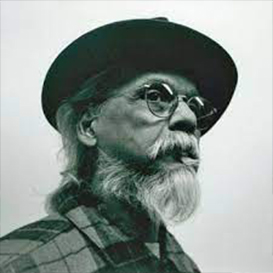 Mohan Samant was born into a middle-class Brahmin family in Goregaon, a suburb of Bombay, India. He was the fourth of eight children in his family, which included two sisters and an elder brother. His father, Balkrishna Ramchandra Samant, served as a high school principal and English teacher, while his mother was a homemaker. From a young age, Samant showed a remarkable talent for music, becoming proficient in playing the sarangi, an Indian bowed instrument. His early exposure to art was influenced by his mother's craft projects and the family's collection of reproductions of Raja Ravi Varma's works. Tragically, his mother passed away in 1942, leaving him and his siblings to navigate their lives without her guidance. In 1971, he married Jillian Saunders, an Australian performer skilled in playing the viola da gamba and recorder, further enriching his artistic environment.
Education
Mohan Samant pursued his formal education in art at the Sir J.J. School of Art in Mumbai from 1947 to 1952, where he was introduced to a colonial curriculum that included copying plaster casts of classical sculptures and studying Indian miniature painting. This traditional training was complemented by his later study of Basholi miniature painting under M. Palsikar, which deepened his appreciation for India’s rich artistic heritage. During his student years, Samant traveled extensively across India, exploring historic sites and immersing himself in the classical arts of the country, which would provide enduring inspiration for his work. In 1957, his artistic journey took an international turn when he was awarded a cultural exchange scholarship to Rome, sponsored by the Italian government. His time in Rome broadened his artistic horizons and introduced him to global influences, including a close friendship with an Egyptian painter, which led to travels in Egypt that significantly enriched his visual vocabulary and thematic repertoire.
Early Life
Mohan Samant's early life was marked by a blend of self-taught artistry and serendipitous inspiration. During his school days, he learned to play the flute and accompanied a bhajan group, showcasing his early interest in creative expression. After high school, he worked as an agent for the British War Effort Office, a role that took him to small businesses across the city. On one such visit, he encountered a factory producing large cinema posters and learned from a poster artist how palette knives could be fashioned from old gramophone springs, sparking his interest in unconventional artistic techniques. In 1947, eschewing a traditional college education or office career, Samant enrolled at Bombay's prestigious Sir JJ School of Art, where he studied alongside notable contemporaries like Akbar Padamsee, Ambadas Khobragade, and Tyeb Mehta. He graduated in 1952 with a diploma and joined one of the most prominent art groups of the time i.e "Progressive Artists Group", cementing his place in the burgeoning Indian art scene.
Painting Style
Mohan Samant's painting style was marked by an extraordinary versatility and innovative approach to mixed media, with watercolors remaining a constant throughout his creative journey. His distinctive technique incorporated an impressive array of materials including tempera, ink, crayon, acrylic paint, stucco, spray paint, and even unconventional elements like insect specimens, toys, and wood boxes. These materials often came together in dynamic compositions that blended painting, sculpture, and mixed media. Following a heart attack in 1974, Samant turned to watercolors with renewed intensity, augmenting them with felt-tip markers and cut-paper appliqués. This period marked a shift toward smaller-scale works, where texture and intricate detail became central to his creative expression.
By 1975, Samant had begun integrating paper cut-outs into his work, crafting three-dimensional scenes that were mounted on canvas and resembled miniature theatrical stages. These compositions were inspired by his fascination with the traditional leather-puppet theatre of Andhra Pradesh and Indonesia’s wayang shadow puppets. This theatrical influence is evident in the layered and narrative quality of his art. From 1987 onward, Samant explored the use of toy-like figurines made of bent wires, transitioning from friezes to niches carved into the canvas, further enhancing the sculptural aspects of his work. His watercolors experienced a resurgence in the 1990s, with vibrant color fields and textured surfaces giving life to his imaginative, art-brut-inspired forms.
Mohan Samant’s art was deeply transcultural, drawing on the visual complexities of Hindu temple carvings, Egyptian hieroglyphics, and pre-Columbian ceramics, while simultaneously referencing European modernists like Paul Klee and Pablo Picasso. His ability to synthesize these diverse influences resulted in a style that was distinctly his own, constantly evolving and rich with cultural and historical resonance. Even in his final works in 2003, Samant continued to innovate, combining vibrant backgrounds with delicate, intricately detailed figures, demonstrating his enduring passion for artistic exploration.
Famous Paintings
• Steps Unto Pride and Prestige - This artwork reflects Samant's characteristic style, combining intricate details with a rich color palette. It likely symbolizes the journey towards achievement and self-worth, consistent with themes found in his oeuvre.
• Night Bird and Moon Girl - This painting is noted for its dominant use of black, which is punctuated by hints of blue. The composition features a dynamic interplay between the figures of the night bird and the moon girl, illustrating Samant's ability to evoke emotion through color and form. It is part of the collection at the National Gallery of Modern Art.
• Garden of Eden - While specific details about this piece are less documented in the search results, it typically represents themes of paradise and innocence, echoing biblical references that are common in Samant’s work. His exploration of nature and spirituality often manifests in such titles.
• The Couple - This artwork likely explores relationships and intimacy, a recurring theme in Samant's portfolio. His use of line and form can be expected to convey the complexities of human connection, reflecting both modernist influences and traditional Indian motifs.
• Mexican Wine Party - An early example of his wire drawings, this painting illustrates how wire figures can unify different areas of the canvas through overlapping colors, drawing inspiration from Basholi and Jain miniatures as well as Buddhist murals.
• Mrutya Smruti: Dance For The Ancestors - This piece features bent-wire figures that depict ancient burial sites, symbolizing the spirits of the deceased dancing across the canvas. It reflects Samant's childhood experiences in museums and his fascination with dioramas.
• Archaeologist At The Ancient City - One of Samant's final works, it integrates various techniques he developed over his career, combining vibrant backgrounds with intricate paper cut-outs and hand-bent figures.
• Descending Angels (1998) - This work features skeletons posed as archaeological finds, set against a barren landscape that reflects on mortality. The central figure of a falling angel is surrounded by smaller representations of human activity, illustrating the cyclical nature of existence—play, work, death, and excavation. The painting embodies a sense of magic realism, where the juxtaposition of the ethereal and the corporeal prompts viewers to contemplate the passage of time and the remnants of human life.
• Celebration Of The Dead - Similar to Descending Angels, this painting explores themes of death through the lens of celebration. Samant's use of skeletons and archaeological motifs invites viewers to reflect on cultural rituals surrounding death and remembrance. The work is characterized by its layered textures and vibrant colors, which create a dynamic interplay between life and the afterlife, emphasizing the continuity of existence beyond physical form.
• Three Queens - This piece showcases Samant's ability to blend historical references with contemporary themes. While specific details about this painting are less documented, it likely reflects his fascination with archetypal figures and mythological narratives, similar to his other works. The title suggests a focus on feminine power and identity, possibly drawing on historical or cultural queens from various traditions, further exemplifying his eclectic approach to art that transcends time and geography.
Themes
Mohan Samant's artwork is characterized by a rich tapestry of themes that reflect his transcultural influences and innovative techniques. Key themes include:
• Fusion of Cultures: Samant's work often combines elements from various artistic traditions, such as Hindu mythology, ancient Egyptian art, Mughal miniatures, and tribal symbolism, creating a unique visual language that transcends geographical boundaries.
• Textural Experimentation: He employed heavily textured surfaces and three-dimensional effects in his paintings, utilizing materials like sand and wire to enhance the tactile quality of his work. This approach allowed him to create relief-like compositions that evoke the roughness of natural surfaces.
• Mythological and Archetypal Imagery: Many of his pieces feature archetypal figures set against mythological backdrops, exploring themes of timelessness and the human experience. His characters often embody universal narratives drawn from history and spirituality.
• Influence of Performance Art: Samant was inspired by theatrical forms, such as Andhra Pradesh's leather-puppet theatre and Indonesian wayang shadow puppets, which influenced his use of cut-out techniques that resemble miniature stages.
• Historical Synthesis: He described his artistic process as one where he "swallowed the entire history of thousands of years," integrating diverse influences from both Eastern and Western art movements. This synthesis resulted in a contemporary idiom that reflects a broad spectrum of art history.
Inspirations
Mohan Samant drew inspiration from a vast array of artistic traditions spanning five millennia and multiple civilizations. His work reflected the influence of ancient cave paintings from Lascaux, the intricate wall paintings and hieroglyphs of Egypt, and the vibrant miniatures and murals of India. He was equally inspired by the bold forms of Pre-Columbian ceramics and the dynamic energy of African sculpture. Samant seamlessly integrated these historical and cultural elements with the modernist innovations of European masters such as Pablo Picasso, Henri Matisse, and Paul Klee. This synthesis of ancient and contemporary influences gave his art a transcultural and timeless quality, rooted in the visual language of global artistic heritage.
Awards
• Governor’s Prize, Maharashtra (1953)
• Gold Medal, Bombay Art Society Annual Exhibition (1956)
• Lalit Kala Academy Award (All India Art Award) (1956)
• Gold Medal, Calcutta Art Society Exhibition (1956)
• Cultural Exchange Scholarship of the Italian Government (1957–58 in Rome), awarded in 1956
• Rockefeller Cultural Exchange Fellowship, administered by the Asia Society, New York (1959–64 in New York), awarded in 1959
• Asian American Heritage Award for Lifetime Achievement in the Arts (2000)
Achievements
• Named among the world’s 100 best artists in 1963 by renowned art historian and critic John Richardson.
• Honored by Hillary Clinton during her senatorial campaign as the best artist living in Manhattan.
Death
Mohan Samant's life came to an end in New York in January 2004, marking the conclusion of a remarkable artistic journey that had taken him from India to the international art world. His passing prompted heartfelt tributes from the art community, most notably from fellow artist Prabhakar Kolte, who penned a poignant article in Art News Magazine of India. In his tribute, Kolte rightfully acknowledged Samant's significant contributions by describing him as "one of the heroes of early post-independence Indian art," a testament to his influential role in shaping the artistic landscape of newly independent India.
Conclusion
Mohan Samant contribution to Indian art is fundamental to the development of modernism in the country, particularly during the early years of the twentieth century. His work played a vital role in shaping the trajectory of Indian modernism, marking a departure from traditional forms and techniques. Samant's exploration of abstraction as a tool to elevate the human figure created a distinctive artistic language that was both unique and groundbreaking. His innovative approach to modernism helped expand the boundaries of Indian art, influencing subsequent generations of artists and establishing him as a key figure in the evolution of modern Indian art.