automatism & veristic: a deep dive into the 2 types of surrealism
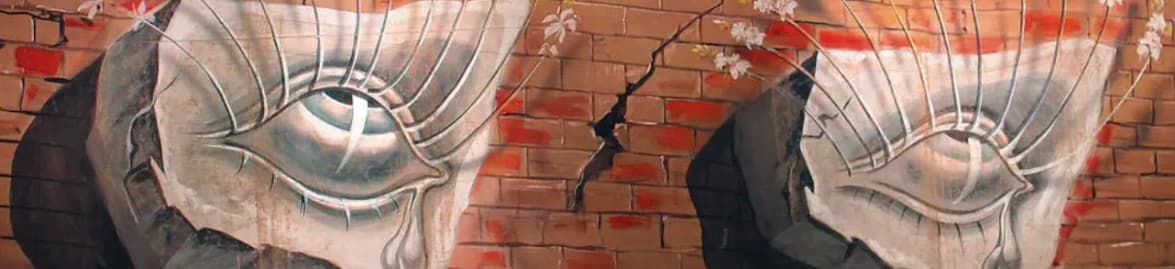
Surrealism is often described as “dream logic made visible” but that phrasing can hide a crucial truth: Surrealism isn’t one single method, it’s a family of methods. Two of the most important ways artists have pursued surreal reality are “automatism” and “veristic” surrealism. Both aim to unsettle the viewer, but they do so in opposite ways: automatism drifts into the unconscious, while veristic surrealism fixes the uncanny in crisp, believable detail.
Below is a deep dive into what each approach is, where it came from, and how they differ, artistically, psychologically and visually.
What Both Types of Surrealism Share
Even though automatism and veristic surrealism look radically different on the surface, they are driven by the same core ambitions. Their similarities matter more than their differences, because both are trying to solve the same fundamental problem: how to give form to what normally escapes conscious understanding.
1. A commitment to the unconscious as a source of truth
Both approaches treat the unconscious not as noise, but as meaningful. This idea comes directly from Surrealist thinkers like André Breton, who argued that dreams, impulses, and irrational thoughts reveal deeper layers of reality.
• Automatism accesses the unconscious directly, by bypassing control.
• Veristic surrealism reconstructs it, by staging dream imagery in a controlled way.
Different routes, same belief: inner experience contains real insight.
2. A rejection of purely rational reality
Both forms push against the idea that logic alone defines what is real.
• Automatism disrupts logic through fragmentation and flow.
• Veristic surrealism disrupts logic by making impossibility look believable.
In both cases, reason is not destroyed, but destabilized. You’re asked to question whether “common sense” is enough to understand reality.
3. The use of contradiction as a tool
Surrealism thrives on tension, and both methods rely on it heavily.
• Automatism creates contradiction between intention and outcome.
• Veristic surrealism creates contradiction between appearance and possibility.
This friction is what produces the surreal effect. Without contradiction, the work would either feel random or simply realistic.
4. An interest in dreams and dream logic
Both approaches borrow from the structure of dreams, even if they express it differently.
• Automatism mimics how dreams form (fluid, shifting, associative).
• Veristic surrealism mimics how dreams feel (convincing while impossible).
Artists like Salvador Dalí and Joan Miró explored opposite ends of this spectrum, yet both were deeply invested in dream imagery.
5. A desire to bypass conventional storytelling
Neither approach relies on straightforward narrative.
• Automatism often abandons narrative entirely.
• Veristic surrealism may suggest narrative, but rarely resolves it.
Instead of clear stories, both create open-ended situations that the viewer has to interpret.
6. Viewer participation is essential
In both types, meaning isn’t handed to you, it’s co-created.
• Automatism asks you to find patterns and emotional signals.
• Veristic surrealism asks you to decode symbols and paradoxes.
The viewer becomes part of the process, filling in gaps or resolving tensions internally.
7. Transformation of the familiar
Both forms take elements of reality and shift them into something unfamiliar.
• Automatism transforms through distortion and emergence.
• Veristic surrealism transforms through context and juxtaposition.
Either way, what you recognize becomes strange and what is strange starts to feel meaningful.
•> Automatism Surrealism: The Pure Expression of the Unconscious
Definition:
Automatism is a method of artistic creation meant to bypass conscious control. The artist tries to loosen or dissolve the “editor” in the mind, the part that chooses what should make sense. The goal is not simply to produce random marks or images. Instead, it’s to externalize inner impulses, associations, emotions, latent imagery, before the mind can rationalize them away.
How it works (artistically)
Automatism often involves:
• Rapid gesture drawing (letting the hand move freely)
• Unplanned composition (no strict sketch-to-final plan)
• Accidental textures or mark-making that guide forms
• Techniques that reduce intentional correction
You might see an image emerge like a dream sequence: not assembled logically, but experienced as a chain of impressions.
Why it feels “surreal”
Automatism produces a signature kind of disorientation:
• The images can feel alive with momentum, as if something is thinking through the artwork.
• The viewer senses meaning without being given a clear path to interpret it.
• Often the result is not “depicting objects realistically,” but depicting the process of thinking, or the residue of thoughts.
Psychological logic
Automatism strongly connects to the idea that the unconscious communicates in:
• fragments
• symbols
• emotional intensities
• strange causal leaps
Rather than translate the unconscious into conventional narrative, automatism often lets it remain untranslated, a direct imprint.
Visual cues you might recognize
Automatist works often include:
• gestural linework and energetic forms
• compositions that feel “found” rather than constructed
• ambiguous figures, sometimes recognizable, sometimes not
Automatism can look like scribble, drift, or spontaneous drawing, but its intention is deeper: to treat spontaneity as a doorway.
Notable Artists:
• Joan Miró
• André Masson
•> Veristic Surrealism: Hyper-Real Visions of Dreams
Definition:
Veristic surrealism uses a “realist” visual language, clear perspective, sharp lighting, convincing materials, to depict scenes that violate normal reality. The word veristic signals the emphasis on truth-like appearance: the world is painted or drawn convincingly, even when the events within it are impossible.
How it works (artistically)
Veristic surrealism relies on skills typically associated with realism:
• coherent lighting and shadows
• believable textures (skin, fabric, stone, metal)
• convincing anatomy and proportion (or intentionally precise distortions)
• structured spatial logic
But into that stable surface, surreal elements are inserted:
• impossible juxtapositions
• dream objects in physical environments
• paradoxical scenes that obey realism while breaking reality
Why it feels “surreal”
Veristic surrealism is unsettling because it creates a paradox:
• Your visual system believes the painting.
• Your knowledge of reality refuses the painting’s content.
The result is a kind of cognitive friction. The viewer doesn’t only wonder “What does this mean?” they also wonder “How can this be true-looking?”
Psychological logic
Veristic surrealism often suggests:
• the unconscious is not chaotic, it can be structured
• inner symbols can be as physical as everyday objects
• dreams don’t only dissolve reality; they can overwrite it while keeping the same visual rules
Where automatism emphasizes process, veristic surrealism emphasizes presentation, as if the dream has been documented.
Visual cues you might recognize
You’ll often see:
• crisp, carefully rendered detail
• “camera-like” or “object-like” solidity
• scenes that look plausible in a literal sense
• symbolism that feels staged, like evidence
Notable Artists:
• Salvador Dalí
• René Magritte
•> Automatism vs. Veristic: A Comparative View
|
Aspect |
Automatism |
Veristic Surrealism |
|
Approach |
Spontaneous, uncontrolled |
Planned, meticulous |
|
Style |
Abstract or symbolic |
Realistic, detailed |
|
Process |
Guided by subconscious flow |
Guided by conscious technique |
|
Experience |
Feels raw and intuitive |
Feels eerie and convincing |
•> Automatism vs. Veristic Surrealism: Two roads to the same destination
Both approaches aim at surreal effect, but they operate in opposite directions of control.
A) Control level
Automatism: reduces conscious control; lets the hand/mind drift.
Veristic surrealism: increases visual control; constructs a believable world.
B) Relationship to randomness
Automatism: treats spontaneity as a legitimate creative engine.
Veristic: treats surreal content as something that can be arranged with precision.
C) How meaning arrives
Automatism: meaning often arrives through emotional resonance and associative leaps.
Veristic: meaning often arrives through symbolism placed in a persuasive “physical” context.
D) What you experience as a viewer
Automatism: you feel the work happening, like a trace of thought.
Veristic: you feel the work proving, like a documentary of impossible reality.
•> How to “read” each type (practical viewing tips)
If you’re looking at automatism surrealism
Ask:
• What is the energy of the marks? Does it feel urgent, calm, frantic, playful?
• Where does your eye want to form images, what does it “accidentally” recognize?
• What emotions does it evoke before you understand it?
Automatism isn’t always about deciphering symbols. Sometimes it’s about entering the logic of becoming.
If you’re looking at veristic surrealism
Ask:
• What details are rendered too convincingly to be accidental?
• What objects or relationships are physically impossible but visually correct?
• What everyday conventions are being used to stage the dream?
Veristic surrealism often invites interpretation, but its first job is to make the impossible look inevitable.
•> The deeper common ground: both challenge rational certainty
Despite their differences, automatism and veristic surrealism share a core Surrealist insistence:
• Reality is not the same as truth.
• The unconscious is not inferior, it’s a source of knowledge.
• Logic alone cannot explain what humans experience.
Automatism tends to undermine reason by flooding the mind with impulse.
Veristic surrealism tends to undermine reason by granting the impossible the authority of realism.
Both create a fracture in your certainty, either by loosening form or by tightening it.
•> Conclusion
Automatism and Veristic Surrealism represent two sides of the same coin. One trusts instinct completely, while the other refines imagination through technique. Both, however, remain united in their ultimate goal: to reveal the hidden workings of the mind. Understanding these two approaches not only deepens appreciation for Surrealist art but also offers insight into the diverse ways creativity can emerge, from chaos or control, from impulse or intention.