bani thani painting: the indian mona lisa
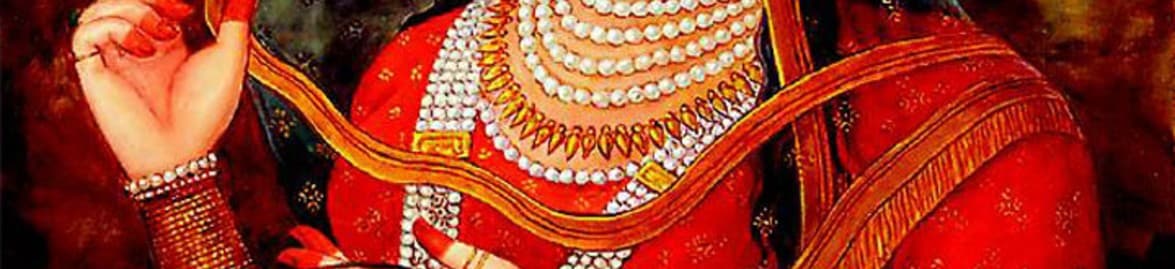
In the rich tapestry of Rajasthani art, few paintings capture the essence of beauty, devotion and royal patronage quite like the legendary Bani Thani portraits. Often referred to as the "Indian Mona Lisa" these remarkable creations from the Kishangarh school of Rajasthan represent one of the most distinctive and refined expressions of Rajput painting. This article is about the Bani Thani painting, the iconic painting from rajasthan that has become synonymous with Kishangarh miniature art - a style that captures the artistic heritage of India.
Origin and Historical Background
The painting of Bani Thani is believed to have been created under the patronage of Maharaja Savant Singh (1699-1764), the eldest son of King Raj Singh & the seventh ruler of Kishangarh who ruled the princely state of Kishangarh from 1748 to 1757. He was a patron of the arts and an ardent devotee of Lord Krishna. Amongst his famous writings are Manoratha Manjari (1723), Rasika Ratnavali (1725) and Bihari Chandrika (1731), all filled with the rasa (nectar) of Krishna’s Prema and Bhakti.
The subject of the painting is thought to be “Vishnupriya”, a singer and poetess who was employed by Maharaja Savant Singh’s stepmother i.e Bankavatji as a singer in the palace. She was known for her beauty and charm, which captivated the King. Maharaja Savant Singh, who wrote poetry under the pen name "Nagari Das" fell deeply in love with Vishnupriya, and she became his courtesan. The name "Bani Thani" translates to "adorned lady" or "well-dressed woman" reflecting her elegant portrayal. Legend has it that Maharaja Sawant Singh was so enamored by her that he himself originally sketched her and handed the sketch to the court painter Nihal Chand, asking him to create a portrait of her to capture her beauty on canvas. This portrait, known as the Bani Thani painting, immortalized her beauty and grace, making her an iconic figure in Indian art.
Historical Significance
The Bani Thani style represents the height of the Kishangarh school of painting, one of the prominent Rajput painting traditions. What elevates Bani Thani paintings beyond mere portraiture is their spiritual dimension. In many works, Bani Thani is depicted as Radha, the divine consort of Lord Krishna, while Savant Singh is portrayed as Krishna himself. This transformation of mortal love into divine devotion (bhakti) reflects the deep spiritual currents in Rajput culture.
The paintings often show scenes from Krishna's life or moments of devotional longing between Radha and Krishna, imbued with both sensual and spiritual significance. This blend of the earthly and the divine gives Bani Thani paintings their particular emotional resonance.
Nihal Chand: The Mastermind Behind Bani Thani Painting
Nihal Chand, the court artist of Kishangarh, is credited with creating the Bani Thani painting. He was a master of the Kishangarh style, known for his ability to capture the essence of his subjects with delicate lines and vibrant colors. Nihal Chand's depiction of Bani Thani is considered one of his finest works, showcasing his skill in rendering intricate details and capturing the subtle nuances of expression.
Bani Thani Painting: A Masterpiece Of Miniature Art
The Kishangarh school of miniature painting reached its artistic zenith under the patronage of Raja Sawant Singh (reigned 1748–1764). While it drew inspiration from both Mughal and traditional Rajasthani art, the Kishangarh style evolved into a unique aesthetic distinguished by its elongated facial features, romantic and spiritual themes, lush natural backdrops, and a subtle yet vivid color palette. This refined visual language became a hallmark of the region’s artistic identity, emphasizing both technical finesse and emotional depth.
At the heart of this tradition lies the Bani Thani painting—arguably the most iconic representation of the Kishangarh style and a timeless symbol of Indian miniature art. Depicted with almond-shaped eyes, a slender neck, and an elegant, poised demeanor, Bani Thani embodies the ideal of ethereal beauty. Her richly embroidered sari, pearl necklaces, and ornate jewelry reflect the luxury of the royal court, while her enigmatic smile evokes comparisons to the Mona Lisa. More than a portrait, the painting captures a sense of spiritual devotion and romantic mysticism—a tribute not only to her historical persona but to the divine feminine as envisioned in the Radha-Krishna tradition. The intricate craftsmanship and delicate brushwork highlight the Kishangarh artists' mastery of detail, elevating Bani Thani to the status of a true artistic masterpiece.
Artistic Features
Bani Thani is characterized by her large, lotus-like eyes, arched eyebrows, and a pointed chin, which are signature features of the Kishangarh style. The painting's aesthetic is marked by its stylized elegance, which has captivated art lovers for centuries. The eyes, in particular, are a focal point, drawing viewers into the depth of her expression.
Role in Rajasthani Art & Culture
The Bani Thani paintings occupy a position of extraordinary significance within Rajasthani art and culture, representing far more than mere portraiture. As the crowning achievement of the Kishangarh school, these works defined a distinctive artistic voice among Rajput painting traditions through their unmistakable stylistic elements: elongated lotus-petal eyes, sharp nose, slender neck and idealized proportions.
As a cultural icon, Bani Thani reflects the aesthetics and ideals of femininity in Rajasthan, showcasing the region's artistic innovation and cultural narratives. The painting's influence extends beyond mere visual art; it has inspired poetry, music, and dance, enriching the cultural tapestry of Rajasthan. The portrayal of Bani Thani as a muse and beloved of the king highlights the interplay between art and royalty, emphasizing the importance of patronage in the development of Rajasthani art.
Famous Artists Who Popularized Bani Thani Art Style
Several artists have played significant roles in popularizing the Bani Thani painting style, which is renowned for its distinctive portrayal of elegance and grace within the Kishangarh School of Art.
• Amar Chand - Active in the Kishangarh court during the later period of the style's development, Amar Chand was instrumental in preserving and refining the Bani Thani aesthetic. His works maintained the elegance and spiritual quality of the earlier portraits while adapting to evolving courtly tastes. He is particularly noted for his meticulous attention to ornamental details and textiles.
• Bhavani Das - Working in the Kishangarh atelier during the late 18th and early 19th centuries, Bhavani Das helped sustain the Bani Thani style during a period of transition. His paintings often incorporated more complex narratives around the central figures while maintaining the distinctive facial types and refined aesthetic associated with the style. His works helped bridge the classical period of the style with later developments.
• Anil Vyas - He is a contemporary artist who has made significant contributions to keeping the Bani Thani style alive. He has created over 10,000 Bani Thani paintings, adhering to the traditional techniques without the use of modern tools like pencils or erasers. His work helps preserve the authenticity of this art form in the face of modern influences.
Why Bani Thani is Called India’s Mona Lisa?
Bani Thani's painting has been widely acclaimed, with Eric Dickinson referring to it as the "Mona Lisa of India" due to several striking parallels with Leonardo da Vinci's masterpiece. One of the primary reasons is the enigmatic smile of Bani Thani, which is subtle, mysterious and seems to convey a thousand emotions, much like the Mona Lisa's iconic smile. The masterful use of colors in the painting is another reason for the comparison. The soft, muted colors used in Bani Thani's painting, such as the blue-green background, add to the painting's mystique, similar to the Mona Lisa's sfumato technique.
Both paintings are also idealized portraits, capturing the essence of the subject rather than a realistic representation. The elongated face, arched eyebrows and lotus-like eyes in Bani Thani's painting are characteristic of the Kishangarh school's idealized portraiture, which is reminiscent of the Mona Lisa's stylized features. Furthermore, both paintings have a timeless appeal, transcending centuries and cultures.
Additionally, both artworks reflect the ideals of beauty and femininity in their cultures. Bani Thani represents quintessential Indian beauty, while the Mona Lisa encapsulates Renaissance ideals of grace. Furthermore, both hold significant historical importance; the Mona Lisa is a masterpiece of the Renaissance, whereas Bani Thani showcases the artistic innovations of the 18th century in India, blending Mughal and Rajput styles. Lastly, the meticulous techniques and attention to detail in Bani Thani parallel the detailed brushwork found in the Mona Lisa, solidifying its status as a treasured piece of Indian art.
What Makes Bani Thani Paintings Unique?
The uniqueness of Bani Thani paintings lies in their ability to capture the essence of feminine beauty and grace, making them timeless representations of Indian miniature art. The paintings serve as a cultural and historical document, offering a glimpse into the royal court's aesthetics and the patronage of the arts during the 18th century. The emotional depth and storytelling elements, combined with the artistic mastery, make Bani Thani paintings not only visually stunning but also deeply evocative, ensuring their enduring appeal and significance in the world of art.
Why Does Bani Thani Still Captivate Us Today?
Bani Thani continues to captivate modern audiences due to its timeless elegance, emotional resonance, and symbolic richness. Her portrayal merges the real and the divine, capturing not just physical beauty but a deeper spiritual ideal. Her mysterious smile, graceful demeanor, and refined styling draw comparisons to Western icons like the Mona Lisa, yet her cultural significance is deeply rooted in Indian devotional and artistic traditions.
In a fast-paced digital world, Bani Thani remains a touchstone of Indian classical aesthetics, representing an era when art was intertwined with poetry, music, and spiritual life. Her image has transcended the canvas—featured in textbooks, stamps, fashion, and pop culture—making her an enduring muse and symbol of Indian feminine grace.
Legacy
The Bani Thani painting influence is evident in various art forms and continues to inspire contemporary artists. The Indian government recognized its cultural significance by featuring it on a postage stamp issued on May 5, 1973, further cementing its status as a national treasure.