


beyond the masters: unveiling the gems of modern indian art
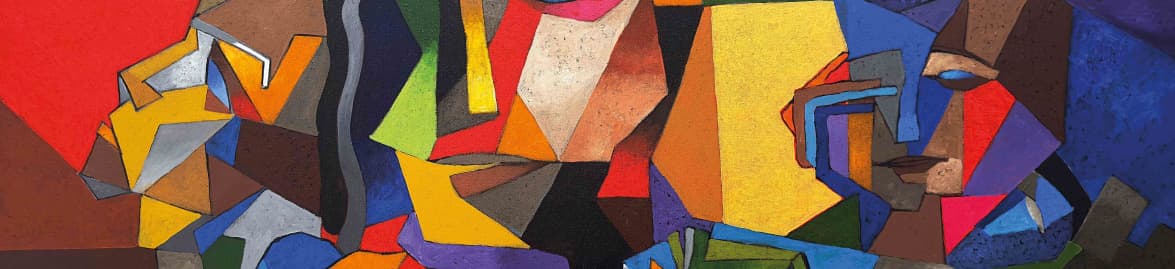
The evolution of modern Indian art has often been dominated by a select group of prominent figures such as M.F. Husain, S.H. Raza, and F.N. Souza. While the celebrated names often take center stage, there is a select group of artists whose profound contributions have been quietly shaping the landscape of modern Indian art. These artists, often overshadowed by the fame of their peers, have created exceptional works that blend traditional Indian sensibilities with modernist experimentation. By exploring their stories and their artistic journeys, we can gain a deeper understanding of the diverse fabric of Indian modernism.
K.S. Kulkarni: A Dialogue Between Tradition & Modernism
K.S. Kulkarni (1916–1994) was a pioneer in blending traditional Indian aesthetics with modernist principles. His ability to merge symbolic imagery with modern techniques placed him at the forefront of a new wave of Indian artists. Kulkarni’s works reflect the cultural depth of India while simultaneously embracing a global artistic language. Despite his significant influence, his contributions are often underappreciated in mainstream art discussions.
K.S. Kulkarni Artwork often explores abstract art with influences from folk traditions and mythological themes. His association with the Delhi Silpi Chakra is a testament to his commitment to modern Indian art. The art themes he explored continue to inspire generations of artists.
Avinash Chandra: The Cosmic Abstractionist
Avinash Chandra (1931–1991) was known for his exploration of cosmic and metaphysical themes. Chandra’s approach to abstraction was not just aesthetic; it was a spiritual pursuit, aimed at conveying the deeper forces of the universe. His unique vision of the world through the lens of abstraction has left a lasting impact on modern Indian art. While his work remains lesser known, its philosophical depth and visionary approach deserve wider recognition.
Avinash Chandra Paintings often exemplify his figurative paintings that blend modernist abstraction with profound spirituality. His time in the London art scene and contributions to the post-independence art movement left an indelible mark on Indian modernism.
Niren Sengupta: The Spiritual Abstract Expressionist
Niren Sengupta (b. 1940) has established himself as a significant figure in Indian modern art, particularly through his spiritual abstraction. His use of bold colours and dynamic forms is not just about visual appeal; it is about creating a sense of balance and harmony that resonates with deeper, spiritual meanings. Sengupta’s work offers a meditative space for reflection, transcending mere visual aesthetics. While his contributions are recognised in select circles, his influence on modern Indian art has yet to be fully acknowledged.
Niren Sengupta Paintings are noted for their spiritual art and exploration of texture in paintings. His art philosophy invites viewers to explore meditation and introspection through the dynamic energy of his abstract expressionist forms.
S.L. Haldankar: Master of Realism
S.L. Haldankar (1882–1968) was one of the most celebrated realist painters in India, known for his technical precision and attention to detail. His ability to capture everyday moments with extraordinary clarity set him apart from his contemporaries. Haldankar’s works have always been a cornerstone of Indian realism, though his contributions are often overshadowed by the more avant-garde movements. His meticulous approach and ability to convey emotions through realistic depiction make him an important figure in Indian art history.
S.L. Haldankar Paintings exemplify realism in art and are best known for works like Lady with the Lamp, which showcases his expertise in watercolour paintings. His understanding of light and shadow techniques continues to be admired by artists and collectors alike.
Sohan Qadri: Art as Meditation
Sohan Qadri (1932–2011) was an artist whose work transcended the visual realm and engaged with the spiritual. Qadri's approach to abstraction was rooted in his deep understanding of mysticism, particularly Tantric philosophy. His art was an expression of his inner experiences, creating a bridge between the tangible and intangible. Despite his significant contribution to modern Indian art, Qadri’s work remains underappreciated in wider art circles.
Sohan Qadri Paintings embody his unique approach to tantric art and spiritual minimalism. His ink and dye paintings are rich in symbolism, connecting sacred geometry and meditation with his exploration of abstract expressionism.
Laxman Shreshta: The Quiet Poet of Landscapes
Laxman Shreshta (b. 1939) is known for his minimalist landscapes that evoke deep emotion with their simplicity. His abstract approach to nature focuses on evoking mood and atmosphere rather than detailing specific elements. Shreshta’s work reminds us that art doesn’t always need complexity; sometimes, simplicity can be just as powerful. Though his contribution to modern Indian art is often understated, his ability to evoke profound emotions through minimalism makes his work significant.
Laxman Shreshta Paintings focus on landscape abstractions and colour fields, capturing the essence of nature through the use of light and space. His work is a testament to the quiet beauty of minimalism and continues to inspire contemporary artists.
K. Damodaran: Folk Traditions Reinterpreted
K. Damodaran was an artist who bridged the gap between traditional Indian folk art and modernist sensibilities. Drawing from India’s rural and mythological traditions, Damodaran infused his work with vibrant colours and intricate patterns, offering a contemporary interpretation of age-old themes. His approach allowed traditional elements to coexist with modern techniques, creating a fusion of the old and the new. While his name may not be as well known as others, his work remains a significant part of the evolution of Indian modernism.
K. Damodaran Paintings explore social realism and mythological themes, providing a contemporary lens to age-old narratives. His contributions to the post-independence art movement are vital in understanding the transition from traditional to modern in Indian art.
Nikhil Biswas: The Expressionist of Human Emotion
Nikhil Biswas (1930–1966) was a master of conveying human emotion through abstraction. His work delves into the complexities of human experience, exploring themes of struggle, resilience, and emotion. Biswas’s expressive approach to art, characterised by bold strokes and powerful imagery, allows him to convey deep psychological states. Despite his relatively short life, Biswas’s work holds an important place in the narrative of modern Indian art, yet his contributions remain under-recognised by mainstream art circles.
Nikhil Biswas Paintings are often seen as a reflection of human struggles in art, especially through his powerful expressionist art and charcoal drawings. His use of bold strokes in works such as Nikhil Biswas landscape watercolours represents his unique approach to emotional expressionism.
Conclusion
Modern Indian art is far richer and more diverse than the handful of celebrated names that dominate public conversations. The artists highlighted here have made invaluable contributions that deserve greater recognition. Each has brought something unique to the field, from K.S. Kulkarni’s fusion of tradition and modernism to Sohan Qadri’s mystical abstraction. Each has brought
By recognising the works of these unsung heroes, we gain a more comprehensive understanding of modern Indian art and ensure that the voices of these artists are not lost to history. Their legacies deserve the same level of recognition as the more famous figures who shaped the movement, allowing future generations to appreciate the full range of Indian modernism.




