chintamoni kar: the philosopher sculptor of bengal
.jpg&w=3840&q=75)
Chintamoni Kar (1915–2005) stands as a towering figure in modern Indian sculpture, renowned for masterfully blending the rich heritage of Indian art with the innovative impulses of Western modernism. His sculptures, crafted in diverse materials such as wood, terracotta, stone and metal, beautifully fuse fluidity, mythology and modern artistry, marking him as an innovator who bridged cultures and artistic epochs.
Beyond his sculptural practice, Chintamoni Kar was a prolific writer and conservationist, dedicated to nurturing Indian art heritage and fostering artistic dialogue between East and West. His enduring legacy is celebrated not only in his monumental public works and educational contributions but also through the Bhaskar Bhavan Museum in Kolkata and the sanctuary named in his honor.
Early Life
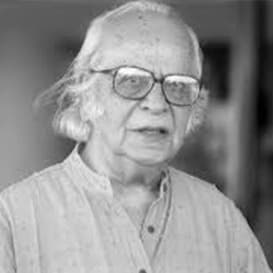 Chintamoni Kar was born born on April 19, 1915, in Kharagpur, West Bengal, India during a period of vibrant cultural and political awakening. From an early age, he displayed an innate passion for the visual arts, which was nurtured by the rich artistic heritage of Bengal. Growing up amidst the Bengal Renaissance; a time of intellectual, artistic, and social reformation Chintamoni Kar's creative instincts flourished as he absorbed traditional Indian art forms and emerging global artistic trends.
Later Life
Throughout his life, Chintamoni Kar remained committed to the advancement of Indian art and sculpture. He worked extensively as an artist, educator, and cultural promoter. In addition to his practice as a sculptor, he served as the Principal of the Government College of Art & Craft, Kolkata, where he inspired generations of young artists. He continued to produce thought-provoking sculptures and contribute to public art projects until his passing in 2000, leaving behind a vast legacy.
Shortly before his death in 2005, Kar established the Bhaskar Bhavan Administration & Maintenance Trust at his residence in Narendrapur, now a public museum displaying his and his wife Amina Ahmed Kar’s work. This trust continues to support art education and holds an annual memorial lecture celebrating his legacy.
Family
Chintamoni Kar was married to Amina Ahmed Kar, herself an abstract and non-figurative artist; the couple had one child, but his family predeceased him.
Education
Chintamoni Kar studied painting at the Indian Society of Oriental Art in Kolkata under Abanindranath Tagore and trained in sculpture under Giridhari Mahapatra, later honing his craft at the Académie de la Grande Chaumière in Paris and Victor Giovanelli’s atelier.
Art Style
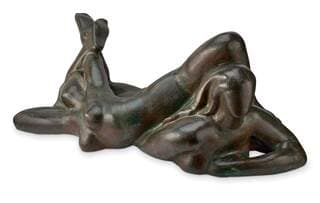 Chintamoni Kar employed a diverse range of materials i.e wood, stone, terracotta, and metal skilled in both academic realism and abstraction. His work often combined myth, symbolism, and the human form, reflecting a dialogue between Indian and Western sculptural traditions.
Famous Sculptures
• Skating the Stag (known as "The Stag"): Silver medal, 1948 London Olympics art competition.
• Public bronzes of Mahatma Gandhi, Subhas Chandra Bose, Rani Rashmoni, Bankim Chandra Chattopadhyay, Sarojini Naidu, Jagadish Chandra Bose, and Dr. Rajendra Prasad, found in locations in Kolkata, New Delhi, and even a Gandhi relief at Harvard University.
Characteristic Features of His Sculptures
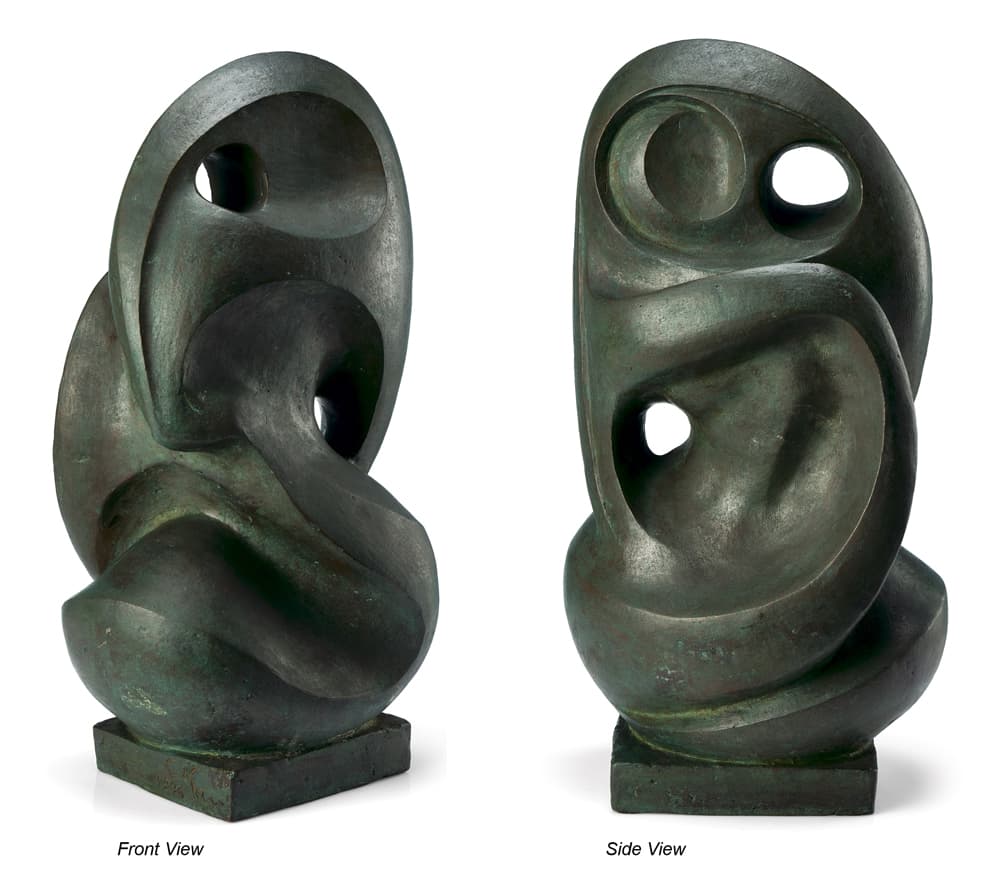 • Minimalist yet expressive form: His sculptures favor simple lines and smooth surfaces, allowing the essence of the subject to emerge without unnecessary embellishment.
• Spiritual undertones: Many of his works reflect Indian spiritual traditions, particularly the themes of meditation and inner peace.
• Material mastery: Kar displayed exceptional skill in manipulating bronze, stone, and terracotta, giving his sculptures a timeless and tactile presence.
• Organic flow: His works often exhibit a rhythmic quality, where the forms appear to flow naturally, almost as if shaped by nature itself.
Exhibitions
During his prolific career, Chintamoni Kar’s works were featured in major exhibitions such as:
• Manifestations VII: 20th Century Indian Art
• The Art of Bengal
• Indian Portraits: The Face of a People
• India’s French Connection: Indian Artists in France
• Navrasa: The Nine Emotions of Art
His works are housed in the National Gallery of Modern Art, Victoria Memorial Hall, and international collections.
Awards
Chintamoni Kar received significant accolades:
• Padma Bhushan (1974), one of India’s highest civilian awards
• France’s highest civilian honour (2000)
• Honorary doctorate from Rabindra Bharati University (1986)
• Deshikottam from Visva-Bharati University, Santiniketan (1995)
• Silver medal, 1948 London Olympics (art competition)
Contribution in Indian Art
As a teacher, principal and author, Chintamoni Kar trained generations of artists, advocated for the preservation of Indian art, and helped secure wildlife sanctuary status for the Chintamoni Kar Bird Sanctuary near Kolkata. His literary contributions include influential essays and books on art in both Bengali and English.
Enduring Legacy & Impact
Chintamoni Kar’s legacy remains deeply influential in Indian art circles. His sculptures continue to be studied for their philosophical depth and artistic innovation. Many of his students went on to become prominent artists themselves, propagating his vision of blending tradition with contemporary expression. Public installations of his sculptures remain important landmarks, inspiring appreciation for sculptural art in public spaces.
Conclusion
Chintamoni Kar stands as a towering figure in Indian art history, celebrated for his pioneering role in modern Indian sculpture. His work not only captures the spiritual and cultural ethos of India but also reflects a global sensibility that speaks across generations. As an educator, innovator, and artist, his contributions significantly shaped the trajectory of Indian visual arts, leaving a lasting mark.
Lesser-Known Facts
• Chintamoni Kar had a deep interest in Indian philosophy, which profoundly influenced the contemplative nature of his sculptures.
• Apart from sculpture, he wrote essays on aesthetics and art theory, many of which remain unpublished or in archives.
• He often used locally sourced materials for his sculptures, emphasizing a connection to indigenous practices and sustainability long before it became a global trend.
• Chintamoni Kar was known for his humility and reluctance to commercialize his art, focusing instead on public works and education.