cows and their appearance in art

Cows in Ancient and Sacred Art
The earliest depictions of cows and cattle can be traced back to prehistoric cave paintings, such as those found in Lascaux, France. These early artworks highlight the importance of cattle in survival and ritual life. In many ancient cultures, cows were revered for their life-sustaining qualities and became symbols of fertility, abundance, and strength.
In ancient Egypt, cows were associated with Hathor, the goddess of motherhood, love, and nourishment. Artistic representations often depicted Hathor as a cow or a woman with cow horns, emphasizing the animal’s divine and nurturing nature. Similarly, in Indian art and iconography, cows are regarded as sacred beings, symbolizing purity, selfless giving, and prosperity. Paintings, temple sculptures, and miniature artworks frequently feature cows alongside deities such as Krishna, reinforcing their spiritual significance.
Cows in Medieval and Renaissance Art
During the medieval period, cows appeared in religious manuscripts, frescoes, and pastoral scenes, often serving as background elements that grounded sacred narratives in everyday life. In nativity scenes, for example, cows and oxen symbolized humility, warmth, and divine presence within ordinary surroundings.
Renaissance artists began to show a renewed interest in nature and rural life, leading to more realistic and detailed portrayals of animals. Cows were included in pastoral landscapes to represent harmony between humans and nature. Artists such as Pieter Bruegel the Elder used cows to depict agricultural labor and village life, offering insight into the social and economic realities of the time.
Cows in Dutch Golden Age and Pastoral Painting
The Dutch Golden Age marked a significant moment in the artistic representation of cows. As agriculture played a central role in Dutch society, cows became prominent subjects in landscape and genre paintings. Artists like Paulus Potter and Aelbert Cuyp portrayed cows with remarkable realism, emphasizing their physical presence and calm demeanor.
Paulus Potter’s famous painting The Bull elevated livestock to monumental status, presenting the animal with dignity and strength. These works reflected national pride, economic prosperity, and a deep respect for the rural landscape. Cows in these paintings symbolized stability, wealth, and the connection between land and livelihood.
Cows in Modern and Contemporary Art
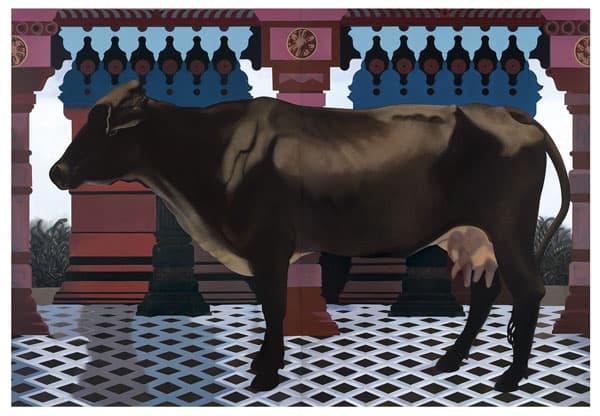 With the advent of modern art, artists began to reinterpret traditional subjects, including cows, through new styles and perspectives. Vincent van Gogh included cows in his pastoral scenes, using expressive brushwork and bold colors to convey emotion rather than realism. For Van Gogh, cows represented simplicity, labor, and a return to nature.
In the 20th century, artists like Marc Chagall incorporated cows into dreamlike and symbolic compositions. Chagall’s floating cows often represented memory, rural childhood, and cultural identity. Meanwhile, contemporary artists have used cows to explore themes such as consumerism, environmental concerns, and industrial farming, sometimes presenting them in provocative or conceptual ways.
Symbolism of Cows in Art
Across cultures and historical periods, cows have carried layered symbolic meanings. They commonly represent nourishment, fertility, patience, and abundance. In religious contexts, cows often symbolize divinity and moral virtue, while in pastoral art, they stand for peace, simplicity, and rural harmony.
In modern interpretations, cows may also symbolize humanity’s evolving relationship with nature and ethical questions surrounding agriculture and sustainability. This adaptability of meaning has allowed cows to remain relevant subjects in art across centuries.
Famous Cow Paintings in Art History
Below are some of the most famous cow paintings in art history, highlighting how different artists and movements have interpreted this humble yet meaningful subject.
1. The Bull – Paulus Potter (1647)
• Artist and Background - Paulus Potter was a Dutch Golden Age painter known for elevating animals to the status of primary subjects.
• Painting Description - This monumental painting presents a bull in striking detail, set against a Dutch countryside. The animal dominates the composition with confidence and realism.
• Historical Importance - The painting was revolutionary for its time, giving livestock heroic scale and reflecting the agricultural pride of the Netherlands.
2. Landscape with Cattle – Aelbert Cuyp (c. 1650)
• Artist and Background - Aelbert Cuyp specialized in serene river landscapes populated with cattle.
• Painting Description - Cows are bathed in warm, golden light, resting peacefully along a riverbank.
• Historical Importance - Cuyp’s works defined the pastoral ideal of the Dutch Golden Age and influenced later landscape painters.
3. Ploughing in the Nivernais – Rosa Bonheur (1849)
• Artist and Background - Rosa Bonheur was a French realist painter celebrated for her animal studies.
• Painting Description - Oxen are shown powerfully pulling a plow through fertile soil, emphasizing strength and labor.
• Historical Importance - The painting highlighted rural life and challenged gender norms, as Bonheur achieved great success in a male-dominated art world.
4. Cow’s Skull with Calico Roses – Georgia O’Keeffe (1931)
• Artist and Background - Georgia O’Keeffe was a modern American painter known for her symbolic interpretations of natural forms.
• Painting Description - A cow’s skull floats against a stark background, paired with vivid flowers.
• Historical Importance - The work reflects themes of mortality, beauty, and the spirit of the American Southwest.
5. The Cow – Marc Chagall (1911)
• Artist and Background - Marc Chagall was a modernist painter whose work blended memory, folklore, and fantasy.
• Painting Description - The cow appears in a dreamlike setting, often floating or glowing with symbolic color.
• Historical Importance - Chagall used cows as symbols of childhood, village life, and cultural identity.
6. Pastoral Scene – Jean-François Millet (1860s)
• Artist and Background - Millet was part of the Barbizon School, focusing on rural labor and peasant life.
• Painting Description - Cows appear alongside farmers in quiet countryside scenes.
• Historical Importance - Millet’s work humanized rural life and influenced later realist and impressionist artists.
7. The Red Cow – Franz Marc (1911)
• Artist and Background - Franz Marc was a German Expressionist and founding member of Der Blaue Reiter.
• Painting Description - A bright red cow lies peacefully in a stylized landscape, rendered with bold colors and simplified forms.
• Historical Importance - The painting reflects Marc’s belief in animals as symbols of innocence and spiritual purity.
8. Cows in a Meadow – Vincent van Gogh (1890)
• Artist and Background - Vincent van Gogh was a Post-Impressionist artist known for expressive brushwork.
• Painting Description - Cows graze in a vibrant landscape painted with energetic strokes and rich color.
• Historical Importance - Van Gogh’s cow paintings reflect his fascination with rural life and emotional expression through nature.
9. Peasant Woman with Cows – Camille Pissarro (1880s)
• Artist and Background - Pissarro was a leading Impressionist painter focused on rural and everyday life.
• Painting Description - Cows are integrated naturally into a working countryside scene.
• Historical Importance - The painting highlights the Impressionist focus on light, atmosphere, and modern rural life.
10. The Cow – Andy Warhol (1966)
• Artist and Background - Andy Warhol was a pop artist known for transforming everyday imagery into iconic art.
• Painting Description - Cows are rendered in bright, unnatural colors using silkscreen techniques.
• Historical Importance - Warhol’s cow series blurred the line between high art and commercial imagery, redefining modern visual culture.
Conclusion
Cows and their appearance in art reveal much about human values, beliefs, and ways of life throughout history. Whether depicted as sacred beings, symbols of rural prosperity, or subjects of modern commentary, cows have consistently reflected humanity’s dependence on and reverence for the natural world. Their enduring presence in art underscores their importance not only as animals of sustenance but also as powerful cultural and artistic symbols that continue to inspire artists today.