


d p roy choudhurys vision for indian art: tradition and transformation
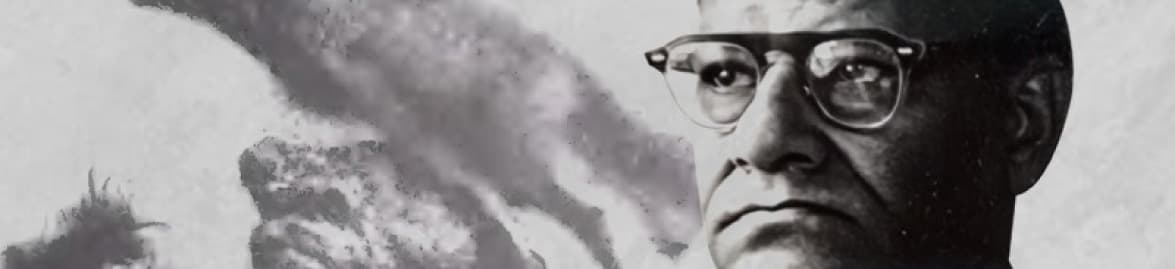
D P Roy Choudhury held a position of importance in Indian art, celebrated for effectively synthesising tradition and transformation. While his paintings were deeply rooted in historical themes of India, a progressive spirit emerges through the works that pay homage as much as reimagine classical aesthetics. In this tour of exploration, we will examine the defining elements that comprise Choudhury's artistic vision and how he handles the interplay of tradition and modernity.
Early Artistic Influences & Career Beginnings
Devi Prasad Roy Choudhury's entire work reflects his individual artistic vision. His works are a dialogue with history. They echo the Indian cultural milieu while pulsating with a contemporary spark. Early in his career, his paintings portrayed traditional themes like mythological narratives and history-tinted personages blending classical techniques with personal interpretations. His work early in his career brought him to the forefront of the contemporary Indian art scenario.
Education & Artistic Evolution
Born into a milieu where art was more than a pursuit but a way of life, Choudhury's early exposure to the Indian art tradition had a telling effect on his practice. Education, spanning from traditional training to modern techniques, allowed him to nurture a style that was uniquely his. In these paintings, the amalgamation of old and new is reflected, where classical iconography often finds a place with innovative forms and colours. His symbolism rich works, replete with narrative depth, infuse instinctive comprehension from both historical contexts and contemporary aesthetics.
Signature Works
D.P. Roy Choudhury's signature works include "Rasa Leela," which merges tradition with contemporary abstraction in depicting Krishna and Radha's divine dance, and "After Bath," a masterly portrayal of a woman in a private moment, clutching her damp tresses while her clothes cling to her wet body; this work reflects the early phase of Choudhury’s practice, where bathing beauties introduced sensuality by way of the sacred into patrons' living rooms, thus bypassing the scrutiny of matriarchs and aligning with religious rituals, and the piece’s plaster-of-Paris sculpture was used for casting the bronze version now part of the National Gallery of Modern Art in New Delhi.
Technique & Style
Choudhury's painting is highly versatile and profound. His method in general is characterised by a sophisticated blending of traditional Indian techniques with modern modes of expression. His textures and layering bring out in his works a very high sense of detailing wherein not a single brush stroke is out of its place in the concept of the larger harmonious vision. This style enables Choudhury to transcend boundaries between old and new.
Classification & Themes : A Diverse Artistic Portfolio
D.P. Roy Choudhury's painting can be primarily classified based on its subjects and forms. His paintings can, in general, be categorised under three major heads: mythological narratives, historical themes, and abstract interpretation. Each classification serves as a window to his creations and the themes that tickled his fancy. In his representations, his mythological art deals with divine personalities or other cosmic themes, while history paintings may provide stylised impressions of the great events in the history of India. Abstract interpretations tend to be more experimental, with a blend of traditional symbolism creating contemporary forms.
Acquisition & Collectibility : A Sought-After Artist
There are various means of acquiring a D.P. Roy Choudhury worked for the interested buyer. Works by Choudhury surface through galleries and auction houses from time to time. His position as one of the most important figures in Indian art means these works are highly sought after - both for their artistic and historical values. In this way, his paintings remain unique to collectors and art lovers of all genres for their bridging between the past and the present.
The history of D P Roy Choudhury as an artist is as multi-layered and rich as his paintings. This journey, from a conventional training background to one of the leading figures in modern art in India, sums up his commitment to continuity and innovation alike in Indian art. His academic successes and numerous exhibitions have put him in the category of a respected name, inasmuch as the continued exploration of new artistic horizons keeps his work relevant and engaging.
To put it all together, what stands forth from D.P. Roy Choudhury's vision for Indian art is a juxtaposition of tradition against transformation. His paintings emerge as a dynamic conversation between the classical and the contemporary, giving ample evidence of his power to respect historical contexts in artistic forms. As we dwell on his work, we appreciate the depth of understanding he has on both the heritage of art in India and its expression in innovation. Whether with his mythological scenes, historical renditions, or again with his abstract compositions, Choudhury's art cannot fail to challenge and inspire in equal measures.
For more information on D P Roy Choudhury's original paintings, please visit - here




