dada art: history, characteristics, famous paintings & artists
What is Dada Art?
Also known as "Dada", Dada Art was an avant-garde art movement that emerged in the early 20th century as a radical rejection of traditional artistic values, logic and societal norms. It celebrated the irrational, the nonsensical and the absurd. Instead of creating beautiful or technically refined works, Dada artists sought to shock, challenge or provoke their audiences, questioning the very purpose of art itself.
History
The Dada Art movement emerged in 1916 at the Cabaret Voltaire in Zurich, Switzerland, a neutral refuge where artists, poets, and intellectuals gathered to escape the devastation of the First World War. Founded by Hugo Ball and Emmy Hennings, the modest café quickly evolved into a vibrant center for avant-garde experimentation.
At the time, Europe was consumed by destruction, and the once-trusted ideals of progress, reason, and patriotism, long considered the foundations of Western civilization, had fallen into disillusionment. Many viewed the established art world, with its ties to nationalism and social order, as complicit in the chaos of war. In response, Dadaism emerged as a deliberate rejection of logic, tradition, and bourgeois values, challenging conventional notions of meaning and cultural authority.
Where did the name “Dada Art” come from?
The name "Dada" originated from a nonsensical word chosen randomly by the movement's founders. In 1916, Hugo Ball, a poet and co-founder of the Cabaret Voltaire in Zurich, Switzerland, flipped through a French-German dictionary and pointed to "dada," which means "hobbyhorse" in French. The group adopted it for its childish, meaningless sound, symbolizing their embrace of irrationality and rejection of rational meaning. Tristan Tzara, another key figure, later popularized the term in manifestos, emphasizing its arbitrary nature.
Where did the movement come from?
Dada originated in Zurich, Switzerland, around 1916 at the Cabaret Voltaire, a café founded by Hugo Ball and Emmy Hennings. The movement was a direct reaction to the horrors of World War I, which many artists saw as evidence of a deeply irrational and collapsing society. In response, they embraced absurdity, spontaneity, and anti-establishment creativity.
•> Dada quickly spread to several major cultural centers:
•> Berlin, which had a more political and socially critical version of Dada
•> Paris, where Surrealism later grew from Dada ideas
•> New York, where artists such as Marcel Duchamp explored conceptual approaches to art
What did people think of Dada Art when it debuted?
When Dada debuted in 1916, it provoked intense controversy and mixed reactions. Supporters saw it as a liberating force against the status quo, but critics viewed it as scandalous, nihilistic, and offensive. Public exhibitions, like the 1917 Salon des Indépendants in Paris, led to riots and outrage, with audiences labeling it "insulting" and "degenerate." Even some artists within the movement disagreed on its direction, leading to internal conflicts. Over time, it gained recognition as a groundbreaking critique of society, though initial reception was largely hostile, with accusations of being anti-art or mere provocation.
What qualifies as Dada Art
A work can be considered Dada if it:
•> Rejects traditional artistic standards or meaning
•> Incorporates chance, randomness, or absurdity
•> Uses everyday or found objects, as seen in Duchamp’s “readymades”
•> Challenges political, cultural, or artistic norms
•> Prioritizes concept over craftsmanship
Dada Art is less about a specific style and more about an attitude that questions systems of power, reason, and convention.
What are the characteristics of Dada Art
Dada Art is characterized by its embrace of irrationality, chance, and provocation. Common features include:
•> Absurdity and Nonsense: Use of meaningless words, sounds, or actions to mock logic.
•> Readymades and Found Objects: Everyday items presented as art, like Marcel Duchamp's "Fountain" (a urinal).
•> Collage and Photomontage: Assembling disparate elements to create disjointed, satirical images.
•> Performance and Happenings: Live events, poetry readings, and theatrical absurdity at venues like Cabaret Voltaire.
•> Anti-Art Stance: Rejection of aesthetics, skill, and traditional mediums in favor of shock value and social critique.
•> Themes of Chaos and Critique: Addressing war, politics, and societal norms through humor, irony, and destruction.
These elements create a sense of disorder, reflecting the movement's response to the chaos of the modern world.
Who are the famous Dada Artists
Famous Dada artists include:
•> Marcel Duchamp: Known for readymades like "Fountain" and "The Bride Stripped Bare by Her Bachelors, Even," pioneering anti-art concepts.
•> Tristan Tzara: Romanian poet and co-founder who wrote Dada manifestos and organized events.
•> Hugo Ball: German poet who founded Cabaret Voltaire and performed sound poems.
•> Hannah Höch: German artist famous for photomontages critiquing gender and society, such as "Cut with the Kitchen Knife."
•> Kurt Schwitters: Created Merz art, using collage and found materials in works like "Merzbau."
•> Francis Picabia: French artist who produced abstract, satirical paintings and writings.
•> Man Ray: American photographer and artist known for rayographs and surrealist influences within Dada.
•> Raoul Hausmann: Austrian artist who developed photomontage techniques in Berlin Dada.
These figures shaped Dada's global impact, collaborating across cities and influencing generations of artists.
What were the later developments after Dada
After Dada, several major art movements and developments grew directly from its ideas. The most significant include:
1. Surrealism (1920s–1930s)
The most direct descendant of Dada. Surrealism kept Dada’s rejection of logic but focused on dreams, the subconscious, and automatic writing or drawing. Many former Dada artists, such as Tristan Tzara and Max Ernst, became key Surrealists.
2. Constructivism and Bauhaus
While less chaotic than Dada, these movements absorbed its interest in redefining art’s purpose. They emphasized design, abstraction, and merging art with everyday life.
3. Neo-Dada (1950s–1960s)
Artists like Robert Rauschenberg and Jasper Johns revived Dada’s use of everyday objects, randomness, and irreverence. They paved the way for later experimental art movements.
4. Pop Art (1960s)
Pop Art inherited Dada’s irony and fascination with mass culture. Like Dadaists, Pop artists challenged what counted as “art,” using everyday imagery, consumer goods, and satire.
5. Fluxus (1960s–1970s)
A radical, international network of artists who embraced performance, chance, humor, and anti-art attitudes very similar to Dada. Fluxus artists such as George Maciunas and Yoko Ono carried Dada’s spirit into the conceptual era.
6. Conceptual Art (1960s–present)
Duchamp’s readymades were the foundation of Conceptual Art. This movement emphasizes the idea behind a work rather than its physical form, a core Dada principle.
7. Performance Art and Happenings
Dada’s chaotic performances at Cabaret Voltaire inspired the later rise of performance-based practices, including Allan Kaprow’s Happenings.
8. Contemporary Anti-Art and Postmodern Practices
Modern artists still draw on Dada’s irreverence, collage techniques, and skepticism of institutions, reflecting its lasting impact on today’s experimental and critical art.
Image Credit:
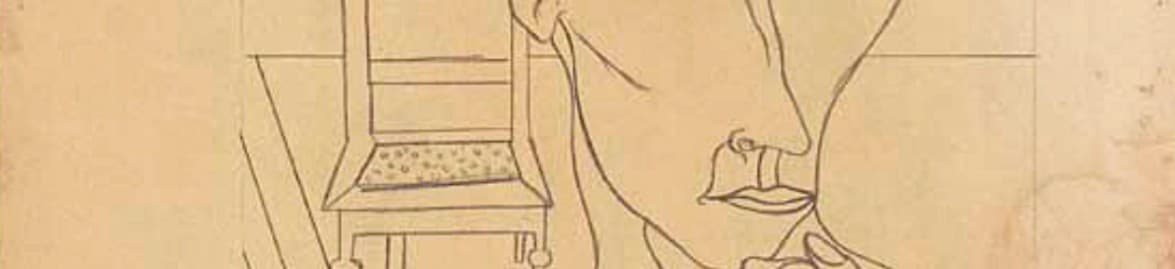
“Angelika Hoerle Mann mit Auge”, Angelika Hoerle via Wikimedia Commons
– Public Domain.