decoding k.c.s. paniker - the enigmatic language of abstract metaphysical art

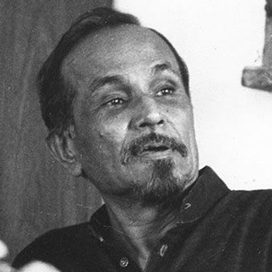 K.C.S. Paniker i.e Kolozhi Cheerambathur Sankara Paniker (31 May 1911 – 16 January 1977) is a modern Indian art innovator known for his abstract and metaphysical canvases. His unique symbols and modernist approach continue to inspire interest and study in the art world. This blog will explore the mystery in Paniker's work, examining his life, his artistic journey, and his lasting impact on contemporary art in India.
Life & Background
K C S Paniker was born in 1911 in Coimbatore, Tamil Nadu. He was nurtured in a very traditional South Indian setting. His early exposure to temple art, folk traditions, and classical literature formed the bedrock of his future artistic expression. He was formally trained at the Government School of Arts and Crafts, Madras (now Chennai). Paniker later in his life became the principal of this institution. His tenure as principal greatly influenced the curriculum and nurtured new minds among artists who were to renew art and create new forms with their styles.
Artistic Career
Constant style and technique evolution marked Panikers artistic journey; the transition began in early works characterised by the influence of the academic style prevalent in the Indian art schools of the period. Gradually progressing to abstraction, he began experimenting with a variety of forms of expression as he matured into an artist.
A significant turning point in Paniker's life was the 1950s. He travelled to London and Paris and was exposed to all the modernist movements that emanated from the West, especially abstract expressionism, which infused into his own style: concrete forms fused with metaphysical concepts taken from Indian philosophy and mythology.
Major Themes in His Work
He is known for his investment of deep metaphysical thought in his works. Paniker's art explores myriad concepts concerning time and space, and the cyclicality of existence. Such myths are enacted in Indian philosophy. The artist often found his inspiration in ancient Indian scriptures, mathematical equations, and astrological charts, infused with a visual language that was modern but yet rooted deeply in Indian culture.
Another consistent motif in Paniker's work is the struggle between the microcosm and the macrocosm. His paintings often make one think of a universe in motion, with forms and symbols floating in an infinite space, urging one to consider their place in the grand tapestry of existence.
Painting Style & Technique
Paniker's style was unique through his use of geometric forms and calligraphic elements alongside minimal colour content. His canvases could have a gridlike structure inhabited by abstract shapes, symbols, and lines that occur even in the vast dispossession of a silent order in chaos. The painter also employed layering paint to create textured surfaces that give abstract compositions dimensionality.
The technique he developed during the 1960s—'Words and Symbols'—was perhaps one of the most striking features of Paniker's work. Elements of written language, mathematical symbols, and ancient scripts form part of his canvases. The visual syntax is mysterious and evocative.
Philosophy & Beliefs
Paniker's artistic development was highly influenced by his philosophical ideas and perception of the cultural heritage of India. He was one of those believers in the potential of art in enabling a transcendence to the meta-mundane realm. For Paniker, painting was not merely a visual activity but an exercise in probing deeper truths about existence and consciousness.
He was also an ardent proponent of specifically Indian modern art. He believed that it had to come from the grand cultural heritage that the country owned and then be shaped into new forms of expression for today. Given this vision, he set up in 1966 Cholamandal Artists' Village near Chennai. The community he founded played a significant role in the movement of modern art in Madras.
Famous Paintings
K.C.S. Paniker (1911–2007) was known for his distinctive style that blended modernism with traditional Indian themes. Here are some of his famous works:
* Woman With Flowers - This painting exemplifies Paniker’s use of vibrant colors and forms. The figure of a woman surrounded by floral elements showcases his interest in the human form and nature.
* The Dance Of The Gods - In this piece, Paniker explores themes of spirituality and tradition, depicting deities in a rhythmic, dynamic composition. The use of bold colors and abstract forms reflects his modernist approach.
* The Great Cosmic Dance - A representation of the divine dance of creation and destruction, this work highlights Paniker's interest in mythology and his ability to fuse it with contemporary artistic expression.
* Two Figures - This painting captures the essence of human relationships through abstract forms and a limited color palette. The figures are depicted in a way that suggests interaction and connection.
* Mother & Child - A tender portrayal of motherhood, this work reflects Paniker’s sensitivity to human emotions, using soft lines and warm colors to evoke a sense of love and protection.
* The Last Supper - A reinterpretation of the biblical theme, this painting is notable for its use of bold forms and a rich color palette, showcasing Paniker's ability to infuse modern aesthetics into traditional subjects.
* Nymph - This artwork represents a blend of femininity and nature, illustrating Paniker's skill in depicting the ethereal beauty of women through abstract shapes and colors.
* Words & Symbols - This is a notable painting that exemplifies KCS Paniker's exploration of the relationship between language, culture and visual art. Created in the 1970s, this artwork reflects his unique style that often blends abstract forms with elements of traditional Indian culture.
* The Dog - This painting is a notable work that exemplifies K C S Paniker's modernist approach through an abstract representation of the subject. Featuring a stylized depiction of a dog, the painting evokes themes of loyalty and companionship, emphasizing the bond between humans and animals.
* Words and Symbols - This piece is a significant work that reflects his exploration of language, culture and visual expression, created in the 1970s. The artwork features a dynamic arrangement of letters, words and abstract forms, showcasing K.C.S Paniker's modernist approach through vibrant colors and fluid shapes that create a sense of movement and rhythm.
Awards & Recognition
K.C.S. Paniker received several prestigious awards throughout his artistic career, recognizing his contributions to Indian art and his innovative approach. Some of the notable awards he received include:
- National Award for Painting (1965) : This award was a significant recognition of his artistic talent and contribution to contemporary Indian art.
- Fellowship of the Lalit Kala Akademi (1985) : Awarded by the National Academy of Art in India, this fellowship honored his lifelong contributions to the field of visual arts.
- K. C. Reddy Memorial Award (1988) : This award was presented to him for his outstanding achievements in the field of art.
- Honorary Doctorate : Paniker was awarded an honorary doctorate by the University of Madras in recognition of his contributions to art education and his role as a mentor to many artists.
- Life Member of the Madras Art Society : While not an award per se, this acknowledgment highlights his influence in the art community in Chennai.
- Maharaja Sayajirao University of Baroda : He was honored for his contributions to art education and mentorship, particularly during his tenure at the university.
Impact On Society & Indian Art
K.C.S. Paniker's contribution to Indian modern art is significant and wide-ranging. As a painter and educator, he plays a very important role in building the country's art landscape and inspires generations of painters to view the emerging Indian modern movement. He helped in the growth of a uniquely Indian modern art movement with pride and national identity in the country's cultural heritage.
Paniker's work also had a considerable influence on the international art world. His blend of abstract forms and metaphysical ideas brought him standing appreciation from critics and scholars all over the world. He was included in some of the most paramount international exhibitions, including the Biennale in São Paulo and the Tokyo Biennale, which opened Indian modern art to other parts of the world.
Conclusion
K.C.S. Paniker's abstract metaphysical art strikes the heart of an art enthusiast and gestures to a scholar so frequently that they cannot resist becoming enchanted with that obscure language of art. His unique visual language, which sees an inflection between indigenous symbolism and modernist abstraction, leaves an indelible mark on the canvas of Indian contemporary art.
The conclusion reminds us of Paniker's life and artistic journey, emphasising how art transcends cultural boundaries to reach the universal human experience. Here lies his legacy as a testimony to the eternal power of art, inspiring, educating, and changing.
By exploring the depths of human awareness and connecting with the limitless, Paniker's art encourages us to reflect on the mysteries of life. We might gain inspiration and deepen our comprehension of the human condition by interpreting the enigmatic language of his art and entering a world of exquisite beauty and spiritual reflection.
We hope you enjoyed this article. For a comprehensive showcase of K C S Paniker's original paintings, click here and explore his vibrant portfolio.