durga paintings by famous artists
.jpg&w=3840&q=75)
Maa Durga, the powerful Indian goddess of strength and protection, has been a profound source of inspiration for artists across centuries. Her depictions in paintings capture her divine aura, warrior spirit and benevolent grace. Renowned artists have immortalized Goddess Durga in their artworks, each interpreting her through unique artistic styles. This article explores some of the most famous Durga paintings and the artists behind them.
But, before we dive into the fascinating world of famous artists and their Durga paintings, it's important to first explore some essential aspects of this art form. From the origins of Durga paintings and their evolution over time to the inspiration that drives these masterpieces, understanding these foundational elements will give us a deeper appreciation for the artworks that have captivated artists and art lovers alike for centuries. Additionally, we'll touch upon the connection between Durga paintings and home decor, offering insight into how these artworks can harmonize with one's surroundings. Let’s begin by tracing the roots of this spiritual and artistic tradition.
Origin Of Durga Paintings
The tradition of Durga paintings traces its roots back to ancient Indian civilization, where artists began depicting the powerful goddess through various artistic mediums. These paintings originated primarily in Bengal during the medieval period, coinciding with the rising popularity of Durga Puja celebrations. Early artists used natural pigments and traditional techniques passed down through generations, creating works that balanced divine representation with artistic expression.
Decoding Durga Paintings
Durga paintings are rich in symbolism and iconography. The goddess is typically portrayed with ten arms, each holding different weapons and symbols representing various aspects of divine power. The lion, her vahana (vehicle), symbolizes strength and dominance over evil. The color palette traditionally includes vibrant reds, yellows, and golds, symbolizing energy, prosperity, and divine radiance. Each element in these paintings, from the asura (demon) beneath her feet to the peaceful expression on her face, carries deep metaphysical significance.
Inspiration Behind Durga Paintings
Artists draw inspiration from various sources when creating Durga paintings. The primary source is the Devi Mahatmya, an ancient text that describes Durga's victory over the buffalo demon Mahishasura. Regional folklore, local traditions, and personal spiritual experiences also influence artists' interpretations. The changing seasons, particularly the autumn when Durga Puja is celebrated, often inspire the backgrounds and settings of these paintings.
Significance Of Durga Paintings
Maa Durga paintings serve multiple purposes in Hindu culture. They are not merely decorative pieces but are considered sacred objects that facilitate spiritual connection. During Durga Puja, these paintings become focal points of meditation and worship. They also serve as educational tools, helping younger generations understand the mythology and teachings associated with Goddess Durga. The paintings often depict various episodes from scripture, making complex philosophical concepts accessible through visual narrative.
Artistic Expression In Durga Paintings
Different artists employ unique styles to express their interpretations of Maa Durga. From traditional oil paintings to modern digital art, the artistic representation of Durga continues to evolve. Some paintings highlight intricate gold embellishments, while others emphasize abstract and contemporary expressions of the goddess’s power.
Durga Paintings In The Modern Era
Contemporary artists are redefining the visual representation of Durga through experimental techniques. Mixed media, graffiti, and 3D art have introduced new dimensions to Durga paintings, making them more accessible and appealing to younger generations.
Durga Paintings In Home Decor
Maa Durga paintings have become a popular choice for home decor. Whether in the form of framed prints, murals or digital canvases, these artworks bring a sense of spirituality and cultural heritage to living spaces. These paintings work well as focal points in living rooms or meditation spaces. Interior designers suggest placing them in eastern walls following vastu principles. Modern prints and reproductions offer affordable options for art enthusiasts. The paintings' vibrant colors and powerful imagery can enhance any space's aesthetic and spiritual atmosphere.
Emotional Connections Of Durga Paintings & Durga Puja
During Durga Puja, these paintings take on special significance as they help create an emotional bridge between devotees and the divine. They evoke feelings of protection, strength, and maternal love. For Bengali communities worldwide, these paintings serve as cultural touchstones, connecting them to their heritage. The artistic representations help create the festive atmosphere essential to Durga Puja celebrations.
Various Forms Of Maa Durga Paintings:
1. Traditional Maa Durga Painting - Traditional Durga paintings follow classic Indian artistic styles such as Pattachitra, Madhubani, Kalighat, and Rajput miniatures. These paintings often depict Maa Durga in her ten-armed form, riding a lion and slaying Mahishasura (the buffalo demon). Bright colors, intricate detailing, and symbolic elements like the trishul (trident), lotus, and conch shell are prominent. Artists use natural dyes, gold leaf, and rich textures to enhance the sacred and divine feel of these artworks.
2. Modern Maa Durga Painting - Modern Durga paintings incorporate contemporary techniques, bold colors, and innovative compositions. Artists experiment with minimalism, mixed media, digital art, and pop-art influences to give a fresh interpretation of Durga’s divine energy. These paintings may focus on expressions, symbolism, or fusion art that blends tradition with modern aesthetics, making them popular in contemporary home decor.
3. Maa Durga Face Painting - Durga face paintings emphasize the powerful and serene expression of the Goddess. The artwork focuses on her third eye, arched eyebrows, and divine aura, symbolizing strength and wisdom. These can range from highly detailed realistic portraits to stylized or symbolic representations. Many artists also use black-and-white contrasts, red sindoor (vermilion), and golden hues to enhance the divine essence of her face.
4. Maa Durga Watercolour Painting - Watercolor Durga paintings are known for their soft, fluid strokes, dreamy textures, and vibrant yet translucent colors. Artists use this medium to create an ethereal effect, capturing the divine grace and strength of the Goddess. These paintings may depict Maa Durga in mythological battle scenes, meditative postures, or abstract spiritual representations, with a harmonious blend of colors that evoke devotion and reverence.
5. Maa Durga Abstract Painting - Abstract Durga paintings break away from traditional depictions, using geometric patterns, surreal forms, expressive brushstrokes, and symbolic color schemes to represent her divine energy. Instead of detailed imagery, these artworks convey her strength, power, and protection through textures, color contrasts, and shapes. Abstract styles appeal to modern art lovers who seek spiritual connection through artistic interpretation rather than literal representation.
Future Of Durga Paintings
With the rise of digital platforms and modern art techniques, the future of Durga paintings looks promising. Digital art, NFT-based religious paintings and customized artworks are gaining popularity. Emerging artists are exploring fusion styles, blending traditional motifs with modern aesthetics to appeal to a global audience.
Now that we've explored the rich history, cultural significance, and various inspirations behind Maa Durga paintings, it's time to shift our focus to the remarkable artists who have brought this sacred art to life. These renowned painters, with their unique styles and interpretations, have not only captured the essence of Goddess Maa Durga but also influenced the way we view spiritual art today. Let’s take a closer look at some of the most famous artists who have immortalized the image of Maa Durga through their masterpieces.
Famous Artists & Their Durga Paintings
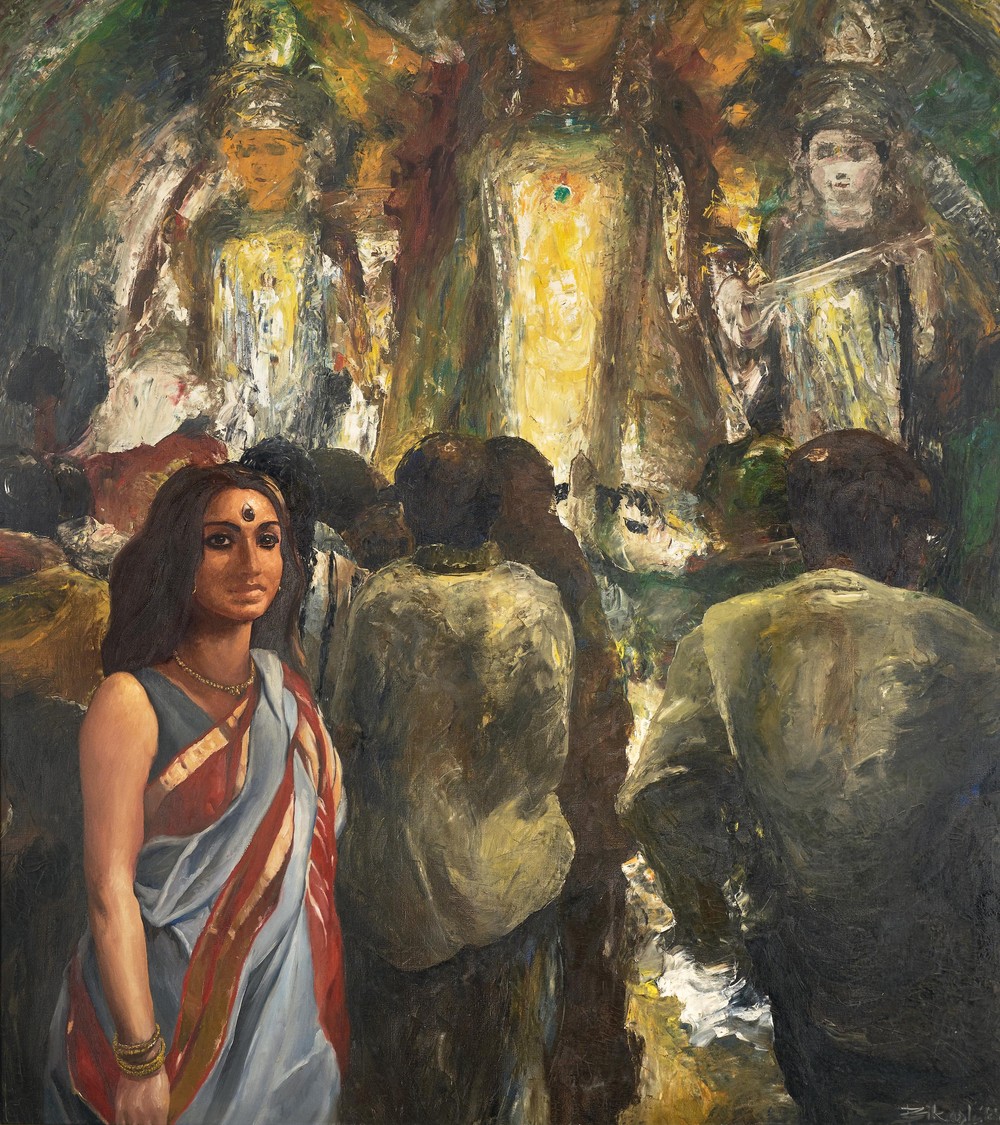 1. Bikash Bhattacharjee - Known for his hyper-realistic and surrealist paintings, portrayed Maa Durga in a thought-provoking manner. His artworks often reflected the socio-political undertones of Bengal. One of his striking depictions of Durga features a clay idol of the Goddess juxtaposed with the struggles of everyday life, symbolizing the contrast between divinity and reality. His use of light, shadow, and intricate detailing made his Durga paintings deeply immersive and emotionally evocative.
2. Gaganendranath Tagore - A pioneer of modern Indian art, Gaganendranath Tagore created Durga paintings that blended traditional themes with cubist and expressionist influences. His depictions of Maa Durga often leaned towards the abstract and symbolic, showcasing the goddess in unconventional forms. His bold use of monochrome shades and experimental brushwork set his artworks apart from the traditional portrayals of Durga in Indian art.
 3. Jamini Roy - One of India’s most celebrated modern artists, Jamini Roy redefined Durga paintings through his bold, simplistic, and folk-inspired style. Influenced by Bengali Kalighat Pat paintings, his depictions of Maa Durga were characterized by flat colors, thick outlines, and minimalistic detailing. His artworks often presented Durga in a motherly form, emphasizing her protective nature. His paintings remain popular for their distinct tribal essence and aesthetic charm.
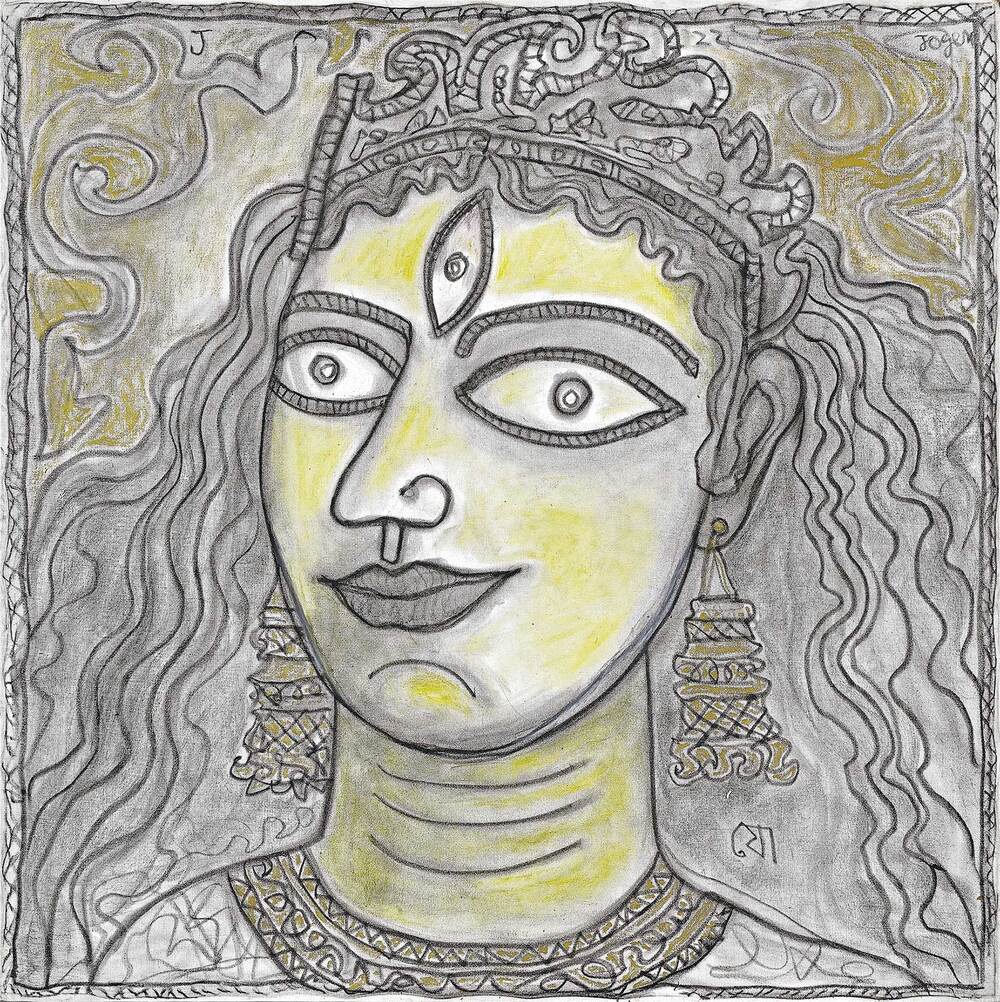
4. Jogen Chowdhury - His Durga paintings are known for their distorted yet expressive forms, vibrant hues, and political commentary. A master of line drawings and cross-hatching techniques, Chowdhury often portrayed Maa Durga with a blend of realism and abstraction, capturing both her divine aura and her deep connection with human emotions. His Durga paintings often explore themes of power, devotion, and societal change, making them both visually compelling and intellectually stimulating.
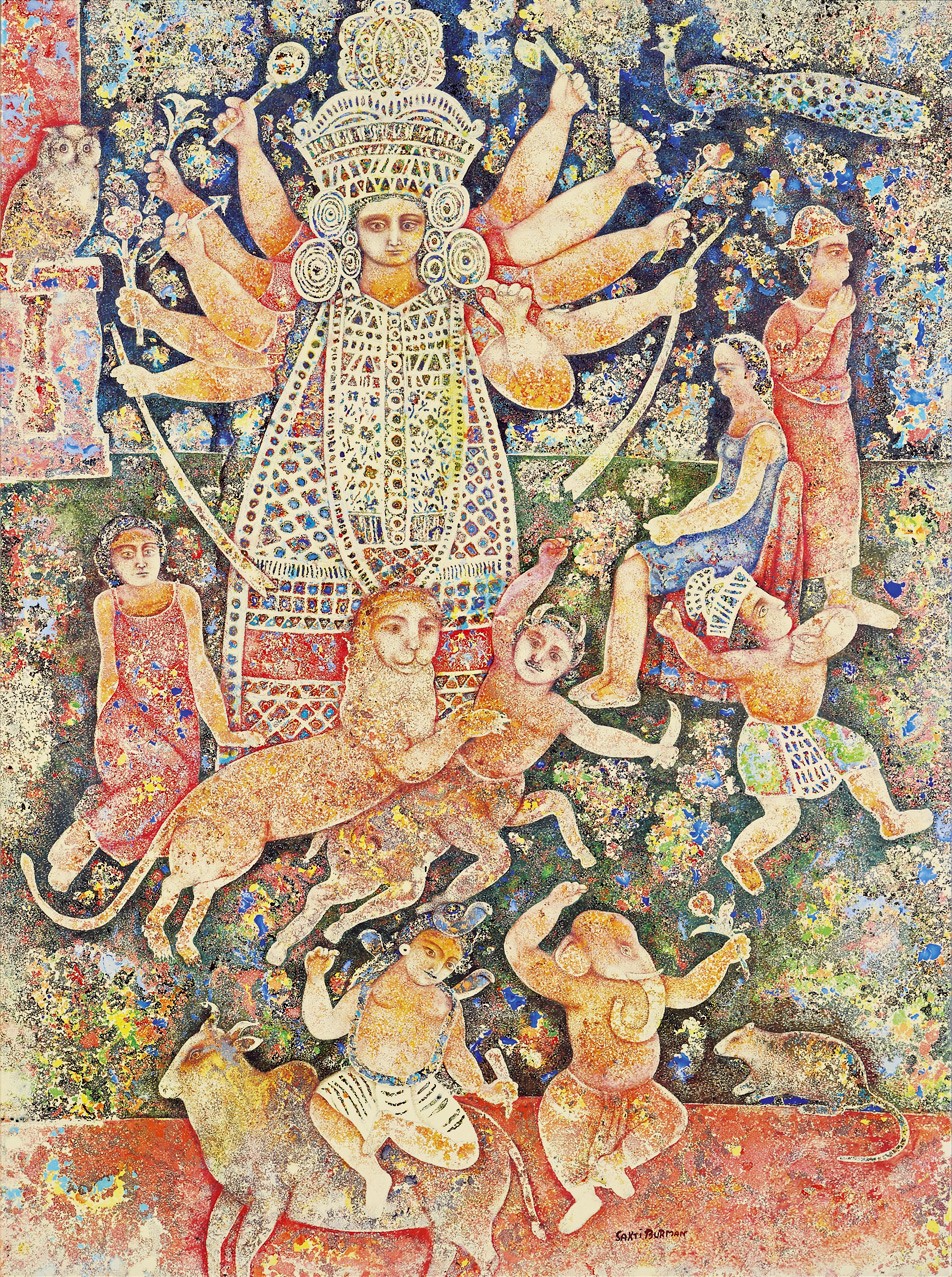 5. Sakti Burman - His Durga artworks are dreamlike and fantastical, influenced by Renaissance art, mythology, and Indian folklore. His paintings depict Maa Durga in ornate, celestial settings, surrounded by mythical elements and divine figures. His use of soft pastel tones, intricate patterns, and fluid compositions gives his Durga paintings a mesmerizing, surreal quality. His unique blend of Indian spirituality and European artistic influences makes his portrayal of the goddess truly exceptional.
6. M. F. Husain - One of India’s most controversial yet legendary painters, M. F. Husain depicted Maa Durga in a modernist, bold, and expressive manner. His paintings of Durga were often characterized by dynamic brushstrokes, fragmented compositions, and intense colors. Husain’s Durga was not just a religious figure but a symbol of power, womanhood, and resistance. His ability to merge traditional iconography with contemporary artistic sensibilities made his Durga paintings thought-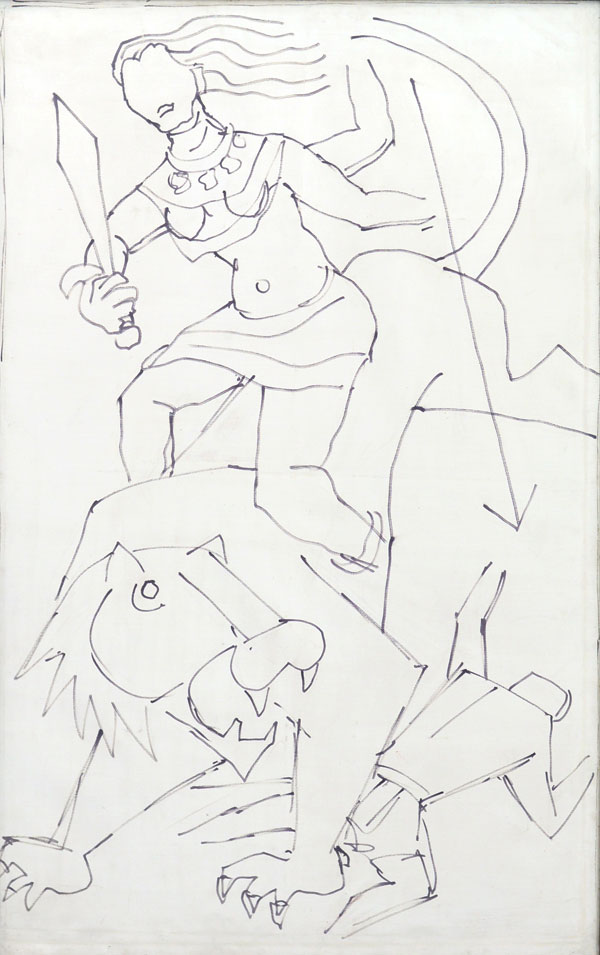 provoking and visually striking.
7. Nandalal Bose - Nandalal Bose, a disciple of Abanindranath Tagore, was instrumental in reviving Indian folk and classical art forms. His Durga paintings were deeply rooted in Bengali traditions and mythology, often featuring Maa Durga in her Mahishasuramardini form, slaying the demon Mahishasura. His artwork for the Haripura Congress session (1938) included an iconic Durga painting, which reflected grace, power, and the nationalist spirit. His delicate brushstrokes and earthy color palette gave his paintings an organic and timeless appeal.
Conclusion
Durga paintings are not just artistic expressions but also a reflection of faith, culture and devotion. From traditional styles to contemporary innovations, these paintings continue to evolve while maintaining their spiritual essence. Whether used for worship, decor or artistic appreciation, Maa Durga paintings remain a timeless tribute to the goddess of strength and protection.