european academic realism in india - origins, masters and evolution

The academic realism style of art was one of the many colonial legacies handed over to India. The artists who became the pioneers of Modern Indian Art, not only mastered the technique, but also seamlessly weaved it within the narrative of Indian society. These artists paved the path on which the modern art of India would catapult to great glory. Portraying the people, places, and culture of India, they left an extraordinary visual heritage that we continue to cherish over a century later.
Influence of the British rule
India’s artistic culture saw a prominent shift as the political reigns transitioned from the Mughal hands to the British. This period witnessed a large number of European artists visiting India who brought with them influences of European styles of painting and art. The strategic dissemination policies adopted by the British Raj greatly contributed to the advancement of the academic style of painting among Indian artists. Traditional arts like Mughal miniatures and Rajput styles soon began to get overshadowed as the academic style of landscape and portraiture gained wider prominence and started being taught at schools. By the 1850’s art academies were opened at Madras, Calcutta, and Bombay and then in 1875 at Lahore. All these factors combined, marked the introduction of easel paintings and oil paints in India and laid the ground upon which Indian masters of the academic style would soon flourish.
Coming of Raja Ravi Varma
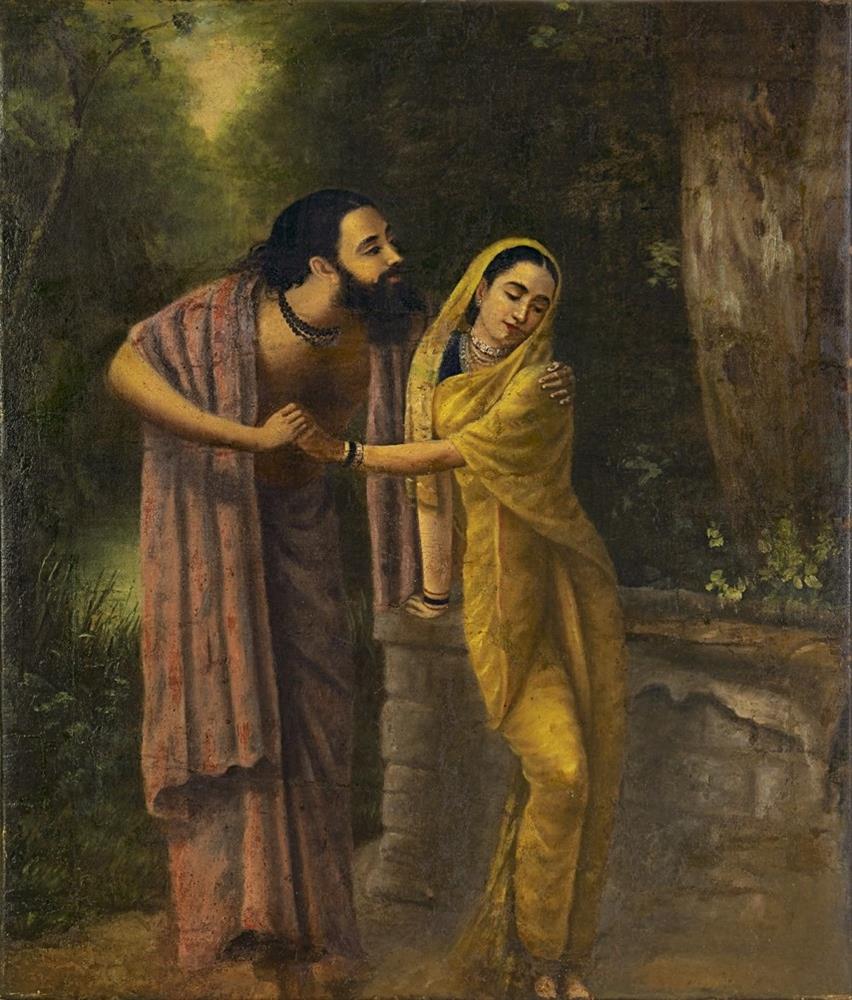 The clout of Indian princes who served as major patrons of arts in the Mughal era, continued to remain vital to art in the 18th-19th centuries. They also played a key role in preserving indigenous artistic practices while serving as conduits for European influences at the same time. The European artists who arrived in India, therefore, found themselves busy at the royal courts of Nawabs and Maharajas, who commissioned them to execute family portraits or to furnish their palaces with elaborate copies of Neoclassical paintings.
The first prominent Indian artist who got inspired by these developments was Raja Ravi Varma. He studied oil painting under the tutelage of Danish painter, Theodore Jensen at the court of the Maharaja of Travancore. Adopting oil as a medium, he incorporated the Western techniques of composition and perspective to depict Indian subjects.
Raja Ravi Varma possessed a keen eye that accurately captured the eloquence and opulence of royalty. As a result, he found himself becoming immensely popular among the aristocratic populace of the time who widely commissioned him to paint their portraits.
Apart from his commissioned portraits, Varma was highly inspired by the Indian female form and painted women from varied backgrounds. Sensual and glamorous, Raja Ravi Varma’s women were depicted in alluring portraits that unearthed an aura of rustic beauty. In many ways, his works documented the Indian women from that era, representing the rich and diverse culture of the country. He also depicted his close-kin and made them popular through his art.
Another integral aspect of his practise was the human-like depiction of the deities from the Hindu mythology. Portraying gods and goddesses, he started to weave the divine aspect of mythology into the everyday lives of common Indians. Raja Ravi Varma championed the idea of shattering the hierarchy between 'high art and low art’ by mass producing oleographic prints of his paintings that he made accessible to all. Thus, he bridged the gap between mythology, history and religion bringing them closer to the masses.
Both a traditionalist and a modernist, he later popularly came to be known as the ‘Father of Modern Indian Art’.
Rise of the Bombay School of Art
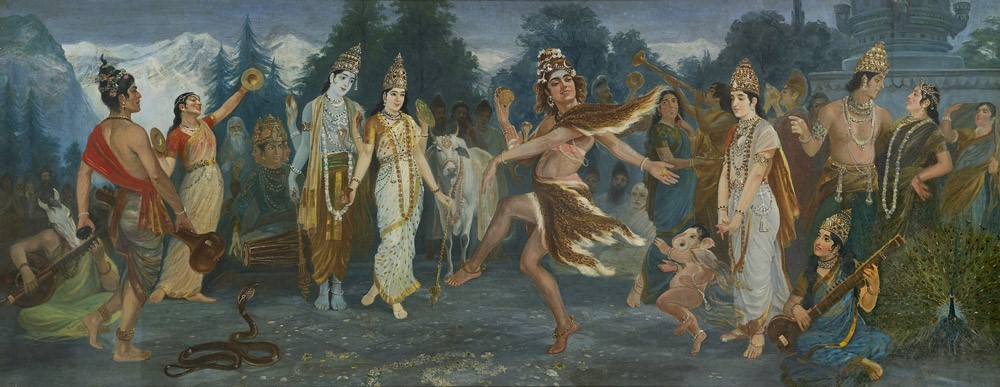 Established in 1857, Sir.JJ.School of Art was one of the most noted art schools in the country. The fine arts education catered at the institute brought a significant change to the style of the artists who were trained in the Royal Academic style. They gradually started to incorporate the Western elements of art with an Indian sensibility, forming a unique aesthetic that became synonymous with the Bombay School.
The period of 1885-1900 saw a number of Indian artists graduate from JJ, trained in the academic style. The most prolific among them were M.V.Dhurandhar, Mancherji Pithawala, Pestonjee Bomanjee, Antonio Xavier Trindade, and a few others.
1. M.V.Dhurandhar – M.V.Dhurandhar perfectly amalgamated idioms from Western academic realism with Indian tradition that cemented his reputation as an exceptional artist among the affluent members of the society. Highly influenced by the artistic accomplishments of Raja Ravi Varma, Dhurandhar drew inspiration from the rich treasure trove of Indian history and mythology. The alluring depiction of the deities from the Hindu pantheon became a characteristic feature of his revered oeuvre.
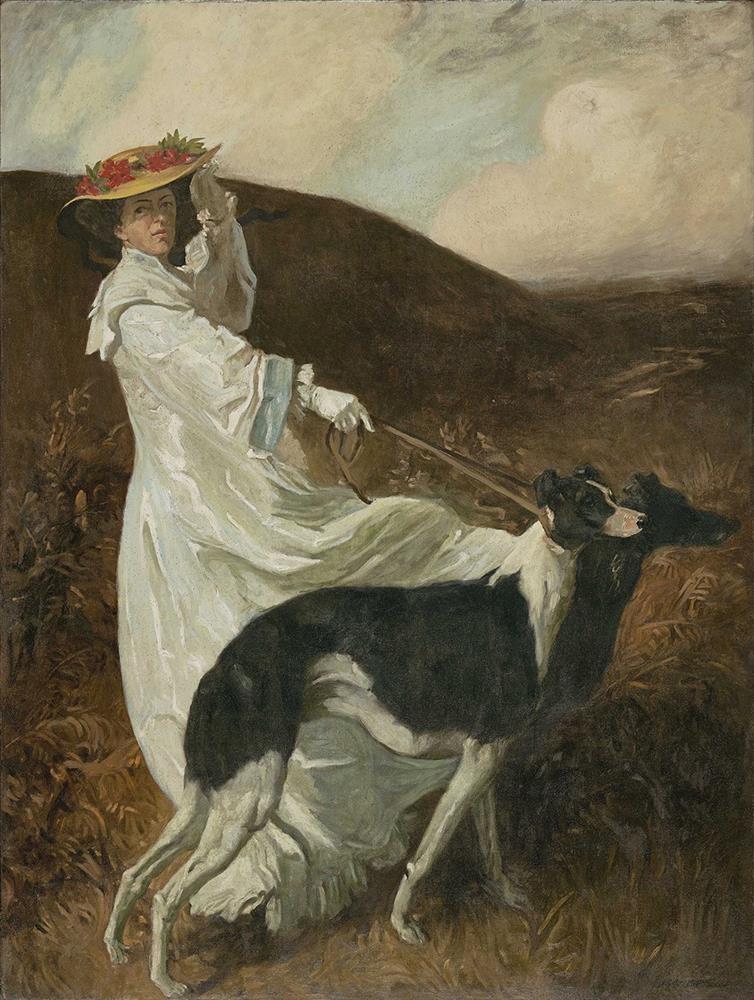
2. M.Pithawalla - M.Pithawalla had gained immense popularity as a portrait artist among the dominant classes of the British Empire by the early twentieth century. He captured the opulence of his patrons in a way that reflected the elite history of India’s Victorian past. Influenced by European naturalism, his portraits were a testament to his finesse as a master.
3. Pestonjee Bomanjee – A celebrated painter from the Bombay Art School, Pestonjee Bomanjee was an exceptional artist whose mastery over portraiture made him an eminent personality among the elite members of the society. He was an assistant to John Griffiths, the principal of Sir JJ.School of art and became the leader of the ‘Ajanta Project’ between 1872 and 1884.
4. Antonio Xavier Trindade - A contemporary of M.F Pithawalla and M.V Dhurandhar, Trindade’s realist works became known for their dignified portrayal of free-spirited, and uninhibited women of India in the 19th-20th century. Working mostly in oils, Trindade’s paintings convey a sense of intimacy that stems from an innate connection and empathy for his subjects, independent of their gender, social condition or environment.
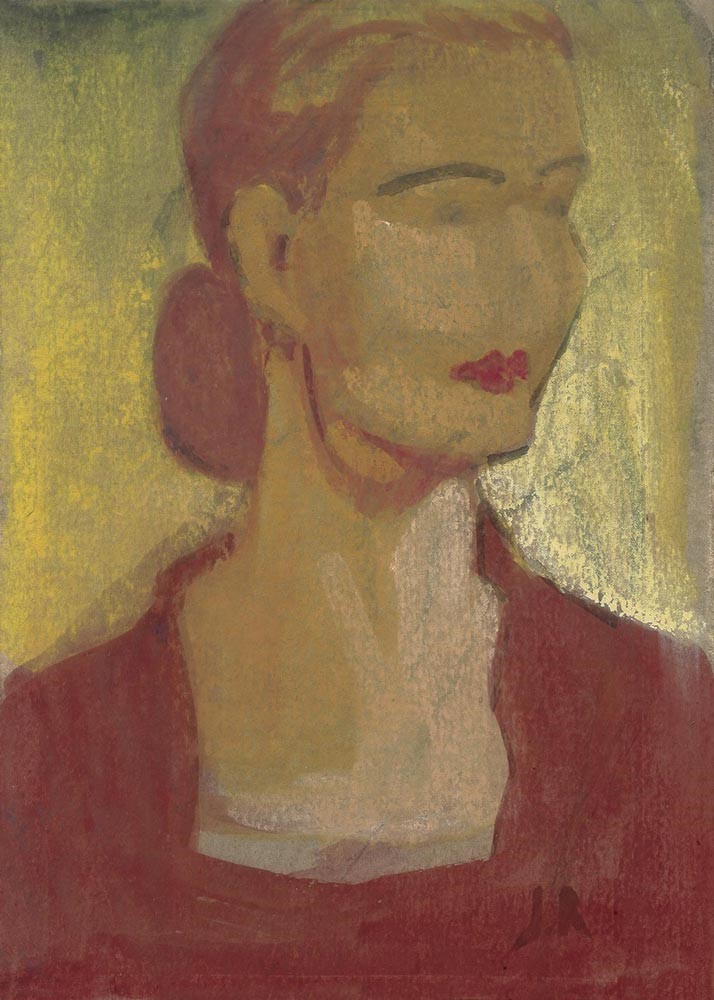
The 1900’s
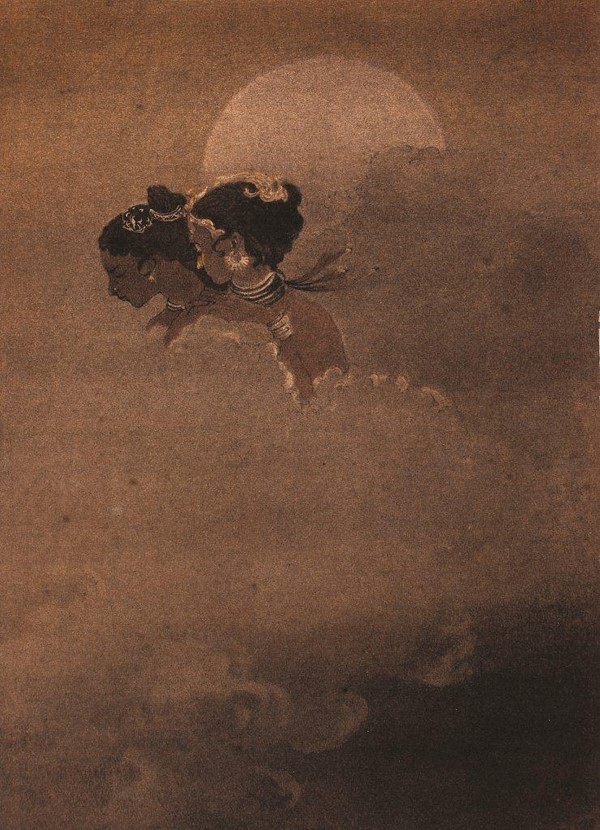
The 1900’s witnessed the rise of the Bengal School of Art, whose origins can be equated to the birth of nationalism in India. Wanting to break free from the traditions of Western academic art, the artists from the Bengal School charted out a path to revive the traditional form of artistic expression. Founded by Abanindranath Tagore, the movement encouraged artists to express their individuality in tandem with their cultural heritage as opposed to appealing to European tastes. With artists like Jamini Roy, Nandalal Bose, K. Venkatappa, Sarada Ukil and many others, the Bengal School of Art not only revived the indigenous pictorial language but also redefined the future of art in a soon-to-be independent India.
The legacy
The remarkable oeuvre of India’s masters of academic realism played a key role in preserving the rich visual legacy of India’s glorious past. At a time when India was struggling to form an identity of its own, they employed the mastery of their art to portray the country and its people, serving as a mark of true historical documentation.
While they lay the building blocks of the future of Modern Indian art, they also left behind a treasure trove of artistic genius that continues to inspire generations to this day.