evolution of wedgwood chandeliers: from 18th-century jasperware to regency elegance
.jpg&w=3840&q=75)
When timeless British craftsmanship meets decorative lighting, the result is the breathtaking elegance of Wedgwood chandeliers. Known globally for its iconic jasperware and refined neoclassical designs, Wedgwood has long been associated with fine ceramics and luxury tableware. Translated into lighting, that same artistry creates chandeliers that are sophisticated, distinctive and truly statement-making.
What Is a Wedgwood Chandelier?
A Wedgwood chandelier is an exquisite antique lighting fixture from the late 18th to 19th century, characterized by its fusion of Josiah Wedgwood's signature jasperware porcelain plaques, typically in matte blue or green with white classical reliefs, and ornate metal frames of gilt bronze, ormolu, or carved wood. These chandeliers emerged during the Regency and Victorian eras, when Wedgwood's Etruria factory collaborated with English and Italian metalworkers to mount finely detailed ceramic medallions depicting mythological scenes, portraits, or neoclassical motifs onto multi-tiered chandelier structures adorned with crystal prisms and candle arms. Inspired by Adam-style architecture and ancient Roman designs, they symbolized aristocratic opulence, illuminating grand estates and ballrooms while showcasing Wedgwood's innovative unglazed stoneware that mimicked cameo glass.
History
Founded in 1759 by Josiah Wedgwood, Wedgwood became one of England’s most prestigious ceramic manufacturers. The brand rose to prominence for its elegant jasperware, a matte-finish porcelain often in soft blue, green, or lilac hues with white classical relief figures.
Wedgwood’s aesthetic is deeply rooted in Neoclassical design, inspired by ancient Greek and Roman art. Over time, these decorative motifs including urns, garlands, cameos, and symmetrical patterns began influencing home décor beyond tableware, including fine lighting pieces such as chandeliers.
Craftsmanship and Technique
Creating a Wedgwood chandelier required collaboration between ceramic artisans, metalworkers, and designers skilled in classical iconography.
Jasperware plaques were molded separately and attached to metal frameworks. Relief figures were applied by hand with exceptional precision. Firing temperatures were carefully controlled to maintain the signature matte finish and prevent distortion.
The result was a harmonious blend of industrial innovation and artistic craftsmanship that reflected Britain’s rising influence in both manufacturing and cultural design.
Key Design Features
1. Jasperware Accents - The most recognizable feature is Wedgwood’s matte porcelain, often in pale blue with white relief ornamentation. These details give the chandelier a museum-quality appearance.
2. Neoclassical Symmetry - Expect balanced arms, graceful curves, and classical motifs inspired by 18th-century European design.
3. Subtle Luxury - Rather than overwhelming glamour, Wedgwood chandeliers deliver understated sophistication. This makes them perfect for refined interiors.
Best Spaces for a Wedgwood Chandelier
Because of their artistic presence, these chandeliers work beautifully in:
• Formal dining rooms, enhancing elegant dinner settings
• Grand foyers, creating a cultured first impression
• Traditional living rooms, complementing antique or classic furniture
• Luxury bedrooms, adding romantic European charm
• Boutique hotels or heritage homes, elevating historical ambiance
They pair particularly well with crown molding, paneled walls, marble fireplaces, and upholstered furniture.
How to Style a Wedgwood Chandelier
To make the most of this piece:
• Keep surrounding décor neutral to let the chandelier stand out.
• Pair with gold or brass hardware for cohesion.
• Use warm lighting between 2700K and 3000K to enhance the porcelain tones.
• Complement with Wedgwood-inspired décor such as cameo art or classical sculptures.
Avoid overly modern or industrial interiors unless you intentionally want a bold contrast.
Maintenance Tips
Porcelain requires gentle c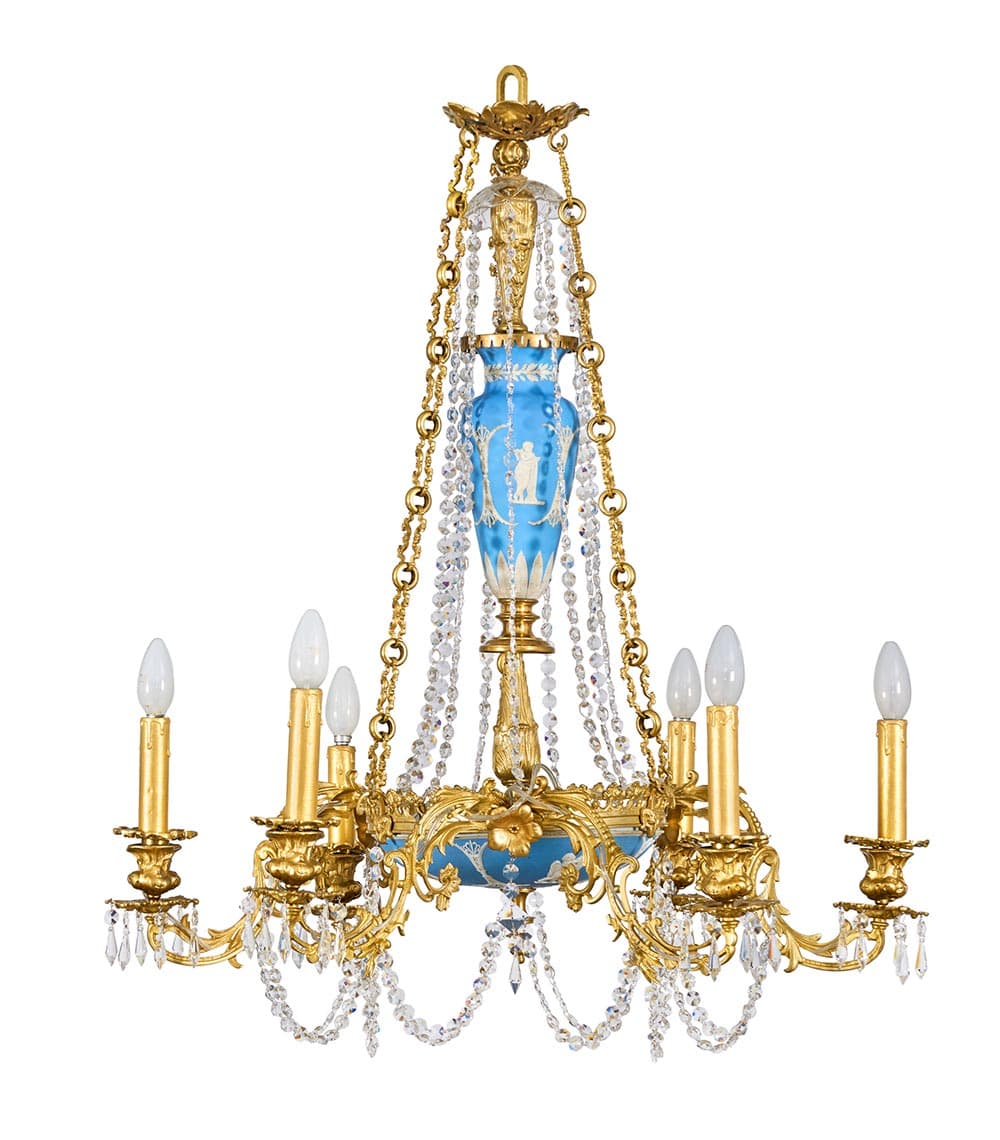 are:
are:
• Dust regularly with a soft microfiber cloth.
• Avoid harsh chemical cleaners.
• Clean crystal elements separately if attached.
• Ensure professional installation due to weight and fragility.
Proper maintenance preserves both the finish and structural integrity.
Influence and Legacy
Wedgwood chandeliers helped shape the visual language of neoclassical interiors in Britain, Europe, and America. Their influence can be traced in:
• Federal style interiors in the United States
• French Empire decorative arts
• Later Victorian revivals of classical design
Today, original examples are prized by collectors and preserved in major institutions such as the Victoria and Albert Museum. Contemporary designers continue to reinterpret Jasperware inspired lighting, demonstrating the lasting appeal of ceramics combined with illumination.
Final Thoughts
Wedgwood chandeliers represent more than lighting. They are art pieces suspended from the ceiling. Rooted in centuries of British ceramic excellence, they bring together heritage craftsmanship, neoclassical beauty, and refined luxury. For homeowners and designers seeking something beyond traditional crystal sparkle, a Wedgwood chandelier offers timeless elegance with cultural depth.