exploring the essence of landscapes in akbar padamsees paintings
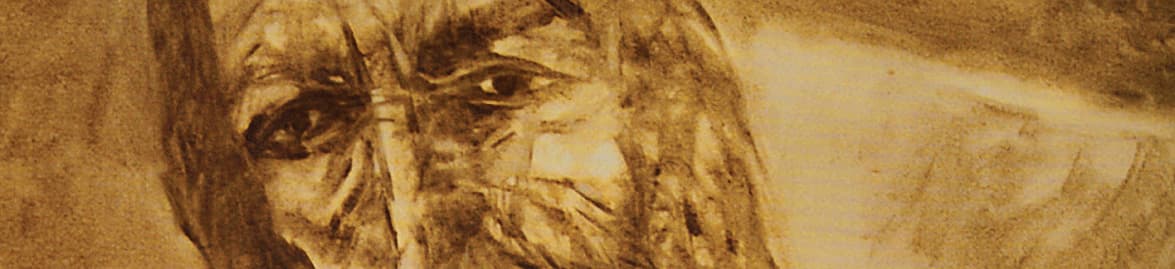
Akbar Padamsee, one of the most influential and celebrated Indian artists, is renowned for his multifaceted artistic expressions. Among his vast body of work, landscapes hold a prominent position, showcasing not only his mastery over color, form, and technique but also his deep understanding of nature, life, and human existence. Through his landscapes, Padamsee explored the fundamental aspects of perception, space, and time, bringing a fresh perspective to the art scene. This article delves into the essence of landscapes in Akbar Padamsee's paintings, analyzing how he brought nature to life on canvas and the philosophical and artistic influences that shaped his works.
Akbar Padamsee: A Brief Overview
Before delving into Akbar Padamsee's landscape paintings, it is essential to understand Akbar Padamsee as an artist. Born in 1928 in Mumbai, Padamsee developed a deep interest in art from an early age. He studied at the Sir J.J. School of Art in Mumbai and went on to further his education in Paris, where he was exposed to a wide range of Western artistic movements. Although his earlier works were influenced by figurative realism, his exploration of abstraction and the human form eventually led him to the realm of landscape art.
Padamsee’s paintings span several styles, from figuration to abstraction. His works are recognized for their sensitivity to light, space, and the interplay between nature and human expression. Padamsee's approach to landscapes was not just about depicting scenes from nature; rather, his landscapes reflected a deeper understanding of the world, inviting viewers to engage in a dialogue about perception, existence, and the underlying forces that shape life.
The Role Of Landscapes In Padamsee’s Artistic Evolution
Landscapes became one of the key areas in which Padamsee’s creative genius flourished. Throughout his career, he continuously experimented with this genre, using it as a platform to explore his thoughts on perception and abstraction. The transition from figurative to abstract landscapes marked a significant shift in Padamsee’s artistic evolution, reflecting a broader engagement with modernist trends in art.
In the early stages of his career, Padamsee's landscapes were rooted in realism, capturing the scenes with a particular emphasis on light, shadow, and texture. However, as his style evolved, so too did his approach to landscapes. Influenced by movements such as Impressionism and Expressionism, Padamsee began to abstract nature and break away from conventional representations. His landscapes became more about mood, feeling, and the emotional impact of the environment, rather than just the mere depiction of nature.
The Essence Of Nature In Padamsee’s Landscapes
What makes Akbar Padamsee’s landscapes stand out is their unique relationship with nature. Unlike many artists who sought to replicate the exact details of the natural world, Padamsee sought to capture the essence of nature—its spirit, its rhythms, and its underlying energy. His landscapes are not static or photorealistic; they are dynamic, capturing moments in time and space, allowing nature to speak through color, form, and texture.
Padamsee’s landscapes often evoke a sense of timelessness, as though they are moments suspended in time, transcending any specific place or season. This sense of universality is an essential element in Padamsee’s approach to landscapes. Through the use of light, shadow, and color, Padamsee brought his surroundings to life, infusing them with a sense of movement and depth. His mastery over color gradients and his ability to manipulate tone created atmospheric effects that gave his landscapes a dreamlike quality, where the boundaries between reality and abstraction blur.
Abstracting The Landscape: The Role Of Color & Form
A hallmark of Akbar Padamsee's landscape artwork is his abstract use of color and form. While many artists rely on precise and realistic depictions of nature, Padamsee employed a more liberated approach, focusing on the emotional resonance of his work rather than its representational accuracy. In his later landscapes, the line between the real world and abstraction becomes almost imperceptible. Rather than focusing on recognizable elements such as trees, mountains, or water bodies, Padamsee experimented with the color palette and the spatial relationships within the canvas.
He used color not just to represent the natural world but to evoke emotional and psychological responses from the viewer. His abstract landscapes are composed of vast, sweeping fields of color, with strokes and patches of hues that represent the interplay of light, atmosphere, and energy in nature. These colors may suggest a sky at dusk, the depths of a forest, or the tension between the elements, but they do not precisely mirror the objects found in nature.
One of Akbar Padamsee’s most famous landscape paintings in this regard is his series of "Seascapes," where the color blue dominates the canvas, with swirling forms and gradients that give the viewer a sense of the ocean's vastness and ever-changing nature. These abstract seascapes convey more than just the physical appearance of the sea; they capture its moods—calm, turbulent, serene, and stormy—through the use of rich, textured color.
Similarly, his landscapes of the desert and mountainous regions are not merely representations of those terrains. Instead, they evoke a sense of desolation, mystery, and quietude. The vast open spaces are depicted with broad, sweeping strokes of color, allowing the viewer to feel the emptiness and the expansiveness of the landscape, rather than just observing a geographic location.
The Influence Of Indian & Western Art Traditions
Padamsee’s approach to landscapes was influenced by a blend of both Indian and Western art traditions. His early exposure to Indian miniature painting, with its intricate detailing and vivid color schemes, gave him a keen sense of the importance of color and texture in creating visual narratives. Indian art traditions often emphasize the spiritual connection between nature and humanity, which deeply resonated with Padamsee’s artistic philosophy.
However, Padamsee’s training in Paris also introduced him to Western modernist movements such as Impressionism, Expressionism, and Abstract Expressionism. These movements, which emphasized the artist’s emotional response to nature rather than an exact replication of it, profoundly influenced Padamsee’s work. In particular, the use of color and form in the works of artists like Monet, Cézanne, and Turner can be seen in Padamsee's landscapes, where the emotional and atmospheric effects of nature take precedence over realistic depictions.
Padamsee’s unique ability to merge these two artistic traditions allowed him to create a landscape aesthetic that was deeply rooted in his cultural heritage while simultaneously engaging with contemporary global art movements. This fusion of Eastern and Western influences enriched his landscapes, making them not only visually striking but also intellectually and emotionally compelling.
Spiritual & Philosophical Undertones In His Landscapes
In addition to being a formal exploration of color and form, Akbar Padamsee’s landscape art also carry deep spiritual and philosophical meanings. For Padamsee, nature was not just a physical entity but a manifestation of deeper metaphysical realities. His landscapes convey the interconnectedness of all things in nature and the profound relationship between the human soul and the world around it.
Many of Akbar Padamsee’s landscapes suggest a meditative quality, inviting the viewer to contemplate their place in the vastness of the universe. His abstraction of natural elements conveys a sense of transcendence, where the viewer is not just an observer of the physical world but is invited to experience the emotional and spiritual resonance of the landscape. His use of color, light, and space often reflects the impermanence of life, the fluidity of time, and the cyclical nature of existence.
In his later works, Padamsee began to incorporate more symbolic elements into his landscapes, such as the horizon line or the recurring motifs of water and sky. These elements are not merely decorative but serve to evoke feelings of infinity, the passage of time, and the eternal cycle of nature.
The Impact Of Akbar Padamsee’s Landscapes
Padamsee’s landscapes had a profound impact on the art world, both in India and internationally. His innovative approach to landscape painting opened new avenues for exploring nature through abstraction. Padamsee’s works have been showcased in several prestigious galleries and exhibitions, earning him recognition as one of India’s leading modern artists.
Furthermore, his landscapes helped shift the perception of Indian art in the global art community. While Indian art was traditionally associated with intricate figurative depictions and spiritual themes, Padamsee’s landscapes challenged those conventions, demonstrating that Indian artists could engage with global modernist trends while still retaining a strong sense of cultural identity.
Padamsee’s landscapes have also inspired countless other artists, both in India and abroad, to explore the potential of abstraction and to consider the emotional and philosophical dimensions of nature. His works continue to be studied for their technical brilliance, their emotional depth, and their ability to convey complex ideas through simple yet powerful visual forms.
Conclusion
Akbar Padamsee’s landscapes are more than just artistic depictions of nature; they are profound explorations of perception, emotion, and existence. Through his use of color, form, and abstraction, Padamsee transformed the landscape genre into a meditative space where viewers could contemplate the deeper meanings of life, nature, and time. His ability to blend Indian and Western artistic traditions allowed him to create a unique visual language that resonated on both a personal and universal level.
Today, Padamsee’s landscapes continue to captivate audiences, offering a glimpse into the mind of one of India's most important modern artists. Through his landscapes, Padamsee demonstrated that the beauty of nature lies not just in its external form but in the deeper, intangible experiences it evokes within us. His work remains a testament to the power of art to communicate the profound and timeless truths of the human condition.
As we conclude our journey through the remarkable world of Akbar Padamsee, we invite you to explore his original paintings in greater depth. Click here to discover the stories behind the brushstrokes and the emotions that bring his art to life.