exploring the legacy of lancelot ribeiro
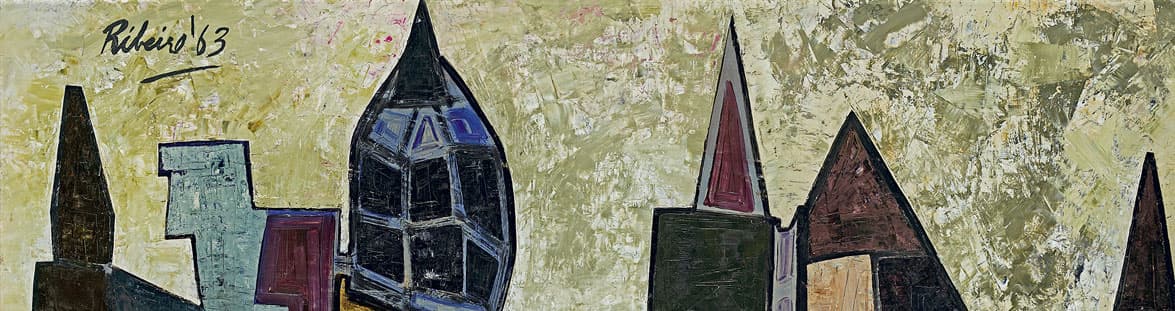
Lancelot Ribeiro, born in 1933 in Bombay, was a trailblazing artist whose work left an indelible mark on the Indian art scene. His artistic journey unfolded against the backdrop of a changing India, and his unique fusion of western and Indian influences set him apart as a pioneering figure in the world of art.
His aesthetic roots in Old Portuguese Goa and Bombay through the 1930s and 1940s, exposed him to a rich tapestry of influences that influenced his artistic sensibilities and would later find expression in his art. What truly sets Lancelot Ribeiro apart is his ability to seamlessly blend Western modernism with traditional Indian elements. His artwork reflects a harmonious coalescence of vibrant colors, intricate details, and a deep connection to Indian culture. Ribeiro's paintings often convey a sense of spirituality, capturing the essence of his cultural roots while embracing the global language of modern art.
His debut exhibition in Bombay’s Artist Aid Centre in 1961 was a sell-out and attracted collector interest, most notably from Tata to paint a mural for the offices of the then Chairman and Chief Executive of Tata Iron and Steel, J.R.D. Tata. By the end of 1962, he had held ten exhibitions across India before moving permanently to Britain. He co-founded the Indian Painters Collective, UK in 1963, the first body of its kind outside of India advocating for artists from the subcontinent, which eventually evolved into Indian Artists UK in 1978/79.