from allahabad royalty to canvas: v.p. singhs photographic roots in painting
.jpg&w=3840&q=75)
From Politics to Palette: The Journey of India's 8th Prime Minister as a Painter
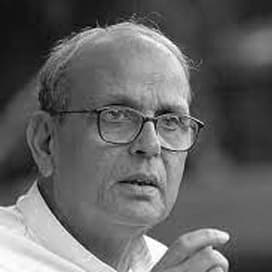
Vishwanath Pratap Singh, better known as V.P. Singh, occupies a unique position in Indian history as both the former Prime Minister of India and an accomplished artist whose creative journey spanned several decades. While his political legacy, particularly the implementation of the Mandal Commission recommendations, remains a defining moment in Indian politics, his artistic pursuits reveal a contemplative, introspective dimension to a man often remembered for his bold political decisions. V P Singh's art was not merely a hobby but a parallel language through which he expressed his deepest concerns about society, humanity and the struggles of the marginalized.
 Early Life
V.P. Singh was born on June 25, 1931, in Allahabad, Uttar Pradesh, into the Rajput Gaharwal royal family of Daiya to Raja Bhagwati Prasad Singh. In 1936, at the age of five, he was adopted by Raja Bahadur Ram Gopal Singh of Manda, whom he succeeded in 1941, becoming the 41st Raja Bahadur of Manda at just ten years old. This royal lineage provided him with access to education and cultural exposure that would shape both his political and artistic sensibilities.
V P Singh's early education took place at Colonel Brown Cambridge School in Dehradun, where he spent five years before returning to Allahabad for higher studies. His artistic inclinations manifested early, beginning with photography. As a young man, he developed into an accomplished photographer, starting as what he called a "camera shikari" with a simple box camera, capturing images of flowers, animals, people, and landscapes. This visual training would later inform his approach to painting.
Later Life
After stepping down as Prime Minister in November 1990 following a vote of no confidence, Singh devoted himself increasingly to art and social causes. He toured India giving public lectures on social justice while pursuing his painting with renewed vigor. However, his later years were marked by health challenges. His protest fast after the 1993 Mumbai riots severely damaged his kidneys and aggravated bone marrow cancer. It was during his recovery from this illness that Singh returned to painting with particular intensity.
Diagnosed with multiple myeloma and suffering from renal failure, V P Singh continued painting even during medical treatments, often taking his painting brush along with him. He remained creatively active until his death on November 27, 2008, at Apollo Hospital in Delhi. Throughout these final years, his art became both a form of therapy and a means of continuing his dialogue about social justice when his physical condition no longer permitted active political engagement.
Family
On June 25, 1955, V.P. Singh married Sita Kumari, daughter of the Raja of Deogarh-Madaria, Rajasthan, in an arranged marriage. The couple was blessed with two sons: Ajeya Singh (born 1957) and Abhai Singh (born 1958). His son Ajeya played a significant role in preserving and promoting his father's artistic legacy, organizing exhibitions of Singh's work after his death. Singh's granddaughter, Adrija Manjari Singh, has also shared memories of watching her grandfather paint and learning about the deeper meanings behind his work.
Education
Singh received his formal education from Colonel Brown Cambridge School in Dehradun before moving to Allahabad for higher studies. He studied at both Allahabad and Pune (Poona) universities, demonstrating leadership qualities early by serving as President of the Students Union at Udai Pratap College, Varanasi, in 1947-48, and later as Vice President of Allahabad University Students Union.
His artistic education was equally deliberate. After mastering photography, Singh progressed to pencil sketches before seeking formal instruction. He studied under Professor Sukhvir Sanghal in Allahabad, where he learned wash painting and figurative drawing in the Bengal School style. However, while Singh appreciated the technique and dreamy landscapes of the Bengal School, he felt it lacked the spontaneity of expression he sought, eventually developing his own more immediate and emotionally direct approach.
Painting Style
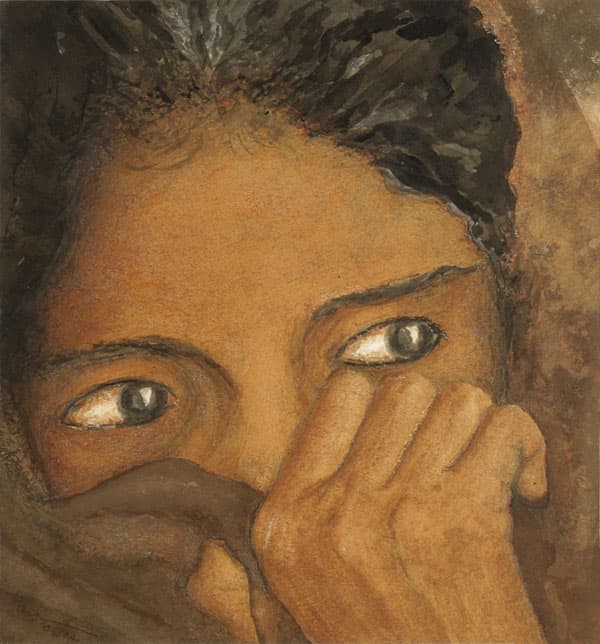 V.P. Singh's painting style evolved significantly throughout his life, reflecting both his technical development and his changing emotional and philosophical concerns. His artistic journey began with photography, moved through detailed pencil sketches, embraced the wash painting techniques of the Bengal School, and eventually evolved into a more expressive, sometimes surrealistic approach.
Singh worked primarily in sketches, watercolors, and oil paintings. His early work showed the influence of the Bengal School's romantic symbols, dreamy landscapes, and carefully rendered figures. However, as he matured as an artist, particularly during his later years after leaving active politics, his themes became what observers described as "more restless and frenzied." This evolution reflected the turbulence of his political experiences and his deepening engagement with questions of social justice and human suffering.
His later work often incorporated elements of abstraction and surrealism, moving away from purely representational imagery toward more emotionally charged, symbolic compositions. The spontaneity he had sought earlier in his career became increasingly evident in his mature work, which balanced technical skill with emotional immediacy.
Famous Paintings
Most of V.P. Singh's paintings were left untitled, allowing viewers to bring their own interpretations to the work. However, certain pieces gained recognition for their thematic power and visual impact.
One of his most celebrated works depicts the cycle of human life, showing the progression from birth through maturity to death in a continuous visual narrative. His granddaughter recalled watching him create this piece and hearing him explain its significance. Another notable work is titled "Downtrodden," which directly addressed the plight of India's marginalized communities, a theme central to both his political and artistic vision.
One of his black and white abstract paintings became particularly valuable, priced above Rs 4.5 lakh at a 2015 exhibition. This work demonstrated his mastery of composition and his ability to convey complex emotions through pure form and tonal variation.
His paintings encompassed various subjects including human figures in moments of contemplation or struggle, landscapes that ranged from serene to turbulent, and increasingly abstract compositions that suggested psychological or spiritual states rather than depicting literal subjects.
Characteristic Features of His Paintings
Several distinctive characteristics define V.P. Singh's artistic output. His work focused intensively on the human condition, particularly depicting various facets of human life and the experiences of ordinary people. Unlike many political leaders who might create idealized or heroic images, Singh's art engaged honestly with struggle, suffering, and the complexities of existence.
His paintings employed both black and white compositions and works in color, demonstrating his versatility and his understanding that different emotional truths required different visual languages. The black and white works often possessed a stark, almost austere quality that emphasized form and composition, while his color works could be more emotionally immediate.
The themes in his art grew increasingly restless and frenzied in his later years, reflecting both his personal struggles with illness and his continued engagement with social and political turmoil. His compositions often featured strong contrasts, dynamic movement, and a sense of psychological intensity.
Many of his paintings explored landscapes, but these were rarely merely decorative. Instead, they seemed to carry metaphorical weight, suggesting states of mind or social conditions. His work also frequently incorporated symbolic elements that referenced his concerns about injustice, inequality, and the human cost of political and social systems.
Contribution to Indian Art
V.P. Singh's contribution to Indian art lies not in founding a particular school or movement, but in demonstrating that serious artistic practice and political leadership need not be mutually exclusive. He showed that painting could be a genuine form of political and philosophical expression, not merely a leisure activity or status symbol.
His work helped bridge the gap between traditional Indian painting techniques and more contemporary, expressive approaches. By studying the Bengal School but moving beyond its limitations, he modeled how artists could honor tradition while developing personal, relevant voices.
V P Singh's art provided an important counterpoint to his political image. While he was known publicly for bold, sometimes controversial decisions, his paintings revealed a contemplative, deeply feeling individual concerned with fundamental questions about human dignity and social justice. This added dimension to public understanding of political leadership and reminded viewers that India's leaders could be complex, multifaceted individuals.
His decision to continue painting throughout his political career and to intensify his artistic practice after leaving office demonstrated that art could serve as both a form of personal expression and a continuing form of social commentary. His paintings about the downtrodden and marginalized communities gave visual form to the political convictions that had defined his time in office.
Enduring Legacy & Impact
V.P. Singh's artistic legacy extends beyond the paintings themselves to encompass what his dual career represents. He demonstrated that political leaders could maintain serious creative practices, that art and activism could inform each other, and that visual expression could be as powerful a form of social commentary as political speech.
His work continues to resonate particularly with those interested in the intersection of art and social justice. The paintings serve as visual documents of a particular historical moment, created by someone who was both observing and actively shaping Indian society. They provide insight into the emotional and psychological dimensions of political leadership that traditional historical accounts often miss.
The fact that his son organized exhibitions of his work and that institutions continue to display his paintings ensures that this aspect of his legacy remains visible. His story encourages contemporary artists and activists to see creativity and social engagement as complementary rather than competing pursuits.
Documentaries about Singh, including Juliet Reynolds' "The Art of the Impossible" and Suma Josson's "One More Day to Live," have helped preserve both his political and artistic contributions, ensuring that future generations can appreciate the full scope of his achievements.
Exhibitions
V.P. Singh's paintings were exhibited at prestigious venues throughout his life and posthumously. During his lifetime, he held solo exhibitions at various locations. On December 29, 2003, a significant exhibition of 110 of his paintings was held at Aparna Arts Gallery in Delhi.
His work was also exhibited internationally, with shows at the Nehru Center in London, demonstrating that his artistic practice had appeal beyond India's borders. Within India, his paintings were displayed at the Jehangir Art Gallery in Mumbai and at the Kerala Lalit Kala Akademi in Thiruvananthapuram.
The most notable posthumous exhibition took place on May 6, 2015, when his son Ajeya Singh showcased 56 of his father's paintings at the Aryan Art Gallery in Delhi. This exhibition, inaugurated by Finance Minister Arun Jaitley, featured works created primarily during Singh's recovery from illness after his 1993 protest fast. The exhibition provided an opportunity for the public to see the breadth of Singh's artistic achievement and to understand this lesser-known dimension of his life.
Awards
While V.P. Singh received numerous political honors during his career, including serving as Prime Minister, specific awards for his artistic work are not extensively documented in available records. His primary recognition came through the exhibitions of his work at prestigious venues and the critical attention his paintings received from art critics like Juliet Reynolds, who became a close friend and made a documentary about his artistic and political career.
The value placed on his work by collectors and galleries, with some pieces priced at over Rs 4.5 lakh, represents a form of market recognition of his artistic merit. However, Singh's approach to art was less about seeking accolades and more about using painting as a means of personal expression and social commentary.
Conclusion
V.P. Singh stands as a remarkable figure who successfully integrated two demanding vocations: political leadership and serious artistic practice. His paintings were not the dabbling of a dilettante but the work of a committed artist who used visual language to explore themes that paralleled his political concerns about social justice, human dignity, and the condition of India's marginalized communities.
His artistic legacy reminds us that leaders are complex individuals whose inner lives and creative expressions can provide valuable insights into their public actions and beliefs. The restless, increasingly frenzied quality of his later work reflects not only personal struggle with illness but also a mind deeply engaged with the unresolved tensions in Indian society.
V P Singh's dual legacy as statesman and artist enriches our understanding of what leadership can encompass. He demonstrated that painting could be a form of political expression, that aesthetic concerns and social justice could inform each other, and that the life of the mind and spirit need not be sacrificed to the demands of public service.
Lesser Known Facts
•> Photography Pioneer: Before becoming a painter, Singh was an accomplished photographer who called himself a "camera shikari" (camera hunter). He started with a simple box camera and eventually progressed to sophisticated equipment, even making home movies.
•> Painting During Treatment: Even during his final illness, Singh would take his painting brush with him to medical treatments, continuing to create art until very near the end of his life.
•> Poet as Well: Beyond painting and politics, Singh was also a talented poet and writer, with a passion for literature that few people knew about during his political career.
•> Simple Lifestyle: Despite his royal background and political prominence, Singh was known for his simple lifestyle and humility, often wearing plain white khadi clothes.
•> Garden Enthusiast: Singh was an avid gardener who took great pride in tending to his plants and flowers whenever he had the opportunity.
•> Animal Lover: He had a particular love for dogs and was often seen feeding and caring for stray animals in his neighborhood.
•> Educational Founder: During his early years, Singh founded the Gopal Vidyalaya Intermediate College in Koraon, Allahabad, demonstrating his commitment to education.
•> Discussed Art with Photographers: Singh would visit the photo section of The Indian Express to discuss his paintings and would sometimes invite the National Photo Editor to his home to seek opinions on his artwork.
•> Retirement Announcement: V P Singh announced his retirement from active politics at a photo exhibition on January 1, 2000, which he had agreed to inaugurate after cancelling his New Year plans.
•> Titled Work: One of the few titled paintings, "Downtrodden," directly reflected his lifelong concern for India's marginalized communities, showing how his art and politics were inseparable expressions of the same convictions.