from banker to artist - krishen khanna’s unconventional journey into art
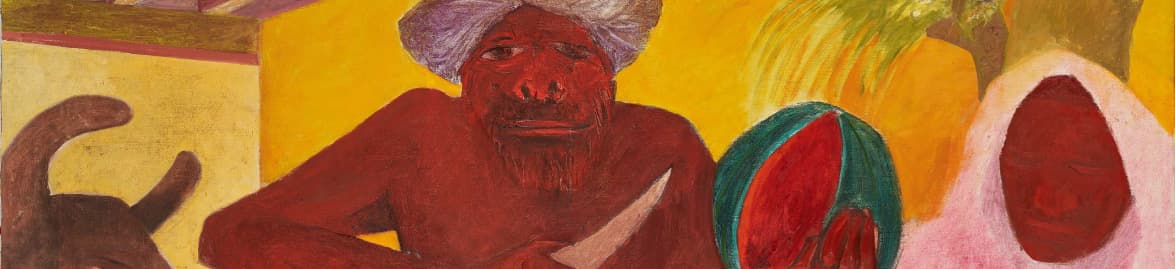
Krishen Khanna is a celebrated Indian painter & modernist, renowned for his evocative figurative works that chronicle the social & historical fabric of India. As Krishen Khanna approaches his centenary, he stands as the last surviving member of the iconic Progressive Artists’ Group, a collective that included legendary painters such as F.N. Souza, S.H. Raza, M.F. Husain, K.H. Ara, H.A. Gade, S.K. Bakre, Ram Kumar, Akbar Padamsee and Tyeb Mehta. His journey from a banker to a renowned artist is a captivating tale of self-discovery, passion and courage. It is a story that goes beyond art; it is about defying convention, challenging societal expectations and fearlessly pursuing what truly resonates with one’s inner self.
In this article, we will delve into Krishen Khanna’s early life, his transition from banking to art, his artistic evolution and the impact of his works on the Indian modern art movement. His life exemplifies the power of following one’s passion, no matter how unconventional the path may seem.
Artist Krishen Khanna : Early Life, Education & Early Works
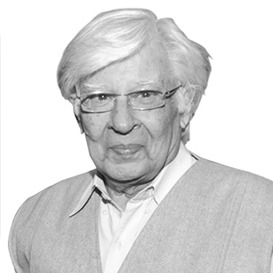 Krishen Khanna grew up in a culturally rich environment, where he developed an early passion for art, influenced by his father, a teacher who shaped his perspective on life and creativity. His academic journey took him to the Imperial Service College in Windsor, England, where he graduated in 1940. Following his family's move to India, Khanna worked with Grindlays Bank in Bombay, where he was introduced to the art scene and invited to join the Progressive Artists' Group, a collective that played a pivotal role in modernizing Indian art. Krishen Khanna's early works began to gain recognition, with his first exhibition in 1949. His fisrt painting "Spring Nude" was purchased by Dr. Homi Bhabha, the renowned nuclear physicist and founder of the Tata Institute of Fundamental Research. In 1955, Khanna held his first solo exhibition at the USIS in Chennai, marking the beginning of his widespread recognition. Since then, Khanna has continued to exhibit his works extensively in India and internationally, cementing his place as one of the leading figures in Indian modern art.
Transition From Banking To Painting
Like many individuals of his generation, Khanna followed a more conventional route that promised stability and financial security, and in the early 1960s, he took up a job at the Grindlay Bank to look after himself and his family. His time in the banking sector was a far cry from the world of art he would eventually immerse himself in, but even in the midst of this seemingly unrelated profession, Krishen Khanna maintained his love for painting. During his time at the bank, he continued to create art in his spare time, using it as a means of personal expression. Khanna's education also included interactions with renowned figures in the Indian art scene at the time, such as M.F. Husain and F.N. Souza, who were part of the Progressive Artists Group. These connections would later influence his approach to modern Indian art, but Khanna also developed a distinct style that was rooted in his own observations of society and the human condition.
His journey from banker to artist was also significant because it allowed him to bring a unique perspective to his work. Having spent time in a structured and disciplined corporate environment, he was able to combine that with his growing understanding of art, producing works that were not only technically skilled but also deeply philosophical and socially relevant.
Krishen Khanna Art Style
Krishen Khanna's paintings style were characterised by figuration and a strong sense of human emotion. He painted large, expressive figures that seemed to convey a deep sense of existential struggle and human pain. His exploration of human themes continued throughout his career by using strong, bold colours and thick brushstrokes to convey his emotions. He created art inspired by Indian culture and as Krishen Khanna’s career progressed, his style continued to evolve. He became more influenced by expressionism, creating works that depicted the struggles of everyday people. Krishen Khanna paintings often addressed social issues, such as poverty, identity, and migration, and they were imbued with a deep sense of empathy for the human condition.
Notable Krishen Khanna Artworks Series
1. Bandwallah Series - Khanna’s Bandwallah series depicts musicians in a wedding procession, wearing red, blue, and yellow colour in several of his works. It highlights the importance of Bandwallahs, who are rarely included in the celebrations. His use of colour and form in "Bandwallah" also reflects the vibrancy of the setting, yet the figures might also have a sense of weariness or solitude, suggesting that despite their role in creating a celebration, their lives are not without struggle. His ability to convey the emotional depth of these figures is one of the hallmarks of his art.
2. Memory of the Partition 1947 - A powerful and poignant Indian partition art that reflects on the traumatic event of the partition of India in 1947. This event led to the division of British India into two independent nations, India and Pakistan, resulting in widespread violence, displacement, and loss of life. The painting speaks to the personal stories of those who lived through the partition and those who continue to carry its memories, even in the present day. It stands as an important work in understanding the cultural and historical significance of the partition of India and the shared history between India and Pakistan.
3. Jesus at Emmaus - In this painting, Khanna might be focusing not just on the religious narrative but also on the universal themes of faith, recognition, and the power of spiritual encounters. The artwork serves as a meditation on the transformative nature of divine revelation and the profound impact of faith on human beings. This work showcases Khanna’s versatility in tackling both personal and religious themes, infusing a timeless biblical story with his own artistic vision and emotional depth.
4. A Season of Watermelons - Through this artwork Khanna invites viewers to reflect on the simple joys of life while also acknowledging the underlying complexities and transient nature of those moments. As is typical in Khanna's works, the depiction of human figures would likely carry emotional weight, illustrating the lives and stories of ordinary people, perhaps highlighting their struggles, resilience, or pleasures. The vibrant colours of the watermelon contrast with darker or muted tones that may represent the complexities of the human experience. He continues his exploration of human emotions and social life, revealing his deep understanding of both the personal and collective aspects of existence.
5. The Women Series - In his exploration of gender and identity, Krishen Khanna has also painted a number of works focusing on women, capturing their strength, vulnerability, and complexity. Many of his works highlight the everyday life of women, often portraying them in contemplative or dynamic poses, sometimes in domestic or work settings. Through these paintings, Khanna provides commentary on social norms and the roles women are often expected to play in society.
6. News of Gandhiji's Death - This painting by Krishen Khanna reflects a historical moment that deeply impacted India—the assassination of Mahatma Gandhi in 1948. Krishen Khanna’s depiction of this event captures the shock, sadness, and sense of loss that permeated the nation at the time. The painting is a poignant commentary on how news of this tragic event affected people across India. The somber tones and emotional expressionism used in this work are characteristic of Khanna's ability to evoke strong emotions through his art.
7. Truckwallahs - This is a painting series that Khanna worked on in the 1960s, which focuses on the everyday lives of truck drivers in India, a common sight on the country's roads. The paintings depict the truck drivers—often portrayed as stoic and hardworking individuals—along with the colorful and embellished trucks that are an iconic part of Indian culture. The work captures the struggle, resilience, and daily labor of these truckwallahs (truck drivers), giving voice to a marginalized section of society. Khanna's style in these paintings blends realism with abstraction, and the vibrant hues give the work a sense of movement and life. The series can be interpreted as a metaphor for India's working class.
8. The Last Supper - Krishen Khanna’s The Last Supper painting is a reimagining of the famous Christian religious scene of the same name. Known for his unique interpretations of classical subjects, Khanna painted this version with a modern, Indian perspective. The artwork conveys a sense of contemplation and solemnity, yet it presents the figures in a way that reflects the cultural and social tensions of the time. The figures in this interpretation are presented with emotional depth, and the painting’s composition and color palette make it a powerful meditation on the nature of sacrifice, communion, and human relationships.
9. La Pieta - La Pieta painting by Krishen Khanna is another reworking of a classical religious theme. The title refers to the iconic image of the Virgin Mary holding the body of Christ after his crucifixion. Khanna’s interpretation takes on a deeply human and emotional perspective, focusing on the sorrow, anguish, and humanity within the scene. Like many of Khanna's works, La Pieta combines his religious inspirations with his own personal understanding of human suffering. His figures in this painting are presented with an emotional intensity that is characteristic of Khanna’s approach to religious iconography, where human experiences of loss and grief are central.
10. A Far Afternoon - A Far Afternoon painting is a reflective piece that explores the themes of time, memory, and solitude. The painting presents a tranquil and contemplative scene that invites viewers to pause and reflect on the passage of time. It may feature individuals, often in solitude, engaged in some kind of activity or contemplation, which is a recurring theme in Khanna’s works. The muted tones and the introspective mood of the painting evoke a sense of distance and nostalgia, asking viewers to reflect on their own experiences of isolation, time, and personal journeys.
11. The Game (Larsen & Toubro Boardroom) - This is an oil painting by Krishen Khanna that was commissioned for the boardroom of Larsen & Toubro in Mumbai. The painting depicts a conference or a meeting of some kind, where the figures are engaged in an intense discussion. The composition and style of the painting evoke a sense of collaboration, strategy, and decision-making—important elements in a corporate setting. The figures in the painting, while abstracted, convey a sense of movement and interaction, reflecting the idea of a business meeting or discussion in action. Khanna’s choice of medium, oil on canvas, brings a layer of depth and texture to the piece, making it a significant addition to the corporate art collection.
12. The Great Procession (ITC Maurya Hotel, New Delhi) - This is a mural created by Krishen Khanna for the lobby of the ITC Maurya Hotel in New Delhi. This monumental work reflects Khanna’s skill in large-scale public art and his ability to capture the essence of a procession or collective movement. The mural likely depicts a large group of figures, possibly from an Indian cultural or historical context, coming together in a unified procession. The figures in the mural, while abstracted, are intended to communicate the idea of collective action, solidarity, and the passage of people through time. As with many of his other works, Khanna’s use of vibrant colors, bold figures, and a sense of dynamic movement are central to the mural’s impact. The mural has become an iconic part of the hotel’s décor and is an important example of public art in India.
Krishen Khanna’s works—whether in oil paintings, murals, or large-scale public art—often tackle significant social, cultural, and historical themes. His ability to translate complex emotions and moments from life into powerful visual forms has made him a significant figure in the world of contemporary art. From his poignant works on Gandhiji's death and truckwallahs to his iconic reinterpretations of religious themes like The Last Supper and La Pieta, Khanna has continually shown an exceptional capacity for combining modern sensibilities with traditional themes. His large murals, like The Great Procession, continue to enhance public spaces and connect audiences with his creative vision.
Krishen Khanna Exhibitions & Awards
Krishen Khanna has received several prestigious awards throughout his career, including the Kala Ratna from the All India Fine Arts and Crafts Society, New Delhi, in 1997; he was also the recipient of the Lalit Kala Ratna from the President of India in 2004; and the Padma Bhushan from the Government of India in 2011. The artist's works have been exhibited both in India and abroad. His notable solo exhibitions include Krishen Khanna: Drawings & Paintings at Vadehra Art Gallery, New Delhi, in 2016; When the Band Begins to Play... at Grosvenor Gallery, London, in 2015; A Celebration of Lines at Sakshi Gallery, Mumbai, in 2013; Krishen Khanna: A Retrospective presented by Saffronart at Lalit Kala Akademi, New Delhi, in 2010; The Savage Heart at Cymroza Art Gallery, Mumbai, in 2008; Krishen Khanna at Saffronart and Berkeley Square Gallery, London, in 2005; and An Airing at Pundole Art Gallery, Mumbai, in 2004.
In addition to his solo shows, Khanna has participated in numerous group exhibitions, such as Ideas of the Sublime at Vadehra Art Gallery, New Delhi, in 2013; and The Discerning Eye: Modern Masters at Vadehra Art Gallery, New Delhi, in 2013, and several others. His work has also been featured in prestigious international events, including the Tokyo Biennale (1957, 1961), the São Paulo Biennale (1960), the Venice Biennale (1962), and the Festival of India in the former USSR and Japan in 1987 and 1988, among others.
Documentaries
Krishen Khanna’s artistic journey is not only captured in his paintings but also through insightful documentaries that explore his life and work. One such fascinating story is that of a portrait Khanna painted in the 1940s of Salman Rushdie’s mother, which was rejected by Rushdie’s father. This moment in Khanna’s early career highlights the personal connections and intriguing stories behind his art. Later, Khanna allowed renowned artist M. F. Husain to paint over this rejected portrait, further intertwining their creative paths. In addition to this anecdotal history, Khanna’s artistic evolution is beautifully documented in the feature film A Far Afternoon – A Painted Saga by Krishen Khanna (2015). Directed by Sruti Harihara Subramanian and produced by the Piramal Art Foundation, the documentary traces the journey of Khanna as an artist, shedding light on the influences, experiences, and moments that shaped his unique style. Through this visual narrative, audiences are given an intimate glimpse into the life of one of India's most celebrated modern artists.
Legacy & Impact
Krishen Khanna eventually became one of the most important figures in modern Indian art. His works have been showcased in numerous galleries both in India and internationally, and his influence on younger generations of artists is widely recognised. His decision to leave a successful banking career to pursue his true calling demonstrates the power of following one’s passions and the importance of creative freedom. His story also challenges the notion that an art career is impractical or risky. Khanna’s life exemplifies how persistence, coupled with a deep belief in one’s vision, can lead to success and fulfillment. Khanna's legacy continues to resonate in the art world, where he is remembered not just as an artist but also as someone who carved his own path, a path that went from the confines of a banker's desk to the boundless world of art. His life story reinforces the message that it is never too late to follow one’s passion and chart a new course, regardless of how unconventional it may be.