from nritta to nritya: expressive abstraction in shiavax chavda’s dance inspired art
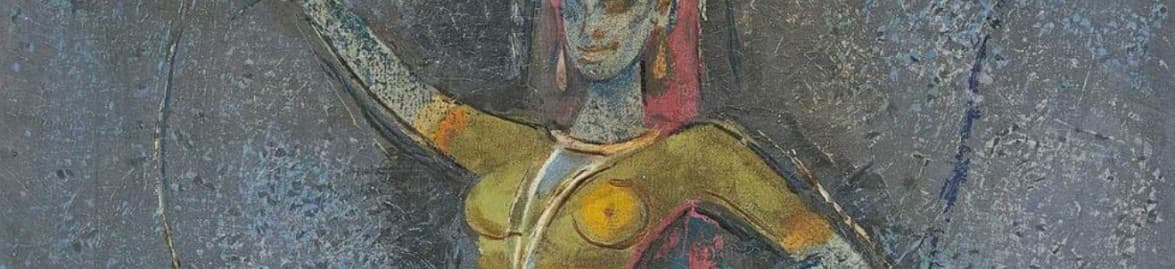
Shiavax Dhanjibhoy Chavda (1914–1990) was a celebrated Indian painter, illustrator and muralist known for his dynamic depiction of movement, especially dancers and musicians from India and Southeast Asia. Celebrated as a pioneer of Indian modern art, he brought a unique rhythmic vitality to his works using expressive lines and vivid colors.
Early Life
Shiavax Chavda was born in 1914 in Navsari, Gujarat, into a Parsi family. Growing up in an environment that valued culture and education, he showed an early interest in sketching and painting. His fascination with human movement and emotion would later become the foundation of his life’s work.
Education
Shiavax Chavda studied at the Sir J.J. School of Art, Mumbai, one of India’s leading art institutions, where he trained in academic realism and classical techniques. After graduating from Sir J.J. School of Art, Chavda earned the prestigious Sir Ratan Tata Scholarship in 1936 and pursued advanced studies at the Slade School of Fine Art in London, completing the three-year course in just two years. He further trained at Paris’s Académie de la Grande Chaumière and worked alongside luminaries such as Leon Bakst and Picasso on the Diaghilev Ballet sets.
Family
In 1947, Shiavax Chavda married Khurshid Vajifdar, a distinguished Indian classical dancer and sister of the noted performer Shirin Vajifdar. They had two children: a daughter, Jeroo Chavda, who followed in her mother’s footsteps as an accomplished Odissi dancer, and a son, Pervez Chavda, who pursued a career in architecture. The family embodied a unique blend of artistic and intellectual pursuits, reflecting the same harmony between tradition and modernity that defined Shiavax Chavda’s own art.
Painting Style
Initially painting in a Victorian realistic style, Shiavax Chavda’s travels across India and Southeast Asia inspired a dynamic style emphasizing movement and musicality. His “dancing line” technique became his hallmark, capturing the rhythmic motion of dancers and musicians with vibrancy and abstraction. Use of vivid colors, rhythmic line work, and elements of Tantric imagery characterize his style.
Famous Paintings
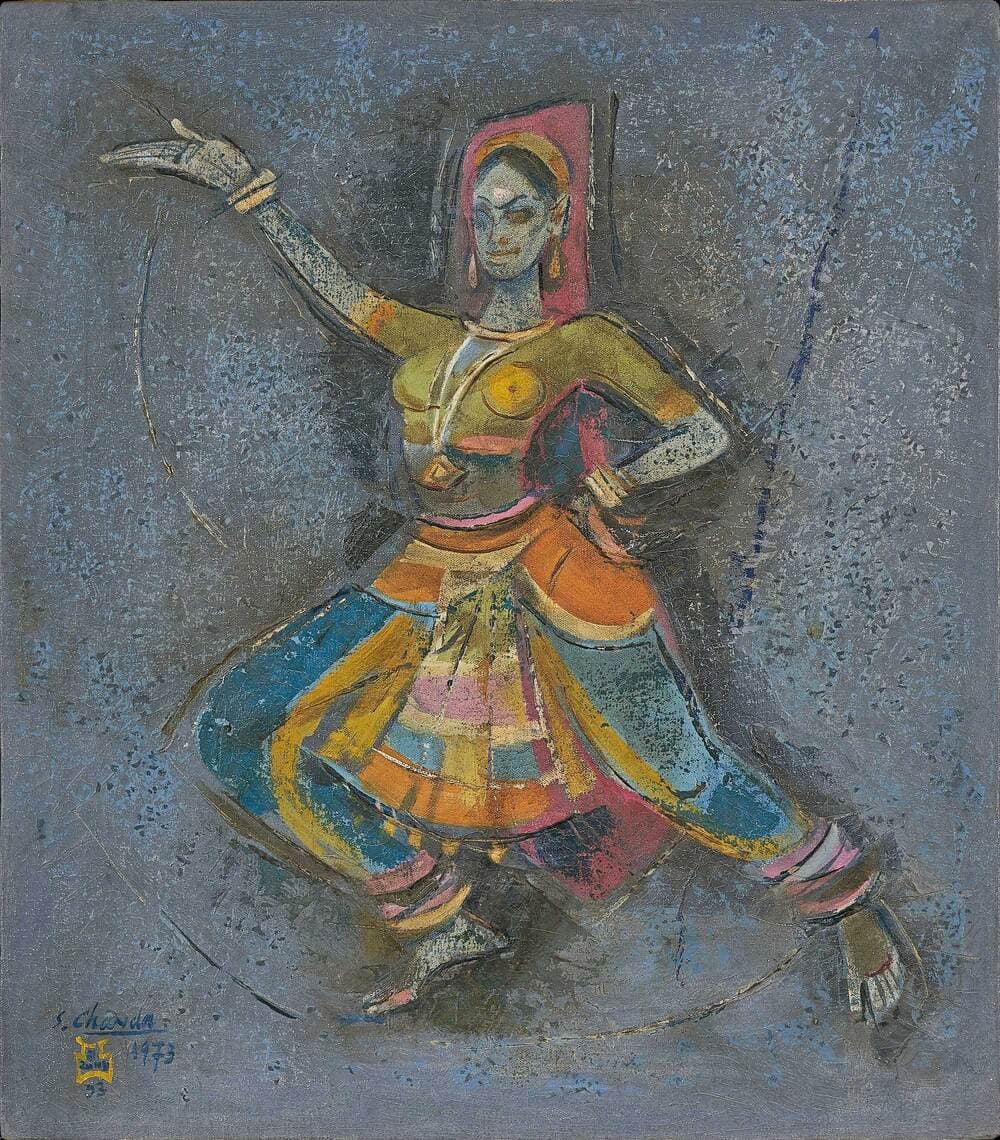 Shiavax Chavda’s body of work features several notable paintings that capture the vibrancy of everyday Indian life and culture. Among his best-known pieces are Calico Printers, Mother’s Love, Worship in Kulu, Rangoli, Toddy Sellers, Daily Work, Booking Office, and In the Balcony. These works reflect his keen observation of people, rhythm, and movement in ordinary settings.
Beyond easel paintings, Shiavax Chavda also created impressive murals for prominent institutions, including the Mumbai offices of Air India, Burmah Oil, the Reliance Group, and public buildings such as the People’s Insurance Company and the National Centre for the Performing Arts (NCPA). These large-scale works showcase his mastery in blending artistic dynamism with architectural space, further cementing his place in the history of modern Indian art.
Characteristic Features of His Paintings
• Emphasis on movement, rhythm, and gesture
• Use of minimal yet expressive lines
• Preference for earthy tones and fluid brushwork
• Depiction of Indian classical dancers and musicians
• Strong sense of composition and balance despite spontaneity
• Blend of Indian themes with modernist aesthetics
Shiavax Chavda’s paintings are never static. Even his simplest sketches convey the kinetic energy of performance.
Contribution in Indian Art
Shiavax Chavda played a vital role in documenting and celebrating India’s rich performing arts through visual means. By choosing dance and music as his central themes, he bridged performing and visual arts, enriching Indian modernism’s narrative scope. His work helped shift artistic focus toward indigenous themes interpreted via modernist techniques.
Awards
Shiavax Chavda was honored as one of the nine Eminent Artists of India by the Lalit Kala Akademi in 1956. Other accolades include the Sir William Orpen Bursary (Slade, 1939), Abhivadan Trust Award (1985), fellowship by Lalit Kala Akademi (1986), and Artist of the Year Award by Maharashtra State Government (1990).
Exhibition
Shiavax Chavda made his artistic debut in 1945 with a solo exhibition at the Princes’ Room of the Taj Mahal Palace Hotel, Mumbai, a milestone that marked his emergence on India’s modern art stage. The following year, he presented another independent show at the Silverfish Club, further cementing his growing reputation. In January 1947, he returned to the Taj for a third exhibition that featured a remarkable series of works inspired by his journeys to the Kullu Valley (1943) and the villages of Gujarat (1946), paintings that reflected his deep engagement with India’s landscapes and people.
Chavda’s practice soon gained international recognition. In 1951, he was among thirteen artists representing India at the Salon de Mai in Paris, marking the nation’s inaugural participation in this globally acclaimed exhibition. Throughout the late 1950s and early 1960s, Chavda remained an active and influential member of the Bombay Group, which included eminent contemporaries such as K. K. Hebbar, Laxman Pai, D. G. Kulkarni, Mohan Samant, and Baburao Sadwelkar. The group’s six major exhibitions held between 1957 and 1962 were pivotal in defining the direction of modern Indian art and in establishing Mumbai as a dynamic hub for artistic innovation and dialogue.
Later Life & Death
In his later years, Shiavax Chavda became one of the most respected artists of his generation. Living in Mumbai, he continued to sketch dancers, musicians, and everyday scenes with equal passion. Even as trends in Indian art shifted toward abstraction and conceptualism, Chavda remained committed to the human figure, rhythm, and vitality. He passed away on 18 August 1990 in Mumbai at the age of 75, leaving behind an invaluable body of work that continues to inspire artists and art historians.
Enduring Legacy & Impact
Shiavax Chavda’s legacy lies in his celebration of Indian classical culture through a modernist lens. His art continues to influence young artists who seek to merge tradition with innovation. He demonstrated that Indian modernism need not abandon its roots but could evolve from them. Today, his works are held in major collections and are studied for their technical mastery and cultural depth.
Conclusion
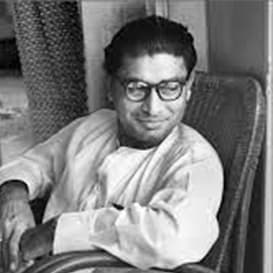 Shiavax Chavda remains one of India’s most poetic interpreters of movement and rhythm. His art, rooted in Indian classical performance yet shaped by modernist discipline, speaks to both emotion and intellect. Through every line, he captured not just the dancer’s motion but the spirit behind it, the eternal dance of life itself.
Lesser-Known Facts
• Shiavax Chavda was an accomplished violinist and had a deep understanding of classical music, which informed his rhythmic approach to painting.
• He was known to sketch live performances, completing dozens of drawings during a single recital.
• Chavda trained in theater stage design with Russian artist Vladimir Polunin.
• Chavda was also a skilled illustrator, contributing to book covers and art journals in the 1940s and 1950s.
• Despite his international training, he preferred to live and work in Mumbai, close to India’s cultural heart.