


from tribal homes to canvas: the tale of warli painting
Your Ultimate Information Guide to Warli Painting of Maharashtra
Warli painting represents one of India's most celebrated tribal art forms and offers a compelling visual chronicle of the quotidian experiences and cultural values of Maharashtra's Warli tribe. Embedded within a tradition spanning several centuries, Warli painting constitutes far more than decorative expression, it embodies a living cultural narrative perpetuated through successive generations, thereby preserving an irreplaceable heritage. While Warli painting has progressively achieved recognition on both national and international platforms, extending well beyond its origins within tribal communities, it continues to honor its foundational traditions. As such, it stands as an enduring testament to the aesthetic excellence and sustained relevance of folk art practices.
What is Warli Art?
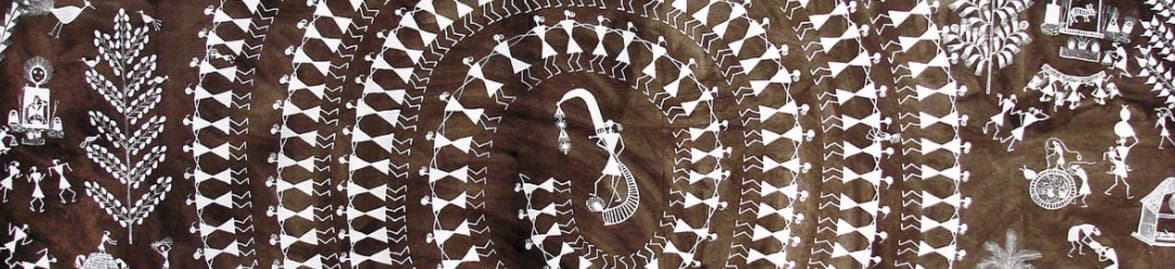
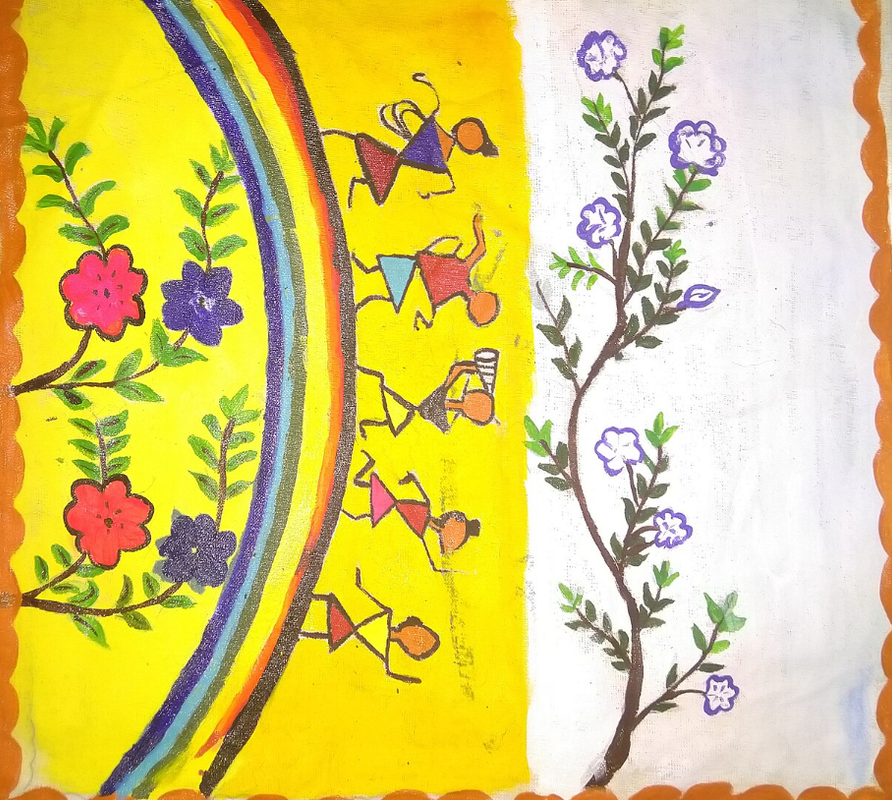 Warli art is a tribal folk painting tradition created by the Warli tribe of the North Sahyadri Range in Maharashtra, India. The region includes cities such as Dahanu, Talasari, Jawhar, Palghar, Mokhada and Vikramgad. It is one of India’s oldest tribal art forms, characterized by simple geometric shapes such as circles, triangles, and squares that are used to depict scenes of daily life, nature, animals and social celebrations such as farming, hunting and dancing.
Origin and History
Warli art originated among the Warli and Malkhar koli tribes in Maharashtra. The art dates back to at least the 10th century CE and was discovered by the wider art world in the early 1970s through artists like Jivya Soma Mashe, who helped popularize it beyond the villages.. Traditionally, these paintings adorned the walls of mud huts in Warli villages during festivals, weddings, and special occasions. They served as a visual storytelling medium, documenting rituals, social life and cultural beliefs. The art form is rooted in a pre-historic style, reminiscent of early cave paintings, yet has evolved uniquely within the Warli culture.
Warli Tribe
The Warli tribe is an indigenous Adivasi community primarily inhabiting the mountainous and coastal regions along the Maharashtra–Gujarat border in western India. Renowned for their deep connection with nature, the Warli people possess a rich cultural heritage shaped by their animistic beliefs, age-old customs, and sustainable way of life. Traditionally, they reside in small, close-knit villages and depend largely on agriculture and related occupations for their livelihood.
The Warli language, belonging to the Indo-Aryan family, reflects the tribe’s cultural and linguistic uniqueness. Their social life is distinguished by vibrant festivals, distinctive attire, and communal traditions that promote unity and harmony. One of their major celebrations, the Bohada festival, is famous for its colorful mask dances symbolizing ancestral spirits and local deities.
Central to Warli culture is their folk art and spirituality, deeply rooted in reverence for Mother Nature. This devotion finds expression in the iconic Warli paintings, a traditional art form illustrating the tribe’s daily life, rituals, and social activities. Created primarily by women, these paintings are rendered using white rice paste on earthen or cow-dung-coated walls, featuring motifs of farming, hunting, dancing, and festivals such as the Tarpa dance.
Traditional attire includes loincloths and turbans for men, and knee-length saris for women, made from locally woven fabrics. The Warli tribe, believed to have existed in the region for over two millennia, continues to preserve its distinct identity through art, music, dance, and rituals, serving as a living testament to India’s diverse and enduring tribal heritage.
Tradition
The tradition of Warli painting is inherently communal. Passed down through generations, it is often the women of the tribe who create these paintings, using them to narrate stories, invoke blessings, and celebrate significant events. Each painting reflects not just artistic expression but also social and spiritual values. painting is more than decoration, it’s a cultural narrative that preserves the tribe’s worldview and way of life.
Medium and Materials
Traditional Warli painting used locally sourced materials such as rice paste for pigment, bamboo brushes and earthen walls as the canvas. In contemporary practice, artists have adapted the form for paper, cloth, ceramics, and other surfaces, expanding Warli’s reach while retaining its visual and cultural identity.
Warli Painting Techniques
The distinctive charm of Warli art stems largely from its traditional techniques. Below is an outline of the key methods used in this art form.
1. Surface Preparation - Traditional Warli artists use the walls of village huts as their painting surface. These walls are typically constructed from a blend of earth, cow dung, and branches, creating a rustic, textured base. Before painting, the surface is coated with a smooth layer of red mud or geru (red ochre) to enhance adhesion and contrast for the white motifs. Once dried, this background provides a rich, earthy tone symbolic of fertility and connection to the land.
2. Drawing Process - The artwork is executed freehand using simple tools such as a bamboo stick chewed at one end to form a brush. Artists employ rhythmic and repetitive strokes to form geometric motifs such as circles, triangles, and lines that represent humans, animals, and elements of nature. Precision and balance are key; despite their simplicity, these shapes are meticulously arranged to depict scenes of daily life, rituals, and community celebrations.
3. Use of Natural Pigments - Warli painters rely entirely on organic and locally available materials. The white pigment is traditionally made from ground rice mixed with water and a natural adhesive, often gum or tree resin. Occasionally, additional hues are introduced using natural sources i.e yellow from turmeric, red from ochre, and black from soot or charcoal though the classic Warli palette remains predominantly monochrome.
4. Symbolic Composition - Each painting follows a deliberate compositional rhythm, typically organized around a central motif such as the tarpa dance, sun, or tree of life. The placement of figures follows radial or circular patterns to reflect harmony and continuity. These compositions are not merely decorative; they serve as visual narratives capturing the spiritual and cultural ethos of the Warli people.
5. Finishing and Preservation - After completion, the artwork is left to dry naturally. Since it is painted on earthen walls, it is impermanent fading with time or weathering. However, modern artists have adapted these techniques onto paper and cloth using similar natural materials to ensure durability while preserving the authenticity of the traditional style.
Style
The style is minimalist and monochromatic, relying on stark white figures against a red ochre or brick-red background. Human figures are depicted as two inverted triangles joined at the waist, representing the torso and pelvis, symbolizing balance in nature. . Triangles also symbolize mountains and trees, while circles indicate the sun or moon. The compositions are rhythmic and dynamic, showing movement and community spirit, often observed in their traditional dance “Tarpa Nrutya”.
Themes and Motifs
Rather than portraying gods or mythological stories, Warli paintings focus on nature and human activity. Common motifs in Warli painting include scenes of farming, hunting, weddings, dance and other social activities, reflecting the tribe’s agrarian lifestyle. The sun, moon (circles), mountains, and trees (triangles) and enclosures (squares) feature prominently as natural and spiritual elements. The central motif often is a square (called “chauk” or “chaukat”), symbolizing a sacred enclosure connected to fertility or Mother Earth.
Warli Art Types
Chauk or Chaukhat - The Chauk or Chaukhat is one of the most important elements in Warli art. It is a sacred geometric shape, usually a square, drawn in the center of the painting to represent a holy space. The Warli people believe that this space invites divine presence and spiritual energy. It serves as a base for other significant figures, such as gods, goddesses, or symbolic motifs. Traditionally, the Chauk is made using white rice paste on mud walls and is decorated with simple patterns. It plays a central role in ritual and ceremonial paintings, symbolizing purity, protection, and the balance of life and nature.
Lagna Chauk - The Lagna Chauk, also known as the Wedding Square, is a special type of Warli painting created during marriage ceremonies. It is dedicated to the goddess Palaghata, who represents fertility, prosperity, and new beginnings. In this painting, the bride and groom are often shown at the center, surrounded by symbolic motifs like animals, trees, and dancing figures that depict community celebration. The Lagna Chauk is drawn to bless the couple with happiness, harmony, and a fruitful life together. It reflects the importance of marriage as not just a union of two individuals, but also a sacred social and spiritual event in the Warli community.
Tarpa or Tarpa Player - The Tarpa is a traditional wind instrument made from bamboo and gourd, used by the Warli people during festivals and celebrations. In Tarpa paintings, the central figure is the tarpa player, surrounded by men and women dancing in a circular formation. This dance symbolizes unity, equality, and the endless cycle of life. Each dancer follows the rhythm of the tarpa, representing harmony between humans and nature. The Tarpa paintings capture the joyous spirit of the Warli tribe, showcasing their love for music, dance, and community togetherness.
Warli Art Importance
Here’s an overview of its importance across different aspects:
1. Cultural Expression: Warli art reflects the beliefs, traditions, and daily life of the Warli tribe. It preserves their rich cultural heritage.
2. Connection with Nature: The art emphasizes harmony between humans and the environment, promoting ecological awareness.
3. Social Significance: It showcases community unity, social values, and collective joy through dance and rituals.
4. Economic Value: Today, Warli art provides livelihood opportunities to tribal artists through exhibitions, handicrafts, and global recognition.
5. Educational Value: It serves as a medium for teaching younger generations about traditional knowledge, folk stories, and sustainable living.
Famous Warli Artists
Over the years, many Warli artists have gained recognition for keeping this ancient craft alive and transforming it into a celebrated art form. Below are some of the most renowned Warli artists names who have helped preserve and popularize this traditional art form:
1. Jivya Soma Mashe - Considered the "modern father of Warli," Jivya Soma Mashe revolutionized the art form by painting it on canvas in 1971. By taking Warli art beyond its ritualistic roots, he helped it gain recognition on the national and international stage. Mashe’s intricate depictions of tribal life, nature, and rituals won him widespread acclaim, culminating in the Padma Shri award in 2011 for his invaluable contributions to Indian art.
2. Balu Mashe - Balu Mashe, the son of Jivya Soma Mashe, is celebrated for his distinctive storytelling within the Warli tradition. Following in his father’s footsteps, Balu blends traditional motifs with narratives that reflect both tribal life and contemporary social themes, ensuring that Warli art remains relevant and vibrant.
3. Sadashiv Mashe - As the eldest son of Jivya Soma Mashe, Sadashiv Mashe continues to practice and preserve the family legacy. His work remains rooted in traditional Warli motifs, emphasizing cultural continuity and the beauty of the tribe’s everyday experiences.
4. Shantaram Tumbada - Shantaram Tumbada is known for his innovative approach while staying true to Warli’s core aesthetic. His ability to experiment with composition and scale has expanded the possibilities of the art form, attracting both new audiences and critical recognition.
5. Ramesh Hengadi - Ramesh Hengadi is another prominent Warli artist whose works have been celebrated for their elegance and adherence to traditional symbolism. He has played a key role in popularizing Warli art beyond tribal communities, contributing to its wider appreciation.
6. Savitri Bai - Savitri Bai stands out as a female Warli artist who continues the tradition with dedication and skill. Her works celebrate the rituals, festivals, and daily life of the Warli tribe, preserving cultural narratives that might otherwise fade with time.
7. Nana Panchal - Nana Panchal is recognized for his significant contributions to Warli art. Through murals, canvas paintings, and workshops, he ensures that the Warli tradition thrives while reaching audiences far beyond its original tribal context.
Contemporary Perspectives
In recent decades, Warli art has transcended village walls, finding expression on canvas, textiles, home decor and digital media. Contemporary artists experiment with colors, materials, and modern themes while keeping the core motifs and storytelling intact. Warli art now not only preserves cultural heritage but also serves as a medium for social commentary and global artistic dialogue.
Challenges
Despite global recognition, Warli art faces challenges such as commercialization risks, loss of traditional knowledge, and cultural dilution. Tribal communities grapple with preserving authenticity amid market demands, and younger generations sometimes distance themselves from ancestral practices. There is an ongoing need for cultural sensitivity, sustainable practices, and educational initiatives to safeguard Warli art’s future.
Conclusion
Warli painting is more than just visual art; it is a living tradition, a story of community, and a celebration of nature. From the walls of humble village huts to international galleries, Warli art continues to connect generations and cultures, reminding us of the enduring power of simplicity and storytelling.
Image Credit:
“Warli painting by Jivya Soma Mashe”, Unknown, via Wikimedia Commons & “Art of warli”, Unknown, via Wikimedia Commons
– Public Domain.




