gouache - (intro to art) - definition, meaning, history, technique
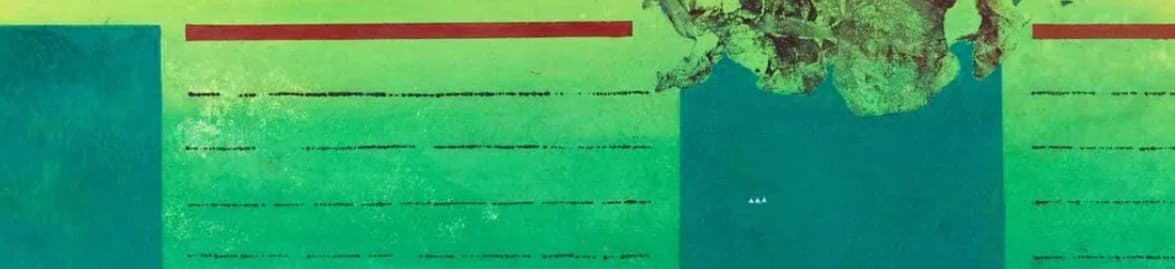
In the vast universe of artistic mediums, gouache holds a special place for its versatility, vibrancy, and ability to merge the qualities of watercolor and acrylics. Whether used for illustration, fine art, or design, gouache continues to captivate artists and audiences alike. This article explores gouache in depth, from its definition and history to techniques, notable works, and famous practitioners.
Definition
Gouache is a water-based paint consisting of pigment, water, a binding agent (usually gum arabic), and often added white pigment or chalk for opacity. Unlike watercolor, gouache dries to a non-reflective matte surface and can be reactivated with water even after drying.
Gouache in Art
Widely used in illustration, design, fine art, and animation, gouache’s opaque and reworkable nature makes it ideal for detailed work and bold color fields. Artists value its ability to produce flawless flat areas and nuanced textures.
Who Invented Gouache
Gouache’s origin dates back over centuries, initially employed in illuminated manuscripts and Persian miniatures. It evolved from tempera and watercolors, becoming popular among commercial artists in the 20th century.
History
Gouache has a rich historical lineage. Early forms were used by medieval artists for illuminated manuscripts and frescoes. During the Renaissance, gouache gained popularity among European painters for preliminary sketches and detailed illustrations. In the 20th century, it became a preferred medium for commercial art, including posters, advertisements, and animation.
Key Characteristics of Gouache
• Opacity: Gouache can cover previous layers completely, unlike transparent watercolor.
• Matte Finish: It dries to a smooth, non-reflective surface.
• Vibrancy: Colors appear bright and intense even in thin layers.
• Reworkable: Once dried, it can be reactivated with water, allowing corrections.
• Versatility: Suitable for detailed work, large washes, and mixed media.
Technique and Application
Gouache can be applied with brushes, palette knives, or even airbrushes. Common techniques include:
• Layering: Applying multiple layers to build depth and color intensity.
• Wet-on-wet: Creating soft blends and transitions.
• Dry brush: Adding texture and fine details.
• Underpainting: Using a layer of gouache as a base before other media.
Gouache is also favored in design and illustration because it reproduces well and photographs beautifully.
Famous Gouache Paintings
1. “The Blue Rider” by Wassily Kandinsky (1903)
Kandinsky, a pioneer of abstract art, used gouache to explore the emotional impact of color and form. The Blue Rider exemplifies his early experiments with abstraction, where bold shapes and vibrant hues convey movement and emotion rather than realistic representation.
2. “Bathers” by Paul Cézanne (1890s)
Cézanne often used gouache for studies of the human figure. His Bathers gouache studies reveal his meticulous exploration of form, structure, and tone, which laid the foundation for modernist approaches to painting.
3. Illustrations for Alice in Wonderland by John Tenniel (1865)
John Tenniel’s illustrations for Lewis Carroll’s classic were enhanced with gouache to achieve precise lines and vivid colors. His work remains a benchmark for detailed, narrative-driven illustration in children’s literature.
4. “Street Scene” by Edward Hopper (1930s)
Hopper used gouache in many of his preparatory sketches to study urban architecture and light. These gouache works capture the stark, quiet beauty of city life with controlled, precise strokes and subtle tonal variations.
5. “Sleeping Venus” by Henri Matisse (1900s)
Matisse employed gouache to study figures and drapery before moving to larger oil paintings. The medium allowed him to experiment with bold shapes and vibrant colors while maintaining a soft, matte surface.
6. Poster Art by Toulouse-Lautrec (1890s)
Henri de Toulouse-Lautrec mastered gouache for his iconic posters advertising cabaret performances in Paris. The bold, flat colors and sharp outlines of gouache made it perfect for commercial reproduction while maintaining artistic flair.
7. Illustrations of The Rubaiyat by Edmund Dulac (1910)
Dulac’s illustrations for The Rubaiyat of Omar Khayyam are celebrated for their intricate designs, luminous colors, and delicate detailing—all achieved with gouache. These works showcase the medium’s ability to produce both subtle textures and vivid imagery.
8. Matisse Cut-Out Studies (1940s-1950s)
While best known for his cut-outs, Matisse used gouache to plan compositions. He layered gouache on paper to visualize color interactions and refine shapes before cutting them into his final pieces.
9. “The Garden of Earthly Delights” Studies by Hieronymus Bosch (c. 1490)
Although Bosch’s final triptych was painted in oil, many of his preparatory sketches and detailed studies were done in gouache. The medium allowed precise detailing, giving life to his fantastical figures and surreal landscapes.
10. “Various Nature Studies” by John James Audubon (1800s)
Audubon, famous for his bird illustrations, frequently employed gouache to achieve lifelike textures and vivid colors in his natural history works. Gouache enabled him to layer colors effectively, giving his subjects a sense of realism and depth.
Famous Gouache Artists
• Wassily Kandinsky – Abstract and modernist works.
• Henri Matisse – Known for gouache in illustrations and cut-outs.
• Paul Klee – Expressive, colorful gouache creations.
• Edward Hopper – Urban scenes and architectural studies.
• John Singer Sargent – Watercolor and gouache explorations.
• Toulouse-Lautrec – Poster art and illustrations.
Must-Know Facts About Gouache
1. Gouache can mimic watercolor and acrylic depending on dilution.
2. It dries faster than oil, making it ideal for quick studies.
3. Unlike acrylic, gouache can be reactivated with water even after drying.
4. Gouache is often used in animation for backgrounds and character design.
5. It provides excellent coverage over dark surfaces.
6. Gouache is popular among illustrators, designers, and fine artists.
7. Its matte finish reproduces well in photographs and scans.
Conclusion
Gouache is a versatile and timeless medium that combines the luminosity of watercolors with the opacity of acrylics. Its rich history, expressive potential, and practical applications make it a favorite for artists across genres. Whether used in delicate illustrations, bold poster art, or modern fine art, gouache continues to inspire creativity, offering endless possibilities for those willing to explore its unique qualities.