h. a. gade - the artist who painted the unseen & unfelt
Introduction
H A Gade i.e Hari Ambadas Gade is one name echoing in Indian contemporary art, famous for his ability to dig up facets often not noticed by bare eyes or even ignored by the heart. Delving into these subtleties of human emotion and complexities in existence, his works become a reflection of what is deemed unseen or unfelt. Gade's art certainly provokes introspection, inviting you into that inner sanctum of your own perceptions and emotions. Here, in this blog, we will explore his life, how he evolved as an artist, and the massive impact he has had on both the art world and society.
Life & Background
Born in 1948, H. A. Gade was brought up in the beautiful town of Matheran, Maharashtra. During his childhood, the environment was blessed with immense beauty from nature and greatly fortified by rich cultural heritage. He showcased a remarkable affinity for art at an early age, which his family encouraged and appreciated as they recognised his talent. Formal education in fine arts was pursued by completing his graduation from the Sir J.J. School of Art in Mumbai, honing his skills to develop a keen understanding of various artistic techniques.
Gade's impressionable years were filled with wonder about the world. His life was powerfully touched by the socio-political transformation sweeping over India at the turn of the 20th century, ultimately becoming an integral part of his existential as well as artistic views. This background set the template for his exploration of art, through which intricate emotions could be conveyed.
Career Highlights
Gade's career really took off in the 1970s when Indian art underwent a major metamorphosis. He began gaining publicity from a succession of group shows that showcased his unique style, but it was his solo shows that would truly mark his place in the world of art. The first solo show took place in Mumbai in the early 1980s and caused considerable excitement among critics and collectors.
Gade has been exhibiting his work in many esteemed venues in India and elsewhere worldwide throughout his career. It is through numerous art fairs and biennales that Gade has positioned himself as one of the leading lights in today's Indian contemporary art movement. More importantly, his body of work has gained public acceptance, making Gade a favourite in galleries as well as museums.
Artistic Profile
Gade's artistic journey, therefore, stands testament to his relentless pursuit of exploring the unseen. He began with experimentation with different styles, from traditional forms of Indian painting to a more abstract, modern conception. Often, his work displays a sublimely deep connection to man and nature and the urban landscape.
The passing years have imparted personal touches to Gade's work, marked by elements of abstraction with narrative qualities in some. His paintings instil mystery and call for contemplation, leading viewers into the depths of their own feelings. His journey has not only been a search for personal expression but also for individual human experiences that are often seen as unattainable.
Major Themes Of His Work
Through his work, Gade touches upon the most important questions, including the complexity of human emotion, the passage of time, and the man-nature relationship. Existential questions abound in these works because they represent inner struggles characterising human life. This is one of the most salient features of his art: carrying over personal as well as universal themes while probing into deeper emotional levels.
One dominant theme is the coexistence of light and shadow, which serves as a metaphor for human dualism. Gade frequently uses colour in such a manner that aligns with the emotional content he wants to portray. Vibrant colours often convey happiness, while sombre colours speak of sadness; thus, the palette encourages observers to feel the emotions of these paintings and reflect upon themselves.
Artistic Style & Technique
Gade's style is a perfect combination of abstraction and realism in his art pieces. He employs layering, texture, and mixed media to achieve depth. A closer look at his paintings reveals fine details, suggesting that layers of meaning may be hiding underneath.
Colour is a hallmark of Gade's technique, as he considers it not only an appeal to the eyes but also an emotional consideration towards the audience, capable of provoking powerful reactions. This approach enables him to engage with viewers in many different ways, making his work both accessible and thought-provoking.
Gade explored other methods in addition to traditional painting. He evolved through the use of digital media, embracing technology in his work. His open-mindedness in adopting new techniques reflects his belief that art must evolve with society—always challenging conventions and pushing boundaries while disrupting the status quo.
Personal Philosophy & Beliefs
Gade's personal philosophy is closely intertwined with his artistic practice. "Art has to try and effect change," he says, suggesting it could and should make us reconsider how we view the world. His art seeks to propose inquiries about aspects of life we may not be familiar with or aware of.
He also places significant emphasis on the role of nature in art. For Gade, creativity is inspired by living in harmony, as all things are interconnected in the natural world. According to him, art fills a gap between human existence and nature, promoting appreciation for the environment and one's place within it.
Famous Paintings
H. A. Gade was celebrated for his abstract landscapes that captured the essence of nature through bold, vibrant colors and geometric forms. His most famous works often depicted the Indian countryside, reimagined through a modernist lens. Gade's paintings, such as his series on Indian villages and cityscapes, emphasized the interplay of shapes, lines, and colors, creating an almost cubist interpretation of landscapes. His mastery of texture and spatial arrangement added depth and complexity, making his art both a reflection of the physical world and a study in abstraction. Mentioned below are some of his notable paintings:
1) Leaf Less Tree - A poignant depiction of a barren tree, stripped of its leaves, evoking a sense of melancholy and introspection.
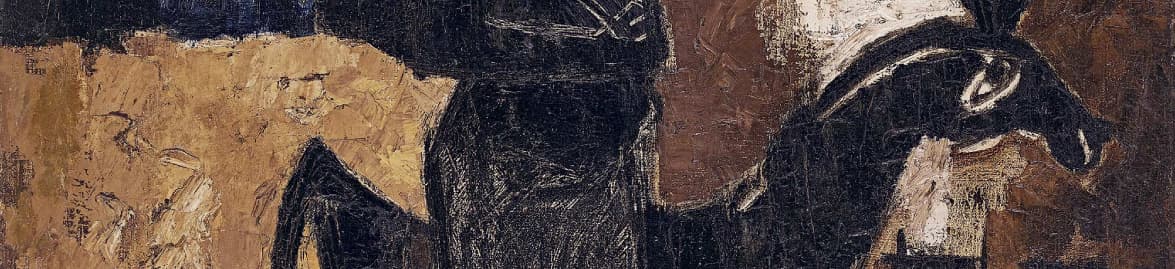
2) Man With A Donkey - A vibrant and expressive portrait of a man accompanied by a donkey, showcasing Gade's skill in capturing the essence of everyday life.
3) Darjeeling Sun - A breathtaking landscape of the Darjeeling hills, bathed in warm sunlight, exemplifying Gade's ability to evoke a sense of serenity and tranquillity.
Impact On Society
The art of H. A. Gade is not just visual but also a factor in society; it provokes discussions on mental health, identity, and humanity. His works foster dialogues, and adept handling of themes creates a space for connections among people and understanding of each other.
Gade is a socially conscious visionary, participating in numerous initiatives and workshops for young artists to empower them to unleash their hidden potential. He believes that art is a tool for transformation, inspiring the next generation of creatives when given the opportunity to express their unique voices.
Awards and Recognition
Gold Medal in Annual Exhibition, Bombay Art Society, Mumbai (1956)
Member of Artists Delegation, Lalit Kala Akademi, New Delhi (1956)
Founder Member of Progressive Artists Group (1947)
Gade has received significant accolades for his art throughout his illustrious career. His innovative approach and engagement with pressing societal issues have garnered appreciation from both critics and collectors. He has been conferred with prestigious titles and has participated in numerous esteemed exhibitions, making him an important figure in Indian contemporary art.
Conclusion
H A Gade is not just an artist; he is a prophet trying to paint what people can't see and don't feel in their souls. His works invite us to think about ourselves and draw closer to the world around us. The artist has made contributions in various fields: within the circles of art and society at large. As we reflect on the contributions of this brilliant artist, we see how, from the beginning, art has been a means to challenge perceptions, invoke feelings, and inspire change. Gade's legacy will continue to resonate for generations as those inspired by him explore realms they cannot yet dream of in their own creative journeys.
Find more of this artist's distinctive art pieces by visiting - here