


haku shah: the gandhian modernist who bridged tribal & contemporary art

Haku Shah (1934–2019) was an eminent Indian artist, anthropologist, educator, and writer celebrated for his deep engagement with tribal and folk cultures of India. Often called the “Gandhian artist,” his work reflects simplicity, humility, and profound human warmth. Through his canvases, writings, curatorial work, and field research, he bridged the worlds of traditional rural India and modern artistic expression.
Early Life
Haku Shah was born in Valod village in Gujarat in 1934. Growing up amid rural landscapes, local customs, and folk traditions, he developed a natural affinity towards tribal art and everyday village life. These early experiences would later shape his entire artistic philosophy.
Later Life
In his later years, Shah became a mentor to young artists, a researcher documenting indigenous cultures, and a curator who presented tribal art on national and international platforms. He spent decades teaching at various institutions and established cultural centers devoted to indigenous arts. Even beyond his painted work, his lifetime contribution included museum creation, exhibitions, research, and cultural preservation.
Family
Haku Shah was born into a family that valued Gandhian ideals such as simplicity, compassion, and service principles that deeply influenced his worldview. His upbringing in a rural Gujarati family kept him rooted in the rhythms of village life, later reflected in his painting style and subject matter.
Education
• Studied at the Faculty of Fine Arts, Maharaja Sayajirao University of Baroda, one of India’s leading art schools.
• Trained under influential artists and teachers at Baroda who shaped his modern yet grounded artistic identity.
• Later enga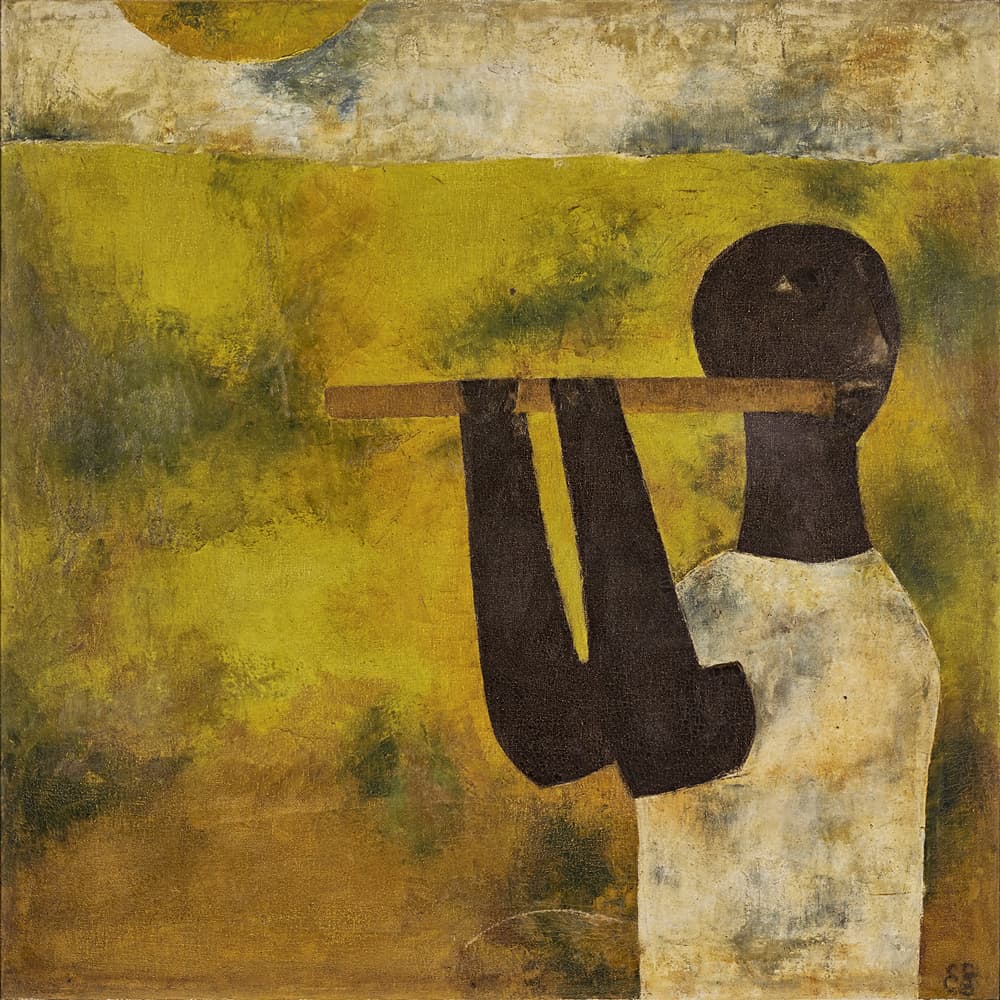 ged in anthropological study and field research across tribal belts in Gujarat, Rajasthan, and Madhya Pradesh.
Painting Style
Haku Shah’s painting style is distinguished by:
• Minimalism and simplicity, inspired by Gandhian philosophy.
• Flat, decorative surfaces and earthy color palettes, reminiscent of folk and tribal art.
• Narrative storytelling, focusing on the daily lives of villagers, tribals, pastoral communities, and saints like Kabir.
• Use of symbolic motifs such as birds, huts, trees, cows, and musical instruments.
• A blend of modernist sensibility with indigenous aesthetics.
Famous Paintings
Some well-known works associated with Haku Shah include:
• Scenes of rural Gujarat
• Depictions of tribal deities and rituals
• Kabir series paintings
• Pastoral life compositions featuring cattle, trees, and village women
 Characteristic Features of His Paintings
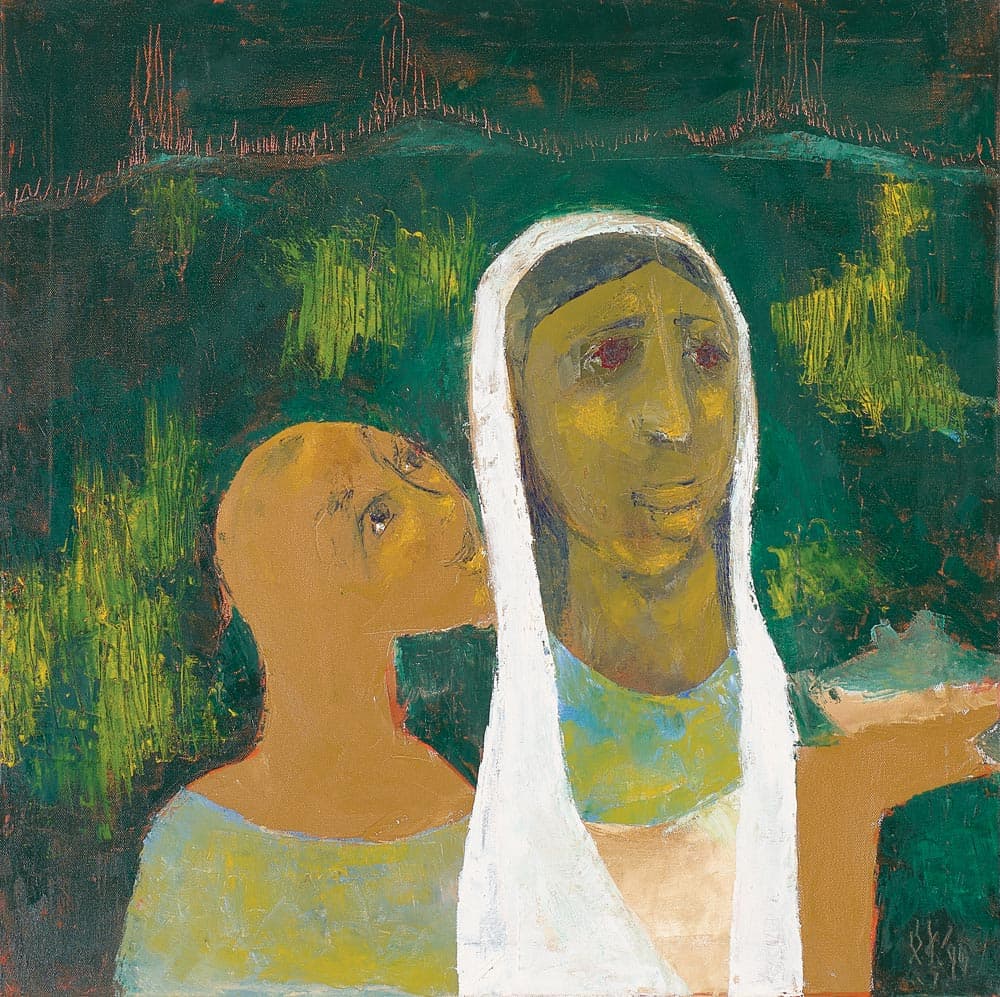
• Earth-toned, natural color schemes
• Delicate line work with a gentle, lyrical quality
• Emphasis on innocence and purity of tribal/folk life
• Figurative forms with symbolic, almost iconic presence
• Inspired by Pithora, Mata ni Pachedi, and other indigenous traditions
• Minimal background detail, focusing on essence rather than realism
Contribution in Indian Art
Haku Shah’s influence extends beyond painting:
1. Preservation of Tribal Art
He documented tribal rituals, crafts, and art forms through fieldwork, research, and exhibitions at a time when tribal art was marginalized.
2. Museum and Institutional Work
He played a key role in:
• Establishing the Tribal Museum at Gujarat Vidyapith, Ahmedabad.
• Curating exhibitions showcasing tribal arts globally.
3. Teaching & Mentorship
As a teacher, especially at the National Institute of Design (NID), Ahmedabad, he inspired generations of designers and artists to appreciate traditional Indian visual culture.
4. Bridging Folk and Modern Art
He was among the earliest modern Indian artists who treated tribal and folk art as equal and rich knowledge systems, not mere decorative crafts.
5. Author & Cultural Thinker
Shah wrote extensively on tribal communities, rural traditions, and the role of culture in society.
Enduring Legacy & Impact
• Considered one of the most significant cultural ambassadors of Indian tribal and folk aesthetics.
• His works remain part of major national and international collections.
• Continues to inspire contemporary artists who explore indigenous traditions.
• Remembered as a visionary who protected, documented, and celebrated India’s grassroots cultural heritage.
Exhibitions
Haku Shah exhibited widely across India and internationally. His exhibitions were held in:
• India, including major metros and cultural centers
• Japan
• USA
• Europe
He curated landmark shows that introduced Indian tribal art to global audiences.
Awards
Haku Shah received several honors for his artistic and cultural contributions, including:
• Padma Shri (1989)
• Kala Ratna Award
• Raja Ravi Varma Award
• Apex Award from the Adivasi Academy
Conclusion
Haku Shah was more than an artist. He was a storyteller, cultural archivist, educator, and humanitarian who devoted his life to India’s tribal and rural heritage. His gentle, contemplative art and his tireless preservation efforts ensure that indigenous voices continue to be seen and valued. His legacy endures as a bridge between traditional India and contemporary global art.
Lesser-Known Facts
• Haku Shah was deeply influenced by Mahatma Gandhi and remained devoted to Gandhian ideals throughout his life.
• He collected thousands of tribal artifacts, many of which became part of museum collections.
• Shah frequently collaborated with anthropologists and sociologists.
• He documented tribal festivals and rituals long before they were academically studied.
• He was also an author of children’s books and essays on culture.
• Designed exhibition spaces and cultural environments with a deep sensitivity to tribal aesthetics.




