iconic series of modern indian art
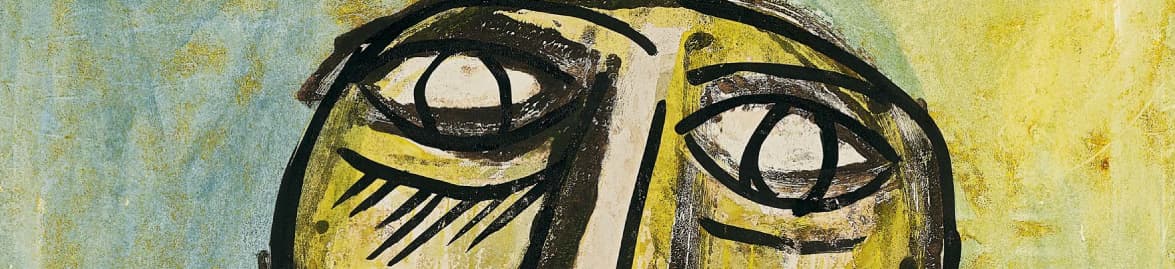
Appreciatively, the most influential artworks were created by a great number of visionary artists who have literally continued to change and address the impressionable cultures, as well as social and political scenes, of their times. Among the most notable artists, iconic series of their masterpieces have not only defined and stabilised their careers but also made significant contributions to the larger picture of Indian art. Such is the work in these series: from themes of spirituality and a quest for identity to social critique and personal struggle, coming alive through dynamic compositions and innovative techniques. Here are some of the most famous series created by modern Indian artists, each an exploration of the human experience and a powerful reflection of the worldview of the artist.
M. F. Husain: Equus

M. F. Husain was one of the great Indian modern painters famous for his dynamic, vibrant style that speaks of life, culture, and the human spirit. His Equus series was perhaps the most iconic that he could create to celebrate power, freedom, and grace—and the horse he used symbolised all those three. For him, it was not just an animal but a metaphorical representation of strength and vitality. In fluid sweeping brushstrokes, he gives the horse energy, raw spirit, and motion in vivid colours that bring the animal to life on the canvas.
In this series, he does not try to achieve realism; rather, he stretches the form of the horse to emphasise its symbolic importance. The movement and intensity of his lines evoke freedom, and the nobility of form speaks of Husain's admiration for an animal's beauty and power. This series became a landmark in Husain's career, so to speak—a kind of encapsulation of his fascination with the dynamic forces between humans and nature and cultural and spiritual concerns.
Jehangir Sabavala: Landscapes
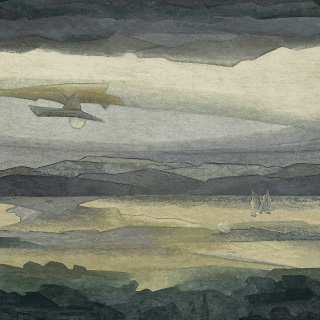
Jehangir Sabavala’s Landscapes series is a striking portrayal of nature, often depicting vast, sweeping vistas of rural and urban terrains. His work in this series explores the relationship between man and nature, capturing the rugged beauty of the land with a sense of serenity and grandeur. Sabavala’s landscapes reflect both an emotional and spiritual connection to the environment, showcasing his meticulous attention to light, texture, and atmosphere. His mastery in transforming landscapes into reflective, almost meditative experiences has made this series iconic in modern Indian art.
VS Gaitonde: Calligraphy Works
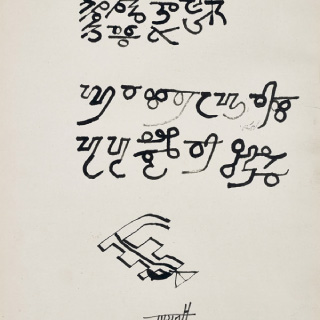
VS Gaitonde's Calligraphy Works are a profound example of abstraction and the artist’s engagement with spiritual themes. Gaitonde incorporated a form of abstract calligraphy into his paintings, where the brushstrokes themselves became symbolic gestures. These works reflect his deep interest in Zen Buddhism and the search for inner peace. The fluidity and rhythmic quality of the lines in his calligraphy works evoke a sense of the sublime, transforming the canvas into a space of contemplative stillness and harmony. This series redefined the potential of abstract art in India, blending Eastern philosophy with Western abstraction.
Bikash Bhattacharjee: Doll Series

Bikash Bhattacharjee's Doll Series is an eerie work on innocence, fragility, and the psychological complexity of identity. His doll-like figures—those often eerily lifelike—stand for a world in which reality and illusion are intertwined. The dolls themselves are not mere inanimate objects; they are imbued with a deep sense of emotional vulnerability, hinting at a world that is simultaneously innocent and disconcerting.
Bhattacharjee uses these figures to explore issues of physical as well as emotional fragility. The blank, almost expressionless faces suggest a loss of agency, yet at the same time, they invite a closer examination of human vulnerability. In regard to the exploration of the human condition—how we move about in our lives, navigate who we are, whom we love, and how we remember—this work takes on surreal, almost dreamlike qualities. It's through the Doll Series that Bhattacharjee succeeds in painting a perceptible yet psychological landscape of disillusionment and existential questioning.
Akbar Padamsee: Metascapes
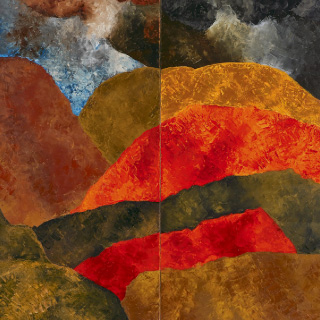
The Metascapes of Akbar Padamsee is a very philosophical series, well in touch with emotion and psychology as dimensions of the mind. The abstract landscapes open up inner worlds, dramatising not just physical space but mental and emotional states as well. The very word "metascapes" comes from his understanding that landscapes are not just symbolisations of external reality but metaphors for inner, changing landscapes of thought, memory, and perception.
The works in the series of Padamsee are marked by soft, muted colours and movement in static compositions. He often compels the spectator to interpret the abstract landscapes in personal and subjective ways—a reflection, in fact, of the complexity of human consciousness. Through Metascapes, Padamsee explores both physical and mental spaces as they change with time, impacted by personal experience as much as philosophical inquiry.
F.N. Souza: Heads
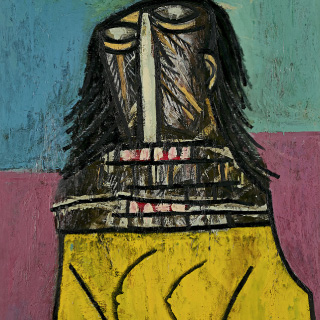
F.N. Souza's Heads is perhaps the most intense and visceral contribution to modern Indian art. The series, probing the human face as a vehicle for the turbulent emotions that remain hidden beneath the surface, presents a raw expression of internal turmoil. The distorted, exaggerated portraits reflect the deep psychological and existential concerns of Souza. The faces are repulsive, covered with torn lines and distorted features, where identity, alienation, and internal struggle form a complicated relationship to be captured.
As personal as it is universal, the exploration of the human figure in this series by Souza frames his themes on anxiety, alienation, and the search for self-understanding based on his personal struggles with both artistic and emotional angst. The bold and aggressive use of colour and form heightens the psychological impact of the work, making this a formidable commentary on the human condition.
J. Swaminathan: Bird, Tree, and Mountain
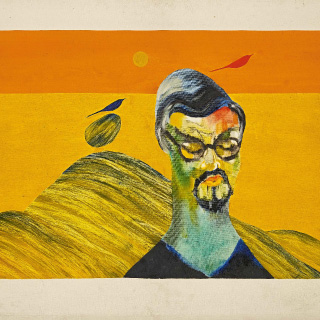
Bird, Tree, and Mountain is a bold series that explores the spiritual and symbolic relationship between man and nature. Birds, trees, and mountains are recurring motifs found in Swaminathan's work and symbolise the interaction of life with nature and are deeply ingrained in Indian philosophy. Elements that have been delineated are not characteristic but symbolic representations towards spiritual transcendence and the unity of all existence.
For Swaminathan, nature was by no means a backdrop to human life but rather an animated world in its own right. The bird, tree, and mountain all speak to a greater spiritual order and remind one of the ancient Indian view of nature as an incarnation of the divine. The heavy use of bold colours and simplified forms imparts a sense of timelessness, encouraging the viewer to reflect on the interconnectedness of all life.
Tyeb Mehta: Diagonal
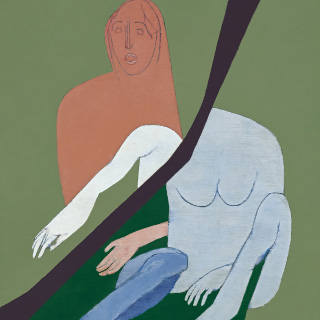
The search within tension and conflict, both in the personal and political realms, is reflected by Tyeb Mehta's Diagonal series. It seems to present itself visually, with the central motif of division, imbalance, and dislocation through the diagonal line cutting across the canvas. Using the simplicity of the powerful geometric form metaphorically for the inherent struggle in modern life at both the individual and societal level.
Mehta's use of strong, bold colours and dramatic composition amplifies the emotional intensity of the series. The diagonal line, often at the very centre of the canvas, divides the composition in a way that suggests conflict and fragmentation, resonating with the artist's own reflections on the political and cultural tensions of post-independence India.
S.H. Raza: La Terre
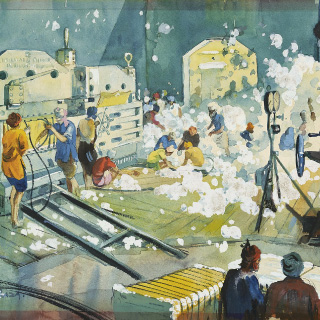
La Terre, by S.H. Raza, is an evocative series speaking about the deep spiritual interface between mankind and land. Rooted in Indian philosophy and spirituality, a belief in the earth as living, sacred, and worshippable; gestural brushwork and earthy tones transform the land into that aboriginal energy beyond physicality.
Throughout La Terre, rounded forms seem to exemplify unity and completeness in their look, suggesting that earth is not only a source of nourishment at the material level but also a spiritual energy connecting life. Rich colours and heavy composition urge the viewer to connect with the earth as an animate being, reflective of Raza's profound reverence toward the power and beauty of nature.
Krishen Khanna: Bandwalla
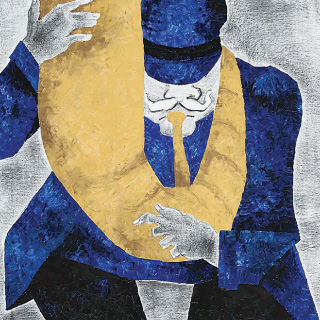
In the Bandwalla series, Krishen Khanna captures the dynamic energy of traditional Indian life, particularly by capturing street musicians who play a pivotal role in Indian cultural and social life. There is a fresh dynamic energy to the figures in this series, captured in this selection of paintings, which Khanna created with his characteristic use of fluid brushstrokes evoking rhythm and movement in the music.
The figures in Bandwalla are not merely symbolised by musicians, but rather represent the very lifeblood of the masses, instilling in them the communal spirit and energy that can push forth the motion. In Khanna's series, the street musicians become a metaphor for shared, communal experiences that define Indian society—drawn from the cultural fabric of the land.