impressionism art | definition, characteristics, techniques
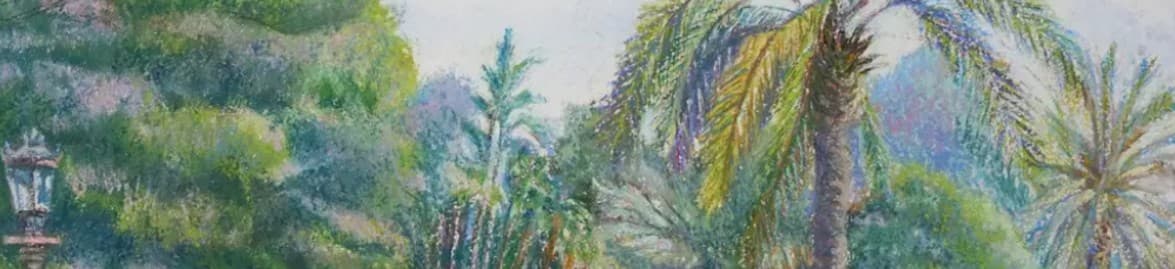
Impressionism was a 19th-century art movement that emerged from a loosely connected group of Paris-based artists, who began publicly exhibiting their works in the 1860s. It defied traditional academic painting and introduced a new way of seeing the world. One that emphasized perception, emotion and momentary experiences. At a time when historical, religious and mythological themes dominated art, Impressionist painters turned to scenes of everyday life, nature and modernity. What began as a radical rebellion grew into a transformative force that changed how art was created and appreciated forever.
Definition of 'Impressionism'
Impressionism is defined as an art movement characterized by its focus on capturing the immediate visual impression of a scene, especially the transient effects of light and color. Rather than striving for photographic realism, Impressionist painters used loose, visible brushstrokes and open compositions to evoke the sensory experience of a moment.
History of Impressionism Movement
The roots of Impressionism can be traced to the 1860s, when a group of young artists in Paris including Claude Monet, Pierre-Auguste Renoir, Alfred Sisley, and Frédéric Bazille began to rebel against the rigid conventions of the Académie des Beaux-Arts. They were inspired by the changing urban landscape of Paris, the innovations of the Industrial Revolution, and the desire to depict modern life as it was truly experienced. The invention of portable paint tubes in 1841 enabled these artists to paint outdoors (en plein air), directly observing the effects of sunlight and atmosphere.
The movement officially took shape in 1874, when these artists organized their own independent exhibition, rejecting the traditional Salon. The critical response was initially hostile, but the Impressionists persisted, holding eight group exhibitions between 1874 and 1886. Over time, their innovative approach gained acceptance and profoundly influenced the trajectory of Western art.
Impressionism Characteristics
Impressionism is distinguished by 7 key characteristics that revolutionized the art world:
1. Quick, Visible Brushstrokes: Impressionists used short, thick strokes of paint, often applied rapidly, to suggest form and movement rather than meticulously describe it. This technique allowed them to capture the fleeting nature of their subjects.
2. Vibrant Colors: The movement is renowned for its use of pure, intense colors. Impressionists often avoided mixing colors on the palette, instead placing them side by side on the canvas to create a luminous effect.
3. Painting Outdoors (En Plein Air): By painting outside, artists could observe and record the changing qualities of natural light and atmosphere, resulting in works that feel fresh and immediate.
4. Capturing Fleeting Moments: Impressionists aimed to depict the transitory effects of light, weather, and movement, often painting the same subject at different times of day to explore its changing appearance.
5. Focus on Light and Color: Rather than relying on traditional shading and modeling, Impressionists used color to define form and create a sense of depth. They were fascinated by how light could transform a scene.
6. Avoiding Black: Black paint was rarely used. Instead, shadows and dark areas were rendered with complementary colors, such as blues and purples, to maintain vibrancy and harmony.
7. Use of Complementary Colors for Shadows: To create lively, colorful shadows, Impressionists placed complementary colors next to each other, allowing the viewer’s eye to blend them optically.
Impressionism Techniques
Impressionist painting is distinguished by its innovative pursuit of capturing the fleeting effects of light, color, and atmosphere within the natural world. At the core of this movement lies a set of defining techniques and visual priorities that enabled artists to convey a heightened sense of immediacy, spontaneity, and sensory experience. These methods departed radically from academic tradition, favoring direct observation, dynamic brushwork, and a perceptual approach that imbued their work with both vitality and emotional depth. The techniques listed below illustrate the core principles of Impressionist paintings:
>> Loose and Visible Brushstrokes:
One of the most recognizable features of Impressionist paintings is the use of quick, visible brushstrokes. Rather than blending colors seamlessly, artists applied short, broken strokes to suggest movement and spontaneity.
• These strokes often mimic the way the eye perceives a scene in real time.
• This approach brought a sense of vibrancy and energy, giving paintings a "sketched" appearance.
Example: Claude Monet’s Impression, Sunrise demonstrates how loose brushwork can evoke mood and light without focusing on fine detail.
>> Pure and Unmixed Color:
Impressionists often applied pure, unmixed colors directly onto the canvas, avoiding the traditional method of mixing paints on a palette.
• This technique enhanced the luminosity and vibrancy of their work.
• Colors were placed side by side, allowing the viewer’s eye to blend them optically — a principle known as optical mixing.
Example: Pierre-Auguste Renoir used dabs of color to capture the shimmering effects of sunlight on figures and fabric.
>> Focus on Light and Its Changing Effects:
Capturing the changing qualities of light was central to Impressionist art.
• Artists painted at different times of the day and in varying weather conditions.
• They observed how light transformed colors, shadows, and textures over time.
Example: Monet’s series paintings (such as Haystacks and Rouen Cathedral) depict the same subject under different lighting conditions to study these variations.
>> En Plein Air Painting (Painting Outdoors):
To observe nature directly, Impressionists painted en plein air (in the open air), rather than in studios.
• The use of portable easels and pre-mixed paint tubes made it easier to paint outdoors.
• This practice enabled artists to capture natural light, movement, and atmosphere more accurately.
Example: Alfred Sisley and Camille Pissarro often painted rivers, fields, and towns while working directly in the landscape.
>> Everyday Subjects and Modern Life:
Impressionism shifted the focus from historical and mythological themes to contemporary life.
• Artists painted urban scenes, cafés, ballet rehearsals, social gatherings, and intimate domestic moments.
• This choice emphasized the present moment and made art more relatable to modern viewers.
Example: Mary Cassatt captured quiet moments between mothers and children in everyday settings.
>> Minimal Use of Black:
Traditional painters used black paint to darken tones or create shadows. Impressionists, however, avoided black, believing it dulled the vibrancy of a painting.
• Instead, they used complementary colors and cool tones to represent shadows.
• This technique gave their work a lighter, more natural appearance.
Example: In Degas’s ballet scenes, shadows and depth are created using blues, purples, and greens, not black.
>> Open Composition and Cropped Framing:
Influenced by photography and Japanese prints, Impressionists often used asymmetrical compositions and cropped edges.
• Subjects were placed off-center.
• Figures or objects might be partially cut off, suggesting spontaneity and movement.
Example: Edgar Degas’s scenes of dancers often resemble snapshots, capturing dynamic, candid moments.
Original Impressionism Artists
The original Impressionists, regarded as the core founding members of the Impressionist movement, were four friends who studied under the academic painter Charles Gleyre. They were Claude Monet, Pierre-Auguste Renoir, Alfred Sisley and Frédéric Bazille. Dissatisfied with the rigid methods of academic training, they bonded over their shared interest in capturing natural light, outdoor scenes and contemporary life.
• Claude Monet (1840-1926) is often considered the father of Impressionism. His painting "Impression, Sunrise" gave the movement its name, and his series paintings of water lilies, haystacks, and Rouen Cathedral demonstrated the Impressionist fascination with changing light conditions. Monet's dedication to painting outdoors and his systematic exploration of light effects established many of the movement's fundamental principles.
• Pierre-Auguste Renoir (1841-1919) brought a warmth and sensuality to Impressionism that distinguished his work from his contemporaries. Known for his paintings of people, particularly women and children, Renoir combined Impressionist techniques with a more traditional approach to form. His works like "Luncheon of the Boating Party" and "Dance at Moulin de la Galette" capture the joie de vivre of Parisian society.
• Alfred Sisley (1839-1899) was perhaps the most consistent of the Impressionists in his dedication to landscape painting. Born in Paris to British parents, Sisley focused almost exclusively on outdoor scenes, particularly around the Seine River valley. His paintings demonstrate a subtle sensitivity to atmospheric conditions and seasonal changes.
• Frédéric Bazille (1841-1870) showed tremendous promise as an Impressionist painter before his tragic death in the Franco-Prussian War at age 28. Coming from a wealthy family, Bazille was able to support his fellow artists and provided crucial financial backing during the movement's early years. His paintings, such as "Family Reunion" and "The Artist's Studio," show his skill in combining figure painting with Impressionist light effects.
List of Impressionist Painters (A–Z)
The key figures in the development of Impressionism in France, presented in alphabetical order are:
- Alfred Sisley
o A dedicated landscape painter.
o Known for his subtle, lyrical depictions of nature and rural France.
- Armand Guillaumin
o Known for vivid landscapes and strong use of color.
o Close friends with Pissarro and Cézanne.
- Berthe Morisot
o One of the leading female Impressionists.
o Known for domestic scenes and portraits, often painted with light brushwork.
- Camille Corot
o A precursor to Impressionism; though not part of the movement, his plein air painting influenced many Impressionists.
- Claude Monet
o Considered the founder of Impressionism.
o His painting Impression, Sunrise gave the movement its name.
- Camille Pissarro
o Called the "father of Impressionism".
o Worked with nearly every major Impressionist artist.
- Edgar Degas
o Famous for ballet dancers, racehorses, and indoor scenes.
o Had a more classical approach but was central to the Impressionist exhibitions.
- Édouard Manet
o Often regarded as a transitional figure between Realism and Impressionism.
o Though not always identifying as an Impressionist, he influenced and exhibited with many of them.
- Gustave Caillebotte
o Known for realistic urban scenes of Paris.
o Actively supported fellow Impressionists financially and organizationally.
- Mary Cassatt
o American painter known for intimate scenes of women and children.
o Worked closely with Degas and exhibited with the French Impressionists.
- Paul Cézanne
o Often considered a Post-Impressionist, but early works were rooted in Impressionism.
o Known for his landscapes and still lifes that influenced modern art.
- Pierre-Auguste Renoir
o Known for vibrant, light-filled scenes of leisure, portraits, and nudes.
o One of the most popular and enduring Impressionists.
Famous Locations That Inspired Impressionists
The Impressionists found inspiration in numerous locations throughout France, both urban and rural, each offering unique lighting conditions and subjects. Some of the most famous locations that inspired their works include:
• Argenteuil, a suburban town on the Seine northwest of Paris, became a favorite destination for Monet, Renoir and others. The town's modern bridges, sailing boats, and riverside gardens provided perfect subjects for exploring the interplay of water, light, and atmosphere.
• Giverny, where Monet established his famous garden and painted his water lily series, became synonymous with Impressionism's later development. The carefully designed landscape, with its Japanese bridge, pond, and abundant flowers, allowed Monet to study light effects in a controlled yet natural environment.
• The forests of Fontainebleau had attracted landscape painters since the 1830s, and the Impressionists continued this tradition. The area's diverse landscapes, from dense woods to open clearings, provided opportunities to study filtered light and shadow effects.
• Le Havre, Monet's childhood home, inspired some of the earliest Impressionist works. The port city's bustling harbor, with its ships, cranes, and industrial activity, offered subjects that reflected modern life's new realities.
• The boulevards and cafés of Paris itself became central to Impressionist imagery. Artists like Gustave Caillebotte and Edgar Degas (though he's often classified as a Post-Impressionist) captured the energy and movement of urban life, from busy street scenes to intimate café interiors.
Impressionism Timeline
The Impressionism movement can be traced through several key events and periods. Here's a concise timeline of the Impressionist movement:
>> Pre-Impressionism (1830s–1850s): Laying the Foundations
• 1830s–1850s
Artists such as Jean-Baptiste-Camille Corot and members of the Barbizon School begin painting outdoors (en plein air), capturing natural light and rural landscapes. Though not Impressionists themselves, their work strongly influenced the next generation.
• 1841
The invention of the portable paint tube allows artists to paint outdoors more freely, encouraging direct observation of nature.
>> Early Development (1860s): Seeds of a New Style
• 1863
Édouard Manet exhibits Le Déjeuner sur l’herbe at the Salon des Refusés, shocking traditional audiences and signaling a shift toward modern themes and techniques.
• Mid-1860s
A group of young artists in Paris — including Claude Monet, Pierre-Auguste Renoir, Edgar Degas, Camille Pissarro, and Alfred Sisley — begin exploring new approaches to color, light, and composition, often painting contemporary life.
>> The Birth of Impressionism (1870s)
• 1872
Claude Monet paints Impression, Sunrise (Impression, soleil levant), a harbor scene that later gives the movement its name.
• 1874
The first Impressionist exhibition is held in Paris at the studio of photographer Nadar. Critics mock the style, coining the term "Impressionism" as a pejorative. Despite this, the exhibition marks the formal emergence of the movement.
• 1876–1879
Additional independent exhibitions are held, featuring works by Morisot, Cassatt, Caillebotte, and others. Their art emphasizes spontaneity, modern subjects, and the effects of changing light.
>> Maturity and Expansion (1880s)
• 1880–1886
Impressionism evolves. Artists begin to explore individual directions:
o Degas focuses on interior scenes and figures.
o Cassatt portrays domestic life and women.
o Monet starts his iconic series paintings (Haystacks, Rouen Cathedral, Water Lilies).
• 1886
The eighth and final Impressionist exhibition takes place. The movement begins to fragment as newer styles, like Post-Impressionism, emerge.
>> Legacy and Influence (1890s–Early 20th Century)
• 1890s–1900s
Impressionism gains international recognition. Exhibitions in London, New York, and other cities spread its influence across Europe and the United States.
• Artists such as Paul Cézanne, Georges Seurat, and Vincent van Gogh, once associated with Impressionism, branch into Post-Impressionism, laying the groundwork for Modernism.
• Claude Monet continues painting into the 1920s, with his large-scale Water Lilies becoming a defining symbol of late Impressionism.
>> Impressionism Today
Today, Impressionism is celebrated worldwide for its revolutionary impact on the art world. Museums and galleries globally house major works from the movement, and exhibitions continue to draw record attendance. Its focus on light, color, and the fleeting nature of everyday life still resonates with contemporary audiences.
Art Movement That Came After Impressionism
The immediate successor to Impressionism was Post-Impressionism, a term that encompasses a diverse group of artists who built upon Impressionist techniques but sought to add greater structure, symbolic meaning, and emotional depth to their work. Key Post-Impressionists include Paul Cézanne, Vincent van Gogh, Paul Gauguin and Georges Seurat. These artists explored new approaches to color, form, and composition, paving the way for later movements such as Fauvism, Expressionism and Cubism.
What is Post Impressionism
Post-Impressionism is a term which refers to a diverse and influential art movement that emerged in France around 1886, following the final Impressionist exhibition, and lasted until roughly 1905. Unlike Impressionism, which emphasized naturalistic depictions of light, Post-Impressionists experimented with bold colors, geometric forms and symbolic content. It was coined by art critic Roger Fry in 1910 to describe the new developments and innovations by artists who while carrying on some elements of Impressionism, sought to move beyond its focus on naturalistic light, fleeting impressions and everyday subject matter.
Post-Impressionism Characteristics
1. Bold, Expressive Colors: Artists used color not just for realism, but for emotional or symbolic impact.
2. Distinctive Brushwork: Visible, often experimental brushstrokes were used to convey feeling or create structure.
3. Emphasis on Structure and Form: Unlike Impressionists, Post-Impressionists often organized their compositions with clear outlines and strong shapes.
4. Personal Symbolism and Subjectivity: Artworks reflected the inner visions or psychological states of the artist.
5. Experimentation with Perspective and Space: Perspective was sometimes intentionally distorted to serve artistic goals.
Famous Post-Impressionist Artists
Some of the principal figures of Post-Impressionism, whose stylistic innovations deeply influenced modern art, include:
• Paul Cézanne: Sought to “make Impressionism something solid and durable,” reducing natural forms to geometric essentials and laying groundwork for Cubism.
• Vincent van Gogh: Known for expressive, swirling brushwork and a vivid palette, he conveyed intense emotions and psychological states through his art.
• Paul Gauguin: Embraced symbolic content, exotic subjects especially from Tahiti and strong, unconventional color harmonies.
• Georges Seurat: Developed Pointillism, using tiny dots of color systematically placed to create luminous, structured compositions.
Difference Between Impressionism & Post-Impressionism
While Impressionism and Post-Impressionism share some similarities, they represent distinct artistic movements with different goals, techniques, and philosophies. Below are the major differences between the two:
- Impressionism
Time Period: Roughly 1860s to 1880s.
Focus: Capturing the effects of light and atmosphere. Impressionists painted scenes as they appeared at a specific moment, emphasizing the transient nature of light.
Techniques: Use of loose brushwork, vibrant colors, and a focus on the play of light. They often painted en plein air (outdoors) to capture natural scenes.
Subject Matter: Everyday life, landscapes, and scenes of leisure. They often depicted ordinary moments rather than historical or mythological themes.
Notable Artists: Claude Monet, Pierre-Auguste Renoir, Edgar Degas.
- Post-Impressionism
Time Period: 1880s to early 1900s.
Focus: Moving beyond the momentary effects of light to explore more emotional and symbolic content. Post-Impressionists sought to express deeper meanings and feelings.
Techniques: More varied and experimental in style. Artists used bolder colors, distinct brushstrokes, and often employed geometric forms.
Subject Matter: Broader themes, including self-portraits, landscapes, and still lifes, often infused with personal symbolism and emotional depth.
Notable Artists: Vincent van Gogh, Paul Cézanne, Georges Seurat, Paul Gauguin.
While Impressionism captured the world as the eye sees it, Post-Impressionism reinterpreted it through emotion, structure, and imagination. Together, these movements revolutionized art, leading to the birth of modernism in the 20th century.
Impressionism Facts
Here are some lesser-known and fascinating facts about Impressionism. Details that go beyond the well-known brushstrokes and landscapes, shedding light on the surprising origins, influences and behind-the-scenes stories of this groundbreaking art movement.
1. The Name "Impressionism" Was Originally an Insult
The term "Impressionism" was coined by art critic Louis Leroy as a mocking jab after seeing Claude Monet's Impression, Sunrise in 1874. He sarcastically wrote that the painting looked like nothing more than an "impression," not a finished work. Ironically, the artists adopted the term with pride.
2. The First Exhibition Was a Financial Disaster
The first Impressionist exhibition (1874) was poorly received by critics and the public. Most works didn't sell, and the group faced ridicule. Today, those same paintings are worth millions and hang in the world’s most prestigious museums.
3. They Were Rejected by the Official Salon
Most early Impressionists could not get their work accepted into the conservative Paris Salon, the official art exhibition of the Académie des Beaux-Arts. Their loose style and modern subjects didn’t fit academic standards, which pushed them to organize independent exhibitions.
4. Impressionists Often Painted on New, Portable Canvases
The invention of pre-stretched canvases and metal paint tubes allowed artists to easily paint outdoors (en plein air), which was crucial for capturing natural light and real-time effects, an essential part of their technique.
5. Black Paint Was Almost Entirely Avoided
Impressionists deliberately avoided using black in their paintings. Instead, they used complementary colors to depict shadows and contrast, which made their works appear more vibrant and lifelike.
6. Photography Influenced Impressionism
The rise of photography in the 19th century pushed artists to explore what cameras couldn’t capture like subtle shifts in light, emotion, and atmosphere. Some Impressionist compositions even mimic photographic framing and cropping.
7. There Was No Unified Style
Although grouped together, Impressionist artists had distinct personal styles. For example, Monet focused on landscapes and light, Renoir on social scenes and the human form, and Degas on dancers and urban life. They were united more by shared values than technique.
8. Women Played a Key Role
Artists like Berthe Morisot and Mary Cassatt were vital members of the movement, breaking gender barriers in a male-dominated art world. Morisot was even part of the very first Impressionist exhibition.
9. The Movement Wasn't Meant to Last
Impressionism wasn’t intended as a long-term movement. Many of the artists eventually evolved in different directions, with some like Monet continuing in the style, and others like Cézanne laying the groundwork for Post-Impressionism.
10. They Weren’t Always Friends
While united artistically, the Impressionists often disagreed personally and professionally. Tensions arose over style, sales, and exhibition choices, particularly between artists like Degas and Pissarro, or Renoir and Monet in later years.
FAQ
o Who Is Considered The Father Of Impressionism?
Claude Monet is widely recognized as the father of Impressionism, having initiated, led, and consistently advocated for the movement. The very term "Impressionism" derives from his painting Impression, Sunrise, exhibited in 1874.
o What Influenced Impressionism?
Impressionism was influenced by a desire to capture the fleeting effects of light and atmosphere, inspired by the changing conditions of nature and everyday life. Key influences included the outdoor painting techniques (en plein air) introduced by Eugène Boudin, developments in color theory, Japanese prints, and a reaction against the academic traditions of the French Salon.
o How To Identify Impressionism Art?
Impressionist art can be identified by seven main characteristics: quick, visible brushstrokes; vibrant, unmixed colors; painting outdoors; capturing fleeting moments and daily life; emphasis on light and color over detail; avoidance of pure black; and use of complementary colors to depict shadows (instead of black or grey shades).
o When Did Impressionism Start & End?
The Impressionism movement began in the early 1860s, with the first Impressionist exhibition held in Paris in 1874. The collective phase of the movement effectively ended with the eighth and final group exhibition in 1886.
o Where Was Impressionism Centered?
Impressionism was centered in Paris, France, with many artists also painting in its suburbs and in locations such as Normandy, Giverny, Argenteuil, and the banks of the Seine, which served as inspirations for their landscapes and scenes of modern life.
o Why Is Impressionism Important?
Impressionism is important because it fundamentally changed artistic practice, prioritizing subjective vision, the depiction of light and atmosphere, and paving the way for modern movements such as Post-Impressionism, Fauvism, and Cubism. It democratized art themes, focused on everyday life, and championed artistic freedom and innovation, influencing generations of artists worldwide.
o How Did Impressionism Change Art?
Impressionism revolutionized art by breaking free from strict academic standards, emphasizing the artist’s perception over realistic representation, and introducing new techniques in color and brushwork. It opened the door to modern art by encouraging experimentation, painting outdoors, and prioritizing sensation and atmosphere over narrative or historical accuracy.