installation art & its deeper meanings
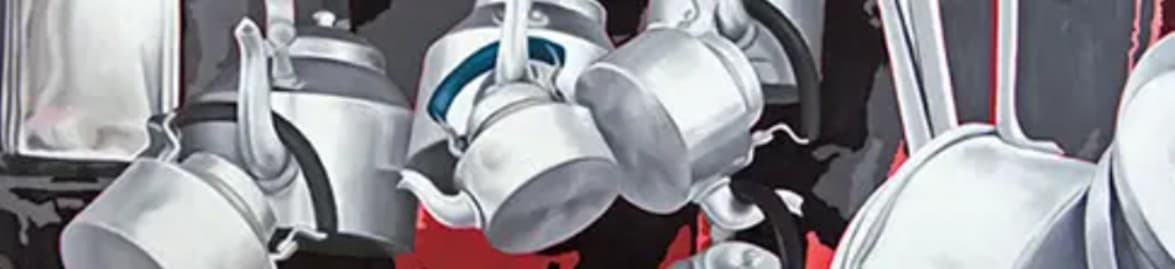
Installation art is one of the most evocative and transformative forms of contemporary artistic expression. Unlike traditional art forms such as painting or sculpture, which are often confined to a frame or pedestal, installation art transcends boundaries by occupying entire spaces. It invites viewers to step inside, move around, and interact with the work, blurring the line between observer and participant. At its core, installation art is not merely about aesthetics; it is about experience, meaning, and dialogue.
What is Installation Art?
Installation art typically involves arranging objects, multimedia elements, sound, light, and sometimes performance within a defined space. The goal is to immerse the audience in an environment that challenges perceptions, evokes emotions, or provokes thought. These works can be temporary or permanent and are often site-specific, meaning they are created in response to the particularities of the location.
Definition
Installation art is a three-dimensional artistic genre where works are often site-specific, designed to interact with and transform the perception of the space they occupy.
Installation Art History Timeline
Installation art has a dynamic and multi-layered history, evolving from early twentieth-century avant-garde experiments to a major contemporary art movement.
Early Roots (1910s – 1950s)
• Marcel Duchamp’s readymades and the Dada movement laid the groundwork for installation art by presenting ordinary objects and unconventional arrangements as art, challenging traditional notions of beauty and authorship.
• Artists like Kurt Schwitters (creator of Merzbau environments) and El Lissitzky (Suprematist and Constructivist spatial compositions) pushed art beyond canvases and sculptures into immersive, transformative spaces.
Prototyping Environments (1950s – 1960s)
• The term “environment” began to be used, notably by Allan Kaprow, who engineered entire rooms for participants to engage and experience sensorially, foreshadowing installation art.
• Gutai Group (Japan) staged multimedia, spatially immersive works, influencing global art’s move toward environments and installation.
Emergence as a Recognized Movement (1960s – 1970s)
• Installation art gained prominence, shaped by Minimalism, Land Art, Conceptual Art, and Performance Art, focusing on the total experience, the materials, and the space over representation.
• The genre challenged traditional exhibition frameworks, favoring temporary, site-specific, and participatory works, often using new technologies and everyday materials.
Expansion and Diversification (1980s – 1990s)
• Installation art expanded to include networks of architectural and environmental sites, integrating video, sound, and multimedia as technology developed.
• Artists worldwide, including Yayoi Kusama, Damien Hirst, Olafur Eliasson, and Ai Weiwei, created ambitious installations exploring sociopolitical issues and sensory experience.
Contemporary Practice (2000s – Present)
• The field now encompasses digital and virtual installations, interactive environments, and massive public art projects.
• Prominent museums and institutions support installation art as a leading form within contemporary practice, reflecting its focus on experience, concept, and community.
Installation art’s history is marked by innovation, interdisciplinary influence, and the continual transformation of audience engagement and spatial awareness.
Deeper Meanings Behind Installation Art
1. Breaking Boundaries:
Installation art blurs the lines between art and life. By enveloping the viewer, it dissolves the traditional distance between the observer and the artwork, encouraging active participation rather than passive viewing.
2. Challenging Perspectives:
It often questions societal norms, politics, culture, environment, or identity. Through spatial experience, these installations engage viewers on an intellectual and emotional level, prompting reflection or dialogue about complex issues.
3. Temporal and Ephemeral Nature:
Many installation pieces are temporary, reinforcing the idea of impermanence and change. This transience can symbolize the fleeting nature of experience, memory, and existence.
4. Multisensory Engagement:
Incorporating sound, texture, and sometimes smell, installation art creates environments that appeal to more than just the visual senses. This multisensory approach deepens the connection between the viewer and the message or mood the artist aims to convey.
5. Interactivity and Public Participation:
Some installations invite viewers to touch, move through, or even alter the artwork. This interaction democratizes the art experience and allows for personalized interpretation, emphasizing the role of the audience in the creation of meaning.
6. Environmental Dialogue:
Installation art often comments on the environment, using natural or recycled materials to raise awareness about ecological concerns. The physical presence of an installation within a setting can highlight the relationship between humans and their surroundings.
Types of Installation Art
Installation art is a versatile medium that takes many forms depending on materials, setting and audience interaction. The major installation art types include:
1. Site-Specific Installation
Created for a particular location and designed to interact with the space’s history, architecture, or environment.
Example: Christo and Jeanne-Claude’s Wrapped Reichstag in Berlin.
2. Environmental Installation
Uses natural or outdoor settings, often blending art with the landscape.
Example: Robert Smithson’s Spiral Jetty in Utah’s Great Salt Lake.
3. Interactive Installation
Involves the active participation of viewers to complete or activate the work.
Example: Rafael Lozano-Hemmer’s digital light projections controlled by audience input.
4. Multimedia / Digital Installation
Uses technology such as video, sound, projection, VR, or AR to create immersive experiences.
Example: teamLab’s Borderless digital art museum in Tokyo.
5. Conceptual Installation
Focuses on conveying an idea or message rather than visual beauty. Materials may be ordinary or symbolic.
Example: Joseph Beuys’ I Like America and America Likes Me (with a coyote in a gallery).
6. Ephemeral / Temporary Installation
Designed to exist only for a short time, often highlighting impermanence.
Example: Ice, sand, or flower installations that naturally decay.
7. Public Installation
Placed in open, accessible public spaces to engage communities and spark social dialogue.
Example: Antony Gormley’s Another Place (cast-iron figures across a beach).
Famous Installation Art
Famous installation art pieces have transformed the way people experience and interact with visual art, often occupying three-dimensional spaces and inviting immersive, participatory engagement. These works blur the boundaries between art and everyday life, using varied materials and concepts to produce both thought-provoking and sensorial encounters. Over the decades, many installation works have achieved iconic status, reshaping the way we think about art itself.
1. Yayoi Kusama’s Infinity Mirror Rooms
Japanese artist Yayoi Kusama is widely celebrated for her immersive Infinity Mirror Rooms. Using mirrors, lights, and endless reflections, Kusama creates kaleidoscopic environments that make visitors feel as if they’ve stepped into infinite space. Her works explore themes of repetition, self-obliteration, and the boundless nature of the universe.
2. Olafur Eliasson’s The Weather Project (2003)
Installed at Tate Modern’s Turbine Hall in London, Eliasson’s The Weather Project transformed the industrial space into a glowing artificial sun. Using mirrors and mist, he recreated an atmospheric environment that encouraged visitors to lie on the floor and gaze upward. It was not only a visual spectacle but also a communal experience that reflected humanity’s relationship with nature.
3. Ai Weiwei’s Sunflower Seeds (2010)
Chinese artist Ai Weiwei filled Tate Modern’s Turbine Hall with over 100 million hand-painted porcelain sunflower seeds. Each seed, crafted by Chinese artisans, represented individuality within mass production, touching on themes of consumerism, labor, and political control. Viewers were initially encouraged to walk across the seeds, though later restricted due to dust concerns.
4. Christo and Jeanne-Claude’s The Gates (2005)
The artist duo Christo and Jeanne-Claude are renowned for large-scale environmental installations. In The Gates, they installed 7,503 saffron-colored fabric panels along 23 miles of pathways in New York’s Central Park. The work invited viewers to reconsider familiar urban landscapes through a new lens, emphasizing transformation and impermanence.
5. Damien Hirst’s For the Love of God (2007)
Though often categorized as sculpture, Hirst’s diamond-encrusted platinum skull installation has become one of the most provocative works of contemporary art. It blurs boundaries between installation, luxury, and mortality, sparking debates on value, art, and death.
6. Mona Hatoum’s Light Sentence (1992)
Mona Hatoum’s Light Sentence consists of a moving light bulb within a cage of wire mesh lockers. As the bulb swings, shadows shift across the room, creating a disorienting and unsettling atmosphere. The installation explores themes of confinement, surveillance, and fragility of personal freedom.
7. Random International’s Rain Room (2012)
This interactive installation allows visitors to walk through a room where it constantly rains—yet sensors ensure that no one gets wet. Exhibited in cities like London, New York, and Los Angeles, the Rain Room blurs the boundary between natural phenomena and technology, highlighting the intersection of human presence and environment.
Installation Art Features
Site-specific: Many installations are created for a particular location and gain meaning from their surroundings.
Immersive: They often occupy entire rooms or outdoor spaces, enveloping the viewer.
Multi-sensory: Installations can include not just visual elements, but also sound, light, movement, or even smell.
Ephemeral: Some installations are temporary, existing only for the duration of an exhibition.
Concept-driven: The focus is often on ideas (concepts, social commentary, or experiences) rather than permanent aesthetic objects.
Installation Art Characteristics
Installation art is defined by several distinctive characteristics that set it apart from traditional art forms. It is a genre of three-dimensional art designed to transform the perception and experience of a given space, often requiring the active participation of the viewer.
1. Site-Specificity
Installation art is typically created for a particular location and often integrates features of that site, making the environment an essential part of the artwork.
2. Immersive and Sensory Experience
The viewer is invited to physically enter or move around the work, engaging multiple senses (sight, touch, sound, sometimes even smell), resulting in a total, immersive experience rather than a passive observation.
3. Mixed Media
These works commonly employ a diverse range of materials, including found objects, everyday items, light, sound, video, and new media technologies.
4. Purposeful Arrangement
Objects and materials are deliberately arranged within the space to create a unified conceptual environment, often transforming the area and altering its atmosphere or meaning.
5. Temporality
Many installations are temporary, designed to exist only for a specific period, after which they may be dismantled or changed. Some permanent installations become part of the space itself.
6. Audience Engagement
The experience and response of visitors are central to installation art; the work is often activated or altered by their movement, interaction, or participation.
Notable Examples
Artists like Yayoi Kusama with her Infinity Mirror Rooms, Olafur Eliasson’s immersive light installations, and Christo and Jeanne-Claude’s large-scale environmental works have exemplified how installation art transcends traditional forms to engage viewers deeply.
Conclusion
Installation art is far more than an arrangement of objects in space, it is an invitation to step into an idea. By blending environment, interaction, and symbolism, it fosters deeper reflection on reality, society, identity, and time itself. In doing so, it challenges us to see art not only as something to be looked at, but as something to be lived.