introduction: what is a murano glass chandelier?
.jpg&w=3840&q=75)
In the world of interior design, few objects command as much presence as a Murano glass chandelier. Often referred to as "frozen light" these fixtures are more than just illumination; they are a 700-year-old testament to Venetian mastery, blending the alchemy of sand and fire with the grace of high fashion.
What Is A Murano Glass Chandelier?
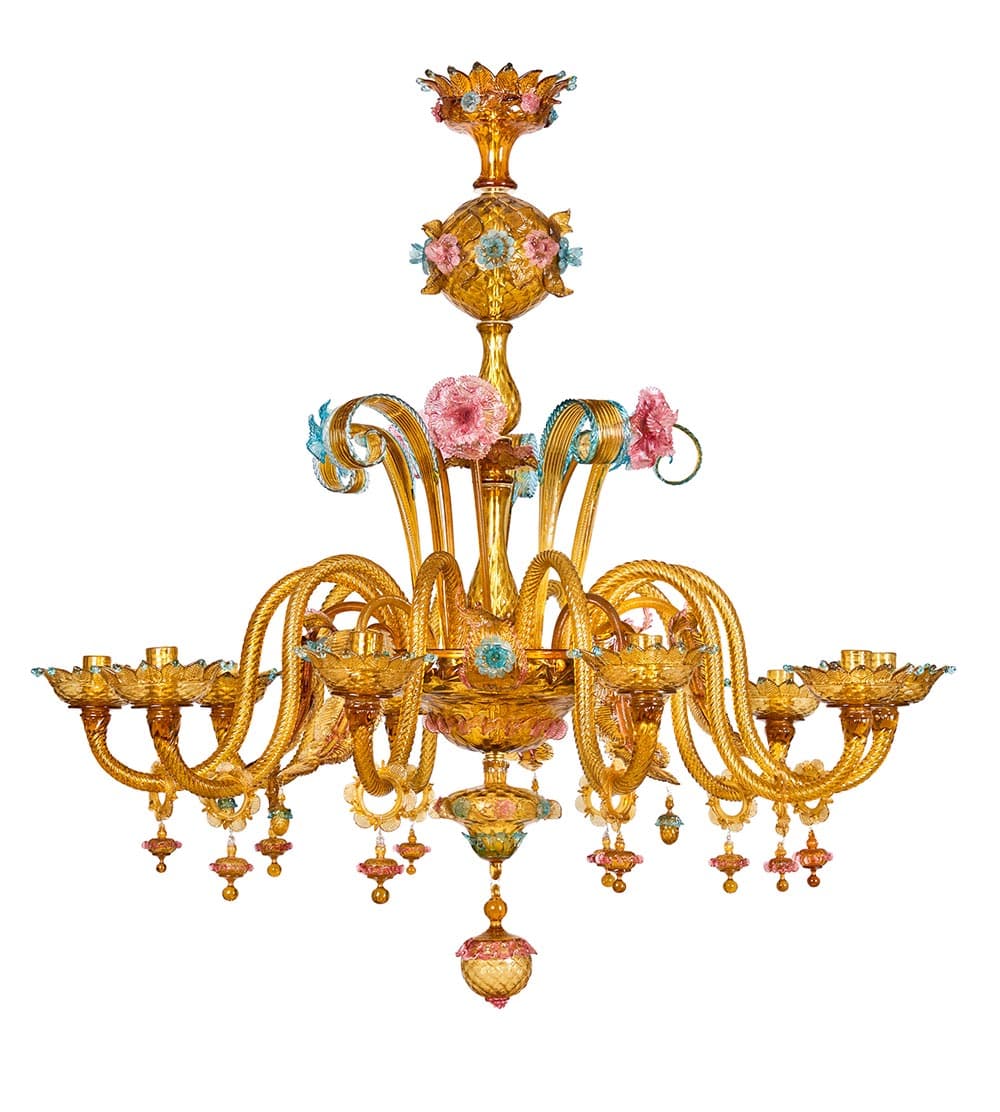 A Murano Glass Chandelier is more than a lighting fixture. It is a masterpiece of art, history, and craftsmanship. Handcrafted on the Venetian island of Murano, these chandeliers represent centuries of refined glassmaking tradition that continues to captivate collectors, designers, and homeowners around the world.
History
Glassmaking shifted to Murano in the 13th century to safeguard Venice from fires and protect trade secrets, evolving into a hub for innovative techniques like cristallo and filigrana. Early chandeliers appeared in the 14th century as simple candle holders, but medieval Murano artisans refined soda glass for its unique lightness, distinguishing it from Bohemian faceted crystal. By the 18th century, elaborate designs boomed, with Giuseppe Briati's Rezzonico Chandelier in 1724 setting the standard for floral motifs and metal frames adorned with blown glass elements.
Craftsmanship and Techniques
Every authentic Murano Glass Chandelier is handcrafted using traditional techniques passed down through generations. Unlike mass-produced lighting, each piece is unique.
Key techniques include:
• Hand-blowing molten glass into delicate forms
• Lampworking to create intricate flowers and decorative elements
• Gold leaf infusion for rich, luminous finishes
• Colored glass layering for vibrant artistic effects
The process demands extraordinary precision, timing, and artistic vision. A single chandelier may take weeks or even months to complete.
Styles
Murano Glass Chandeliers have evolved in style while preserving their artisanal roots.
1. Classic Venetian Style - Characterized by flowing arms, floral motifs, and transparent or pastel glass, this style reflects the grandeur of 17th and 18th-century Venice.
2. Rezzonico Style - Inspired by the grand halls of Venetian palaces like Ca' Rezzonico, these chandeliers are large, ornate, and heavily decorated with glass flowers and colored accents.
3. Modern and Contemporary Designs - Twentieth-century masters such as Carlo Scarpa introduced sleeker lines and innovative forms, blending tradition with modern aesthetics. Today, designers continue to reinterpret Murano craftsmanship in minimalist and avant-garde styles.
Why Choose a Murano Glass Chandelier?
• Unmatched Artistry - Each chandelier is individually handcrafted, making it a one-of-a-kind work of art.
• Heritage and Authenticity - Authentic Murano pieces often include certificates of origin and are produced by renowned glass furnaces on Murano island.
• Investment Value - Because of their craftsmanship and historical significance, genuine Murano chandeliers can appreciate in value over time.
• Versatility - Whether in a grand foyer, dining room, boutique hotel, or modern penthouse, these chandeliers serve as a stunning focal point.
How to Identify Authentic Murano Glass
Due to its prestige, Murano glass is widely imitated. To ensure authenticity:
• Look for a certificate from a Murano glass consortium
• Verify the origin of the manufacturer
• Examine craftsmanship details such as hand-shaped elements and slight asymmetries
• Purchase from reputable dealers
Authentic Murano glass carries a level of detail and refinement that machine-made reproductions cannot replicate.
Global Appeal
From European palaces to luxury homes in the United States, the Middle East, and Asia, Murano Glass Chandeliers remain symbols of elegance and refinement. Interior designers often use them to blend classical artistry with modern architecture, creating striking contrasts that elevate entire spaces.
More Than Light
A Murano glass chandelier does something that no other lighting fixture can quite replicate. It does not merely illuminate a room; it animates it. As light passes through and around hundreds of hand-shaped glass elements, it fractures into color, catches in curves, and dances with the slightest movement of air. The room below seems to breathe.
This is the enduring magic of Murano glass: that it transforms something as ordinary as light into something that feels, unmistakably, like wonder. In an age of mass production and disposability, the Murano chandelier stands as a testament to what human hands, working at the edge of their ability, can still achieve.