

Blogs

J. Sultan Ali: The Indian Modern Master We Forgot To Remember
Yungming Wong | 27 Apr, 2026
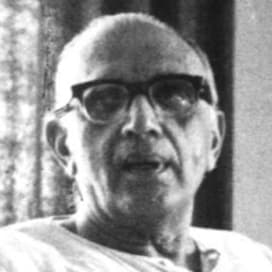 Jalaluddin Sultan Ali i.e J. Sultan Ali (1920–1990) was a towering figure in modern Indian art, best known for his deep-rooted connection to folk and tribal culture. While many of his contemporaries looked toward Western Modernism for inspiration, Ali turned inward, exploring the rich tapestry of Indian myths, village life, and primordial symbolism. His work bridges the gap between traditional iconography and contemporary aesthetic sensibilities.
Early Life
J. Sultan Ali was born on 12 September 1920 in Bombay (present-day Mumbai) into a prosperous business family. His family had little interest in the arts and fully expected him to follow the conventional path of trade and commerce. Ali, however, was drawn irresistibly toward painting from an early age, and the tension between his artistic ambitions and his family's expectations would define the opening chapter of his life.
In an act of quiet but decisive rebellion, the young Ali turned away from the family business and made the fateful decision to pursue art professionally. He relocated to Madras (present-day Chennai), a city that would become central to his identity, and enrolled at the Government College of Art in 1945, beginning a six-year diploma course in painting. It was this first act of defiance that set in motion one of the most distinctive artistic careers in twentieth-century India.
Later Life
After completing his formal training, Sultan Ali's career unfolded across several distinct and fruitful phases. He joined the Lalit Kala Akademi, New Delhi, as an Exhibition Officer in 1959, a position he held until 1963. It was during this period that he encountered the writings of British anthropologist Verrier Elwin, widely regarded as the foremost authority on tribal India. This discovery proved transformative.
Compelled by Elwin's writings, Ali toured Bastar, the largest tribal district in central India, and immersed himself in the life, imagery, and symbolism of its communities. The encounter with tribal art redirected his work entirely. He went on to become a founding member of the celebrated Cholamandal Artists' Village, established on the outskirts of Madras in the late 1960s, which became a nucleus for progressive contemporary art in South India.
In his later years, Ali served as President of the Artists Handicraft Association, Chennai (1977–1980) and was honoured with the Senior Fellowship of the Government of India in 1988, a testament to the high regard in which the Indian state held his artistic contributions. He passed away in 1990, leaving behind an extraordinary body of work.
Family
J Sultan Ali’s family life was deeply intertwined with his professional world. His daughter, Mumtaz Sultan Ali, followed in his footsteps to become a respected artist and printmaker in her own right, ensuring that the family's artistic lineage continued into the next generation.
Education
J Sultan Ali's educational journey was as wide-ranging as his artistic sensibilities.
He completed his six-year Diploma in Painting from the Government School of Art and Craft, Madras in 1945, studying under the eminent sculptor and teacher D. P. Roy Chowdhury, who instilled in him the rigours of classical training. He was subsequently awarded a Government of Madras Scholarship to study Textile Design at the Government Textile Institute, Madras in 1946, an experience that left visible traces in the pattern-like, rhythmic quality of his early works.
Demonstrating an unusually diverse intellectual curiosity, he also completed a Diploma in Photography from the Lingham's Institute of Photography, Madras in 1947, and later pursued a photography course in London, further broadening his visual education.
Beyond formal institutions, his most formative education came from the field: the time he spent immersed in the tribal communities of Bastar, the iconographic traditions of Hindu folk art, and his deep study of calligraphic traditions as carriers of philosophical meaning. He was, in the truest sense, a lifelong learner.
Painting Style
J. Sultan Ali’s style is often described as "Neo-Primitive". He moved away from the academic realism of his early training to embrace a flat, decorative and highly symbolic language. His canvases are crowded with figures, yet meticulously organized, often resembling ancient scrolls or tribal murals.
In his early phase, i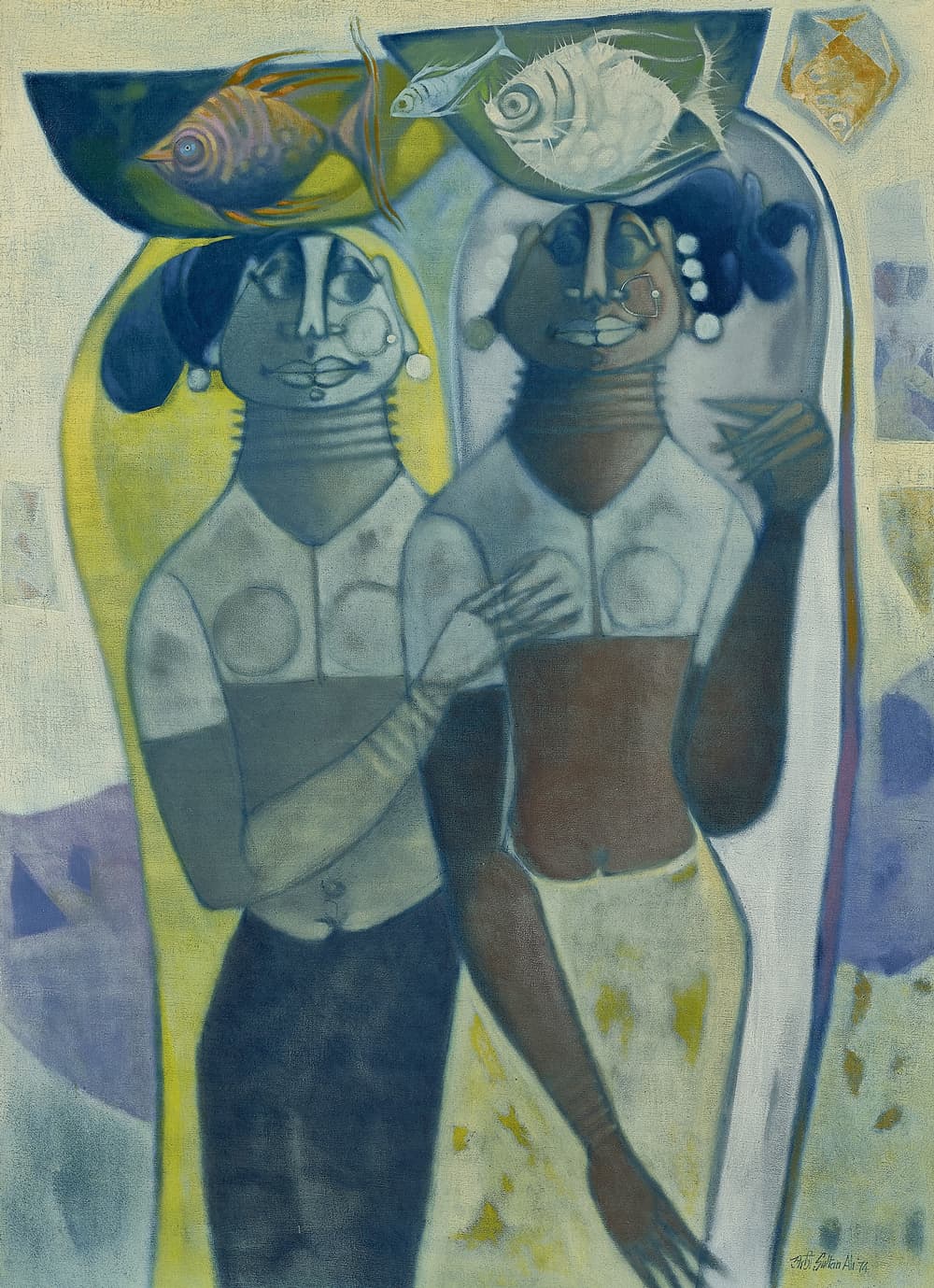 nfluenced by his textile design training, his compositions showed a strong sense of surface pattern and decorative rhythm. As he moved into the 1950s and 1960s, the encounter with tribal art profoundly altered his approach. He embraced the directness, freshness, and symbolic economy of tribal imagery, qualities he found lacking in the formal conventions of European modernism, which he considered too cold and intellectualized.
His style evolved through several distinct phases: a tribal phase rooted in the imagery of Bastar communities; a Hindu mythological phase exploring iconographies of deities and folk worship; and a calligraphic phase in which he incorporated the visual forms of words and sounds as philosophical symbols. Throughout all these phases, his work retained a figurative core, earthy, vital, and deeply humanistic, even when it moved toward abstraction.
He worked primarily in oil on canvas, but was equally fluent in watercolour, mixed media, and ink drawing, each medium deployed with precision and confidence.
Famous Paintings
Among the many works for which Sultan Ali is remembered, several stand out as particularly representative of his artistic vision:
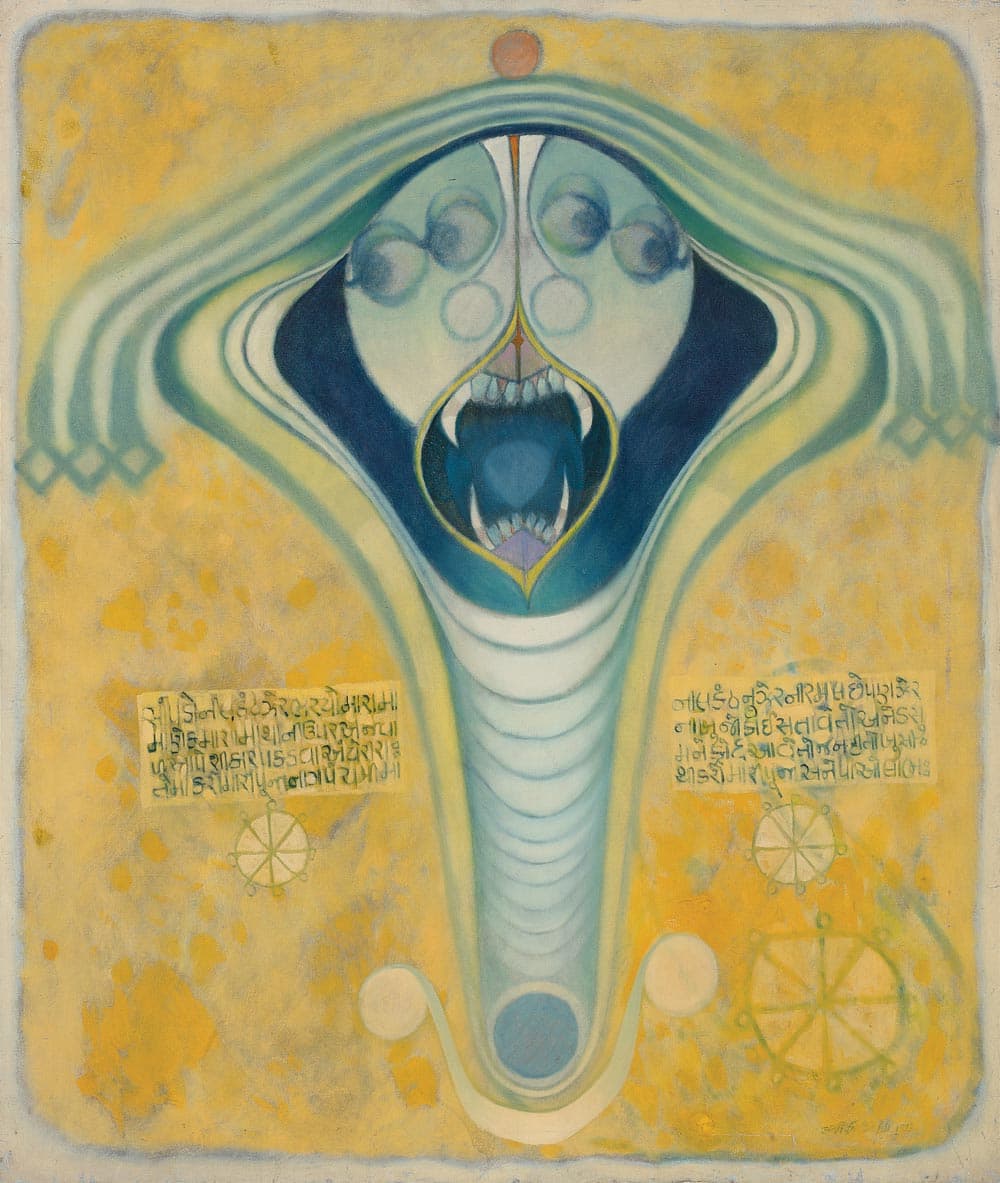 • Naga-Panchika Series, A celebrated group of works drawing on the imagery of the serpent goddess, merging tribal symbolism with Hindu iconography.
• Ganesha Series, Deeply personal explorations of one of Hinduism's most beloved deities, approached through the lens of folk and tribal artistic conventions rather than classical iconography.
• Tribal Myth (1967, Oil on Canvas), A powerful evocation of tribal life and mythology, considered among his finest mature works.
• Muria Maiden (1967, Oil on Canvas), A striking figurative work inspired by his engagement with the Muria community of Bastar.
• Cage Birds (1962, Oil on Canvas), An expressive painting from his middle period, rich in symbolic layering.
• The Milkmaid (1958, Mixed Media on Board), An early figurative work demonstrating his mastery of the human form.
• Bhayanaka Ballad (1989, Mixed Media on Paper), A late work showcasing the calligraphic and philosophical dimensions of his mature style.
• Rhapsody XIII (1989, Watercolour on Mount Board), One of his last known works, lyrical and quietly profound.
• Winter Night, An award-winning early painting that brought him recognition at the Academy of Fine Arts, Amritsar.
• Pakshi Raja and Veer Balad (1972, Ink Drawings), Vivid ink works from his prolific graphic art period.
Characteristic Features of His Paintings
• Tribal Iconography: Use of folk motifs, masks, and totemic figures.
• Calligraphy: He often integrated scripts (like Devanagari) into the background of his paintings, treated not just as text but as a design element.
• Earthly Palette: A preference for ochres, deep reds, blacks, and terracottas.
• Intertwined Forms: Humans, animals, and mythical beasts often merge or coexist in a single, fluid space.
Contribution in Indian Art
J Sultan Ali played a pivotal role in the Madras Art Movement. He helped redefine "Indianness" in art by proving that modernism didn't have to be an imitation of the West; it could be derived from the "primitive" and "folk" traditions of one's own soil. As a writer and administrator, he also worked tirelessly to document and promote Indian art globally.
Enduring Legacy & Impact
His legacy lies in his unique ability to modernize the tribal vernacular. He inspired a generation of artists to look at rural India not as "backward" but as a source of sophisticated aesthetic energy.
His famous dictum, "If you want to paint a mango tree, go and spend a day sitting under it. Then go home and paint it. But don't copy it. Paint what you have assimilated of the tree", encapsulates a philosophy of artistic experience that continues to inspire. It is a philosophy that prizes deep engagement over superficial representation, absorption over imitation.
J Sultan Ali demonstrated that Indian art could be simultaneously modern and deeply rooted, that tradition was not a constraint but a resource, and that the most vital art arises from genuine encounter with the world.
Exhibitions
• Solo Shows: Held across major Indian cities (Mumbai, Chennai, Delhi) and internationally in Switzerland and Germany.
• Commonwealth Art Festival (London, 1965): A major milestone in his international career.
• Venice Biennale: He represented India on this prestigious global platform.
Awards
Over his long career, Sultan Ali received numerous honours in recognition of his contribution to Indian art:
• Award for Painting (Winter Night), Academy of Fine Arts, Amritsar (1956)
• Award from Shilpa Kala Parishad, Patna (1957)
• Punjab Government's Silver Medal, Academy of Fine Arts, Amritsar (1958)
• National Award for Drawing, Lalit Kala Akademi, New Delhi (1966)
• National Award for Painting, Lalit Kala Akademi, New Delhi (1978)
• Silver Plaque, All India Fine Arts and Crafts Society, for contribution to the 2nd Veteran Artists Exhibition, New Delhi
• Senior Fellowship, Government of India (1988), one of the highest honours bestowed on an Indian artist
Conclusion
J. Sultan Ali was, at heart, a searcher, an artist who refused to be satisfied with easy answers, inherited styles, or borrowed vocabularies. His life's work was the construction of a genuinely modern Indian art: one that was conversant with the world without losing itself, that was rooted in Indian experience without being provincial, and that drew on the oldest wells of human creativity, tribal and folk art, to produce something entirely fresh and contemporary.
His paintings stand today not merely as beautiful objects but as arguments: arguments for depth over decoration, for cultural rootedness over fashionable cosmopolitanism, and for the artist's responsibility to engage with the full complexity of the world they inhabit. In an age that continues to wrestle with questions of cultural identity, authenticity, and the relationship between tradition and modernity, J. Sultan Ali's example remains as relevant, and as inspiring, as ever.
Lesser-Known Facts
• He was born on 12 September, a date rarely cited even in major biographical accounts, which tend to mention only his birth year of 1920.
• His textile design training was on scholarship: he won a Government of Madras Scholarship to study textile design, an unusual combination with fine arts training that influenced the rhythmic, pattern-like quality of his compositions.
• He completed a photography diploma from the Lingham's Institute of Photography, Madras, in 1947, a fact often overlooked in discussions of his work, though it speaks to an early and broad fascination with visual representation.
• His encounter with Verrier Elwin was through a book, not a meeting: it was while working as an Exhibition Officer at the Lalit Kala Akademi that Ali came across Elwin's writings on tribal India, a chance encounter with a text that redirected his entire artistic practice.
• He toured Bastar as part of his research: rather than simply reading about tribal art, Ali physically travelled to Bastar, then as now one of the most remote tribal regions of India, to observe and absorb its visual culture firsthand.
• His wife was a printmaker: Mumtaz J. A. Khan, his wife, was an accomplished graphic artist, and their joint exhibition in Germany was a rare instance of a husband-and-wife artistic collaboration receiving international recognition.
• He taught at Rishi Valley School, the educational institution founded by the philosopher J. Krishnamurti in Andhra Pradesh, a school renowned for its progressive pedagogy, from 1951 to 1954.
• His works entered the collection of an American film editor: a significant group of his ink drawings was collected by Marvin Walowitz, a Hollywood film editor who also ran the India Ink Gallery in Los Angeles and Santa Monica, suggesting that his work reached unexpected audiences even during his lifetime.
• He was a participant in the Venice Biennale (33rd edition, 1966), one of the most prestigious international art events in the world, an achievement not widely highlighted in Indian art histories of the period.
• His famous quote about the mango tree, urging artists to assimilate nature rather than copy it, is considered one of the most eloquent articulations of the philosophy of experiential painting in Indian art discourse.
Things To Keep In Mind While Building Your Collection Of Contemporary South-Asian Art
3 Feb, 2022
Mario Miranda - Profile, History, Paintings & Art Style
1 Aug, 2024

Tracing The Evolution, History & Significance Of Contemporary Indian Art
27 Jun, 2024

Anish Kapoor : The Subversive Sculptor
11 Sep, 2023
The Many Moods & Emotions In The Art Of Zarina Hashmi
30 Sep, 2024
The Role Of Realism Paintings In Contemporary Art
11 Oct, 2024
Mattress Paintings: Domestic Space As A Stage In Anju Dodiya’s Art
11 Nov, 2025
Fire Painting In Vastu Shastra
5 May, 2022

Viewing The Mahatma Through A Contemporary Lens
4 Feb, 2022
Revisiting and Reflecting On The Past Through Contemporary Art
5 Feb, 2022
A Creative Dialogue Between Art and Spirituality
7 Feb, 2022

Lens-Based Art – The New Generation Of Photography in Contemporary Art
9 Feb, 2022
Mumbai Art Galleries - Where Creativity Meets Culture!
5 Aug, 2025
Indian Madhubani Art: From Rural Walls to Global Recognition
19 Jul, 2022
‘Present Future’: Highlights From The Upcoming Contemporary Art Auction
14 Sep, 2022
Looking To The Future: Sculptural Works In Contemporary Art
15 Sep, 2022

Life and Work of Renowned Artist: Biren De
22 May, 2024
Prominent Artist from Kashmir Valley: Gulam Rasool Santosh
22 May, 2024

Creative Collisions: Exploring the Influence of Popular Culture on Art
5 Jul, 2023
John Fernandes: Finest Realistic Painter of India
11 Jun, 2024
A World Of Imagination: An Exploration Of Fantasy In Contemporary Indian Art
7 Feb, 2023
Influence of African Art On Western Art
8 Jul, 2024
Beyond Conventional Boundaries: Reinterpretation Of Spaces In Contemporary Indian Art
8 Feb, 2023
Virtuoso of Multi-Layering: Idris Khan
13 Jun, 2024
Contemporary Artists Redefining Pop Art In India
14 Feb, 2023
Prolific Indian Women Artists in Indian Contemporary Art
12 Feb, 2023
Masterpieces & Editions : Highlights from AstaGuru’s upcoming International Iconic Auction
13 Jul, 2023

Jitish Kallat - Biography Of A Trailblazer In Contemporary Art
28 Nov, 2024
Bimal Das Gupta - Profile, History, Paintings & Art Style
19 Mar, 2025
10 Contemporary Indian Artists Making Waves Internationally
30 Aug, 2024
16 Famous Installation Artists in India Who Are Gaining Global Recognition
5 Aug, 2025
Masterpieces and Editions: Artists Whose Works Are Featuring For The First Time In AstaGuru Auction
5 Jul, 2023
Cosmic Convergence: AstaGuru’s Virtual Gallery Presents Expressions of Neo Tantric Art
23 May, 2024
Paresh Maity - Artworks, Life & History
22 Nov, 2024
Rajnish Kaur - Artist Profile, Biography, Art Style & Paintings
8 Jul, 2025
The Art Of Portraiture: Unique Portraits By Influential International Artists
6 Jul, 2023
Present Future : Highlights from AstaGuru’s upcoming Contemporary Indian Art Auction
21 Sep, 2023
International Iconic : Contemporary Highlights from AstaGuru’s upcoming International Art Auction
13 Nov, 2023
The Innovative Artistic Odyssey of Lancelot Ribeiro
28 Nov, 2023

AstaGuru’s upcoming Beyond Bold auction to showcase remarkable creations of contemporary Indian art
11 Dec, 2023
The Bold Sculptures Of Contemporary Indian Art
13 Dec, 2023
Exploring The Themes Of Infinity & Void In Anish Kapoor’s Artworks
18 Nov, 2024
Artist Reshaping Indian Contemporary Art
5 Apr, 2024

Highlights From AstaGuru’s Upcoming Contemporary Indian Art Auction
5 Apr, 2024
Niren Sengupta - Profile, History, Paintings & Art Style
12 Mar, 2025
International Art: History, Key Concepts, Impact & Top Artists
3 Jul, 2025
Emerging Contemporary Indian Art Artists Who Are Boldly Redefining The Art Scene
31 May, 2024

Visionaries: Highlights From AstaGuru’s Upcoming Contemporary Indian Art Auction
10 Jun, 2024
Artist Featuring For The First Time In AstaGuru’s Upcoming Modern Indian Art Auction
20 Jun, 2024
Motifs Of Marc Chagall
8 Jul, 2024
International Icon: Modern Artists Featured In AstaGuru’s Upcoming ‘International Art Auction
10 Jul, 2024
Contemporary Art Featured In AstaGuru’s Upcoming ‘International Icon’ Art Auction
11 Jul, 2024
The Impact of Contemporary Indian Art On Interior Design
24 Jul, 2024
.jpg&w=1200&q=75)
Anupam Sud - Profile, History, Paintings & Art Style
1 Apr, 2025
The Significance Of Indian Contemporary Art & How It Differs From Other Forms Of Art
19 Sep, 2024
Paresh Maity - The Mystic Melody (2024) | Overview
9 Dec, 2025
D P Roy Choudhury's Vision for Indian Art: Tradition and Transformation
17 Sep, 2024
How Contemporary Art Painting Can Change The Look Of Your Living Room
4 Oct, 2024

Kangra Paintings – The Soulful Art of Himachal Pradesh
1 Aug, 2024
A Painter's Journey : The Life, Work & Inspiration Of Atul Dodiya
4 Oct, 2024
Jagannath Panda - Crafting Narratives Through The Art Of Collage
16 Oct, 2024
Subodh Gupta - Three Cows (2003) | Overview
5 Aug, 2025
Introduction to Kishangarh Painting: Origin & Historical Background
15 Dec, 2022
The History Of Miniature Paintings - From Royalty To Modern Art
18 Oct, 2024
Arpana Caur - Profile, History, Paintings & Art Style
4 Apr, 2025
Sunil Kumar Das - Profile, History, Paintings & Art Style
7 Apr, 2025
Nalini Malani – Pioneer Of Video Art & Experimental Film
30 May, 2025

Canvas Paintings - Types, Characteristics, Materials & Themes
18 Jul, 2025
Paramjit Singh - Profile, History, Paintings & Art Style
15 Apr, 2025
The Politics of Materiality : Stone, Wax & Pigment in Anish Kapoor’s Art
11 Nov, 2024
Symbolism of Pigeons in Jamil Naqsh’s Paintings
19 Jan, 2026
The Role Of Women In Sobha Singh's Art
5 Dec, 2024
4 Gond Paintings Every Art Lover Needs To Know
12 Nov, 2022
What Is Lettrism & Why Is It Making A Comeback?
4 Feb, 2022
From Cinema To Canvas: The Artistic Journey Of Bal Chhabda
18 Feb, 2025
.jpg&w=1200&q=75)
Iconic Indian Sculptors & The Signature Styles That Define Them
25 Feb, 2025
Terracotta Art & Its 21st Century Successors
1 Feb, 2022
Anil Thambai - A Voice For Cultural Identity In Art
5 Mar, 2025
Valay Shende - Sculpting The Stories Of Urban India
6 Mar, 2025
Jayasri Burman - Artist Profile, History, Art Style & Paintings
11 Mar, 2025
Modern Art vs. Contemporary Art: Two Styles Explained
15 May, 2022
Paritosh Sen - Profile, History, Paintings & Art Style
9 Apr, 2025
.jpg&w=1200&q=75)
Anant Joshi - Profile, History, Paintings & Art Style
30 Apr, 2025
Bharti Kher Bindi Art: Decoding Her Signature Motif
30 Apr, 2025
Yashwant Deshmukh - Profile, History, Paintings & Art Style
30 Apr, 2025
Sudarshan Shetty - Shift (2004) | Overview
2 May, 2025
.jpg&w=1200&q=75)
Rekha Rao - Profile, History, Paintings & Art Style
30 Apr, 2025

Nalini Malani - A Pioneer Of Feminist Art In India
2 May, 2025
.jpg&w=1200&q=75)
The Monumental Artistry of Anish Kapoor
5 May, 2025
.jpg&w=1200&q=75)
Valay Shende – Profile, History, Paintings & Art Style
6 May, 2025
AstaGuru’s Upcoming Auction ‘Present Future’ Celebrates Contemporary Indian Art
6 May, 2025
.jpg&w=1200&q=75)
Jagannath Panda – Profile, History, Paintings & Art Style
6 May, 2025
.jpg&w=1200&q=75)
Jitish Kallat – Profile, History, Paintings & Art Style
6 May, 2025
.jpg&w=1200&q=75)
Ranbir Singh Kaleka – Profile, History, Paintings & Art Style
7 May, 2025
.jpg&w=1200&q=75)
Chittrovanu Mazumdar – Profile, History, Paintings & Art Style
7 May, 2025

Shibu Natesan – Profile, History, Paintings & Art Style
8 May, 2025
Atul Dodiya - Gandhi Series | Overview
14 May, 2025
How To Enjoy Art In Mumbai: Tips From An Art Enthusiast
14 May, 2025
Paresh Maity - The Indian Odyssey | Overview
28 May, 2025

Subodh Gupta - Line of Control (2008) | Overview
29 May, 2025
A. Ramachandran & The Evolution Of Indian Figurative Painting
13 Jun, 2025
Installation Art & It's Deeper Meanings
20 Aug, 2025
Jodhaiya Bai Baiga: From Firewood Seller to Padma Shri Folk Artist
10 Aug, 2022
Bhil, the Art of Painting with Dots & Storytelling
11 Nov, 2022
Shilpa Gupta: Pioneering Interactive Art in Contemporary India
20 Jun, 2025
How Hema Upadhyay Used Rice to Paint Narratives
20 Jun, 2025
How Varunika Saraf Transforms Wasli Painting Into Political Art
20 Jun, 2025
The Challenges of Restoring Contemporary Artworks: Navigating Complexity and Innovation
13 Jun, 2025
Beyond Hyperrealism: Decoding Riyas Komu’s Hyper-realistic Oil Portraits
25 Apr, 2021
What Makes Art Contemporary? Key Elements That Define The Genre
20 Jun, 2025
Buddha Paintings - The Life of Gautam Buddha in Art
1 Mar, 2022
12 Beautiful Lakshmi Paintings To Attract Wealth & Abundance
8 Jul, 2025
Ananta Mandal: The Monsoon Muse - Painting Rain Soaked Realities
4 Jul, 2025
Rekha Rodwittiya: The Feminist Voice in Indian Contemporary Art
30 Oct, 2025
Anjum Singh: An Artist of Sensitive Urban Ecology
27 Oct, 2025
Why Buyers Prefer To Buy Art Online Instead Of Galleries
11 Apr, 2021
12 Beautiful Hanuman Paintings To Channel Courage & Protection
17 May, 2022
Why Do Rich People & Big Corporations Buy Expensive Art?
22 Jul, 2022
12 Beautiful Radha Krishna Painting To Attract Love & Togetherness
11 Aug, 2022
How Do Art Collectors Discover & Buy Art in 2025?
2 Feb, 2025
![What Is Abstract Art — Definition, History & Types [2025 Edition]](/_next/image?url=https%3A%2F%2Fcms-assets.astaguru.com%2Fupload%2F07252025_052256_Screenshot_2025-07-25_172106.jpg&w=1200&q=75)
What Is Abstract Art — Definition, History & Types [2025 Edition]
25 Jul, 2025
Top 7 Shilpa Gupta Installations That Challenge Political Boundaries
24 Jul, 2025
Art Galleries in Mumbai: Where Heritage & Modern Art Collide
29 Mar, 2022
.jpg&w=1200&q=75)
Bharti Kher - Elephant (2006) | Overview
21 Nov, 2024
Nalini Malani - In Search of Vanished Blood (2012) | Overview
4 Aug, 2025
Lalitha Lajmi - Homage to Frida Kahlo (2004) | Overview
3 Aug, 2025

Bharti Kher’s Sculpture 'Ancestor' & The Power Of Indian Womanhood
8 Aug, 2025
Bikash Bhattacharjee’s Durga Series | Overview
15 Nov, 2025
Top 10 Friendship Day Paintings by Renowned Artists Worldwide
3 Aug, 2025
Latika Katt - Deoband In Memory Of Grandfather (2023) | Overview
23 Sep, 2025
Paresh Hazra: Weaving Spirituality & Tradition On Canvas
28 Aug, 2025

Binoy Varghese: Capturing Emotion In Female Portraits
27 Aug, 2025
Babu Xavier – Elephant Series | Overview
25 Aug, 2025
A Glimpse Into The Intricate Motifs Of Madhubani Paintings
18 Dec, 2022

Ideal Paintings For Home As Per Vastu
9 Feb, 2022

Nilima Sheikh: The Art Of The 'Un-archived' History
17 Aug, 2025

Nicholas Roerich - Himalayas (1933) | Overview
23 Nov, 2022
Chintamoni Kar: The Philosopher Sculptor of Bengal
5 Aug, 2025
Nalini Malani - All We Imagine As Light (2016) | Overview
2 Sep, 2025
10 Beautiful Gond Art That Bring Folklore To Life
17 Nov, 2022
Cheriyal Scroll Painting – History, Techniques, Motifs & Famous Artists
19 Jul, 2023
Camel Paintings in Vastu: A Complete Guide for Home & Office
2 Jan, 2022
10 Popular Paintings Of 21st Century & The Stories Behind Them
9 Mar, 2022
Shanu Lahiri - Woman on a Rickshaw (2003) | Overview
22 Sep, 2025
Jayasri Burman - Jalo Utsav (2020) | Overview
2 Dec, 2025
Reba Hore’s Artistic Journey: From Economics Graduate to Renowned Painter
29 Oct, 2025
Jhupu Adhikari: The Designer Who Became A Painter Extraordinaire
28 Oct, 2025
Bharti Kher Resumes Painting After A Three Decade Hiatus
18 Oct, 2025
Haku Shah: The Gandhian Modernist Who Bridged Tribal & Contemporary Art
26 Nov, 2025
Mario Miranda’s Cartoons: Where Humor Meets High Art
25 Oct, 2025
Role of Trees & Nature Motifs in Ram Singh Urveti's Paintings
17 Nov, 2025
Vivan Sundaram: India’s First Installation Artist & His Multimedia Practice
19 Feb, 2022
Materiality & Myth-Making In Manjunath Kamath’s Terracotta Sculptures
14 Nov, 2025
The Body As Battlefield: Exploring Vasundhara Tewari Broota’s Figurative Art
13 Nov, 2025
Legendary Indian Terracotta Artists Whose Works Inspire Generations
11 May, 2022
Animal Motifs & Anthropomorphism In Amit Ambalal’s Paintings
20 Nov, 2025
Atul Dodiya - The Titanic Days (2006-2010) | Overview
1 Dec, 2025
Paresh Maity - The Citi of Faith (2006) | Overview
2 Dec, 2025
Manu Parekh - Holy Dip at Banaras (2019) | Overview
5 Dec, 2025

Why Is World Art Day Celebrated On April 15th
15 Apr, 2025
Cheriyal Paintings Explained: A Complete Guide to Cheriyal Art
7 Aug, 2022

Jhupu Adhikari - Three Wise Men (2012) | Overview
11 Dec, 2025
Sakti Burman - Stories in the Stories (Circa 2007) | Overview
10 Dec, 2025
.jpg&w=1200&q=75)
Nature & Femininity in A. Ramachandran’s Lotus Pond Paintings
2 Dec, 2025
.jpg&w=1200&q=75)
Why the Peacock Is a Popular Subject in Gond Art
15 Dec, 2022
Significance of Gond Elephant Painting for Home
10 Sep, 2022

Krishen Khanna - The Last Bite (2005) | Overview
21 Dec, 2024
Sakti Burman's Daughter: Maya Burman Inheriting Mythic Figuration with Modern Whimsy
22 Dec, 2025
.jpg&w=1200&q=75)
Rasik Raval’s Folk Motifs: Connecting Warli, Bhimbetka & Modern Painting
15 Dec, 2025

The Cut-and-Paste Metropolis: Hema Upadhyay's Photographic Urban Sculptures
14 Dec, 2025

Suryakant Lokhande’s Sculptures: Material, Meaning & Method
9 Mar, 2026

Jayashree Chakravarty: Weaving Destruction into Layered Landscape Narratives
13 Jan, 2026
Vasudha Thozhur’s Pedagogical Approach to Art
23 Apr, 2026
Exploring the Signature Style of Venkat Bothsa’s Fiberglass Sculptures
14 Jan, 2026
How Probir Gupta Uses Art as Activism to Address Inequality & Injustice
12 Jan, 2026
How Nature Shapes Murali Nagapuzha’s Art
15 Jan, 2026
Interpreting Ved Nayar’s Naika Motif Across His Works
13 Jan, 2026
.jpg&w=1200&q=75)
Painting with Fire: How Jeram Patel Pioneered The Blowtorch Technique
19 Jan, 2026
Reading Adeela Suleman’s Art Through the Lens of Islamic Art Traditions
16 Jan, 2026
The Prism As Metaphor In Nabibakhsh Mansoori's Paintings
22 Jan, 2026
The Emergence Of Archetypes In A P Santhanaraj's Work
21 Jan, 2026
Milburn Cherian and the Art of Catharsis
16 Jan, 2026
The Abacus Series: Geometry & Abstraction in Nagji Patel's Work
15 Jan, 2026

Materiality & Meaning: Paper’s Dual Nature in Ravi Kumar Kashi's Work
24 May, 2022
Farhad Hussain’s Dot-by-Dot Technique & Its Impact
24 May, 2022
My Village, Bhil Painting by Bhuri Bai
15 Nov, 2022
Documenting The Artistic Legacy Of Shyamal Dutta Ray
5 Feb, 2026
S Yousuf Ali: Remembering A Painter Who Blended Tradition & Modernity
4 Feb, 2026
The Life & Legacy of Shankar Ghosh: Tracing a Sculptor’s Journey
2 Feb, 2026
A Birthday Tribute To K G Subramanyan: India’s Most Curious Modernist
15 Feb, 2026
Stamping Ink, Turpentine & Revelation: The Unique Techniques Behind Velu Viswanadhan's Art
24 Apr, 2026
The Unique Fresco Technique of Lita Cabellut in Contemporary Art
16 Apr, 2026
.jpg&w=1200&q=75)
The Legacy of S. Nandagopal at Cholamandal Artists' Village
30 Apr, 2026
.jpg&w=1200&q=75)
Social & Political Themes in Adeela Suleman’s Sculptures
4 May, 2026

KNOW MORE
Buy
Sell
Request an Estimate
FAQs
Seller Terms
Store Terms
SERVICES
Client Advisory
Restoration
DOWNLOAD THE APP


Copyright 2026 AstaGuru. All Rights Reserved


