jagdish swaminathan - a prominent 20th century figure in indian art
.jpg&w=3840&q=75)
Jagdish Swaminathan (1928-1994), known as J. Swaminathan was a seminal figure in the landscape of Indian art during the 20th century. As an artist, theorist, and institution builder, he challenged conventional wisdom and established new paradigms for understanding and creating art in post-independent India.
Early Life & Education
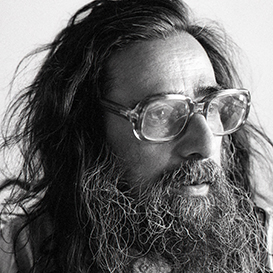 Born on June 21, 1928, in Shimla, Himachal Pradesh, Swaminathan's early life was marked by a restless pursuit of knowledge and self-expression. Initially enrolled in a pre-medical course, he soon left to explore journalism & politics in Kolkata. His artistic education began informally through evening classes at the Delhi Polytechnic and later at the Academy of Fine Arts in Warsaw, Poland. However, it was not until the late 1950s that he fully committed to a career in art.
Artistic Philosophy & Group 1890
In 1962, Jagdish Swaminathan co-founded Group 1890, an artist collective that sought to challenge the prevailing norms of Indian art. The group's manifesto criticized the "vulgar naturalism" of the Bengal School and the imitative tendencies of European modernism. Instead, it urged artists to perceive their surroundings in a "virginal state"—a theme that became central to Swaminathan's work. His paintings often featured vibrant colors and simple forms that reflected his deep connection with nature and spirituality.
Revolutionary Vision In Modern Indian Art
Swaminathan's contribution to Indian art was revolutionary in its rejection of both Western academic traditions and the nationalist Bengali school. He proposed a radical alternative that recognized India's diverse artistic traditions, particularly those existing outside the mainstream urban centers. This perspective would prove transformative for Indian modern art.
His intellectual framework was built on several key principles:
• The recognition of tribal art as a contemporary rather than primitive form.
• The rejection of the artificial divide between folk and classical art.
• The emphasis on symbolic rather than representational art.
• The integration of mystical and tantric elements into modern artistic expression.
Contributions To Tribal Art
One of Jagdish Swaminathan's most significant contributions was his advocacy for tribal art. He played a crucial role in bringing attention to the works of tribal artists, particularly those from Madhya Pradesh. In 1981, he discovered Gond artist Jangarh Singh Shyam, who would go on to gain international acclaim. By organizing exhibitions and promoting Jangarh Singh Shyam's work, Jagdish Swaminathan helped establish a unique style known as "Jangarh Kalam", which blended traditional tribal motifs with contemporary techniques.
Institutional Leadership & Cultural Impact
Perhaps Swaminathan's most enduring contribution came through his role as the founding director of Roopankar Museum at Bharat Bhavan, Bhopal. Under his leadership, this institution became a groundbreaking space that:
• Exhibited contemporary and tribal art side by side, challenging traditional hierarchies.
• Created India's first museum-based collection of contemporary tribal art.
• Established workshops where urban and rural artists could collaborate and learn from each other.
• Developed new frameworks for understanding and appreciating indigenous art forms.
Establishment Of Bharat Bhawan
In 1982, Jagdish Swaminathan was instrumental in establishing Bharat Bhawan, a multi-art complex in Bhopal that became a hub for various forms of artistic expression, including visual arts, music and theater. He served as the director of its Roopankar Museum until 1990, where he curated collections that celebrated both urban & tribal art. This initiative not only provided a platform for emerging artists but also fostered dialogue between different artistic traditions.
Artistic Innovation & Style
In his own artistic practice, Swaminathan developed a distinctive visual language that embodied his theoretical principles. His work was characterized by:
Symbolic Geometry - His paintings often employed geometric forms that referenced both tantric symbols and modernist abstraction, creating a unique synthesis of spiritual and contemporary elements.
Color Philosophy - Swaminathan's use of color was deeply influenced by traditional Indian color theory but expressed through a modern sensibility. His distinctive palette became a hallmark of his work.
Spatial Concepts - His treatment of space in paintings challenged conventional perspective, creating works that existed in multiple dimensional planes simultaneously.
Legacy & Recognition
Jagdish Swaminathan's impact on Indian art was profound; he held over thirty solo exhibitions and participated in numerous national and international shows throughout his career. His work is characterized by its simplicity and vivid imagery, reflecting themes of survival and the human condition. In recognition of his contributions, he received the Jawaharlal Nehru Fellowship in 1968 for his research on traditional Indian aesthetics.
Jagdish Swaminathan passed away on April 25, 1994, but his legacy endures through his artworks and the many artists he inspired. Jagdish Swaminathan paintings continue to be celebrated for their innovative use of color and form, with some pieces fetching high prices at auctions.
Conclusion
Jagdish Swaminathan's significance as a 20th-century figure in Indian art lies not just in his remarkable paintings, but in his comprehensive vision for Indian art that encompassed theory, practice, and institution-building. His influence continues to shape discussions about Indian art and culture, making him a pivotal figure in understanding the development of modern Indian art. His legacy reminds us that artistic innovation need not come at the expense of cultural authenticity, and that tradition and modernity can engage in productive dialogue rather than conflict.